
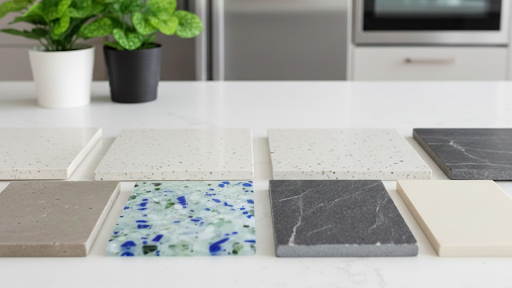
For many years, quartz countertops have been among the most popular choices for contemporary kitchens. Due to their strength, non-porous nature, and beautiful look, they have become the go-to countertop material for many homeowners. However, as more and more research is published regarding the potential health hazards resulting from breathing dust containing crystalline silica when creating quartz countertops, many interior designers and kitchen remodelling contractors now look for safer options. When selecting the materials for your kitchen remodel, you need to take into consideration not only how beautiful and durable they are but also how safe they are.
Why Would You Explore Other Options Besides Quartz Countertops?
The engineered quartz worktops contain a combination of natural stone and resin. When cutting, grinding, and polishing engineered quartz, it creates dust particles which contain respirable crystalline silica, and when inhaled over time, can lead to silicosis (a lung condition). Therefore, designers need to consider the health impacts of the products they recommend to their clients as well as their aesthetic value. For those contractors who manage client projects, using safer products not only helps protect their clients from exposure to harmful materials but also provides peace of mind for homeowners.
Top Safer Alternatives to Quartz Worktops
1. Solid Surface Worktops
Solid surface materials such as acrylic or polyester-based worktops can skip the silica entirely. These are seamless, easy to clean, and, if you scratch them, you can usually fix them right up.
Brands to check out: Durat, HIMACS, Velstone, Meganite
Why designers love them: You get smooth, uninterrupted surfaces and can even create integrated sinks or funky curves without fuss.
Something to keep in mind: They don’t handle heat as well as stone, but if you want flexibility and low maintenance, they’re a great pick.
2. Sintered Stone (Silica-Free Options)
Sintered stone delivers that high-end stone look but skips the silica.
Try: Lapitec (zero silica)
Why it stands out: Crazy durable, UV-stable, and it works inside or out.
Heads-up: It’s pricier than regular quartz, but in luxury kitchens, it’s money well spent for safety and style.
3. Recycled and Composite Surfaces
Some newer surfaces use recycled glass, paper, or alternative resins. They’re eco-friendly, unique, and don’t have the silica problem.
Examples: GEOS (recycled glass), PaperStone (paper-based), Aurea Stone ZERO, Compac Obsidiana Zero
Design perks: You get all sorts of colours and textures, plus they appeal to clients who care about sustainability.
Just check: Some can be sensitive to heat or hard knocks, so look into the details for each brand.
4. Low-Silica Engineered Surfaces
If your client loves that quartz look but wants something safer, low-silica engineered surfaces are a solid compromise.
Why try them: You still get the classic style, but with way less health risk during fabrication.
Keep in mind: These aren’t completely silica-free, but they’re a big step in the right direction.
5. Laminate and Compact Surfaces
Laminate worktops are a real budget-saver and completely silica-free.
Why they work: Tons of patterns (including fake stone looks), easy to install, and perfect for projects where cost matters.
Downsides: They don’t feel as fancy as stone and aren’t as heat-resistant, but they’re great for secondary spaces or as accent pieces.
What Pros Need to Consider
Durability: Sintered stone and solid surfaces hold up well. Laminates are better for low-traffic spots.
Maintenance: Solid surfaces and laminates are easy to fix up. Composites might need a little more care.
Design options: Recycled and composite surfaces let you get creative. Low-silica quartz sticks with that classic look people want.
Budget: Laminate and solid surfaces are wallet-friendly. Sintered stone and fancy composites cost more but bring a touch of luxury.
Wrapping Up
Switching to safer alternatives isn’t just about ticking a safety box, it’s about creating kitchens that look amazing and feel good to live with. Solid surfaces, silica-free sintered stone, recycled composites, and low-silica engineered options all give you the freedom to design safe, stylish, and sustainable spaces. In the end, you get kitchens that people love, and you can breathe a little easier, too.
