
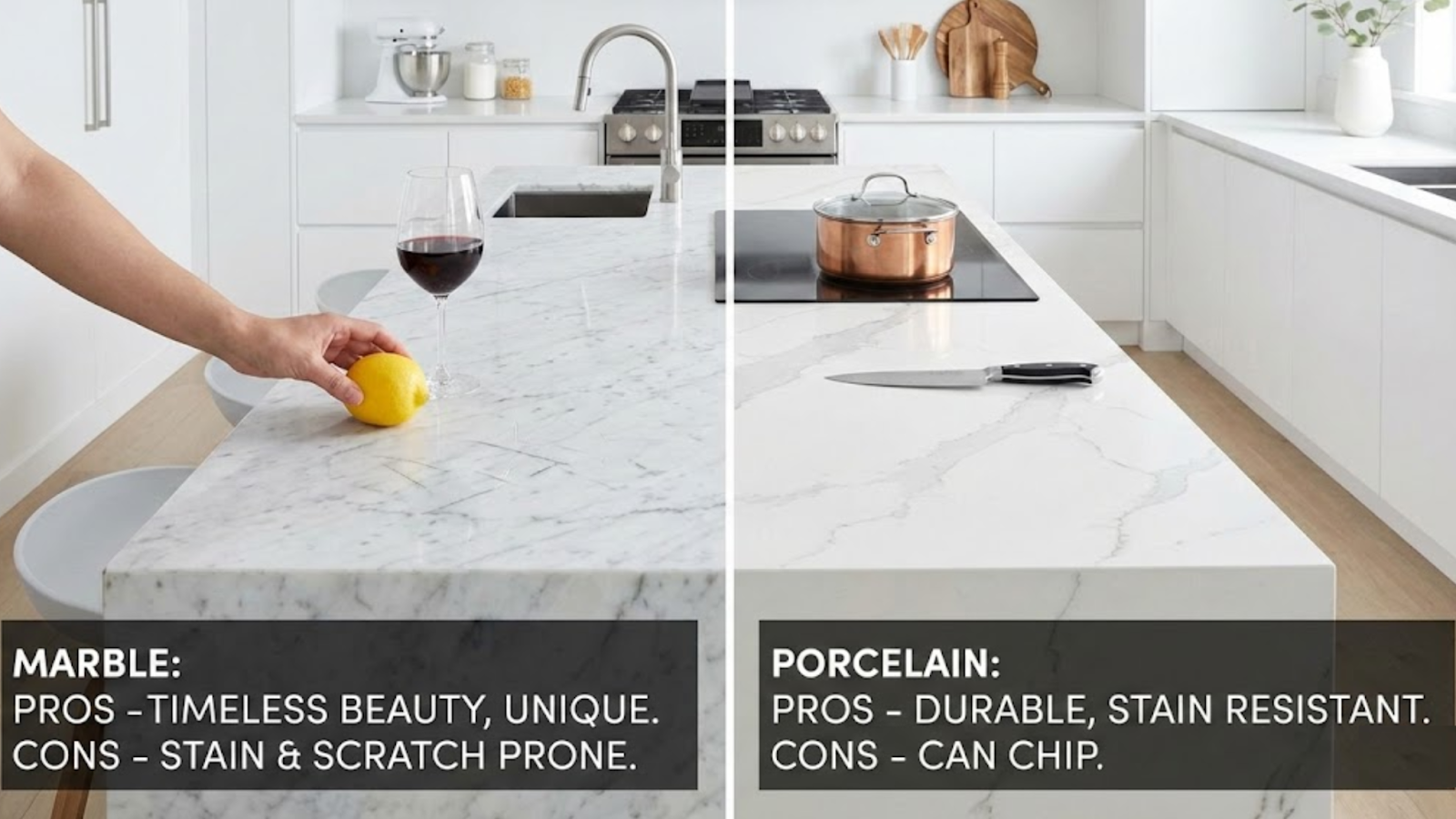
Selecting a countertop is an important part of planning a kitchen renovation or building a new house. Marble and porcelain are both popular high-end countertop options; however, they have their own pros and cons.
The following information breaks down the most important differences between porcelain and marble countertops, so you can choose your next countertop confidently:
Key Takeaways
- Marble countertops have unique veining and natural beauty, but must be sealed and cared for regularly.
- Porcelain countertops are extremely durable, low maintenance, and non-porous.
- In Porcelain vs Marble Countertops, porcelain suits busy kitchens, while marble fits luxury designs.
- Marble-effect porcelain delivers the look of stone with better durability.
- When selecting marble or porcelain for your kitchen, it is essential to consider how you will use the countertop in addition to how it looks.
Introduction: Understanding the Materials
Before exploring the pros and cons of marble and porcelain surfaces, we should define precisely what distinguishes each of these materials:
- Marble Worktops: Marble surfaces are natural stones that were formed through natural geologic processes over millions of years. Marble worktop has always offered an elegant, luxurious appearance and were historically highly prized by wealthy individuals throughout history as one of the most beautiful materials available for kitchens.
- Porcelain Worktops: Porcelain worktops are an engineered stone product made from different types of clay mixed with minerals and fired at very high temperatures. The manufacturing process allows porcelain slabs to be produced with very high levels of durability and versatility in their design options. For example, porcelain manufacturers can produce porcelain slabs with realistic marble-like finishes.
When determining which type of countertop surfaces will be best for your kitchen and lifestyle, considering these two major differences is critical.
Porcelain vs Marble Countertops: Key Differences
| Feature | Marble Worktops | Porcelain Worktops |
| Origin | Natural stone | Engineered ceramic |
| Aesthetics | Unique, organic veining | Wide design range, can mimic marble |
| Durability | Softer, more scratch-prone | Highly durable, scratch resistant |
| Stains & Porosity | Porous, needs sealing | Non-porous, low maintenance |
| Maintenance | Regular sealing | Minimal care required |
| Heat Resistance | Good, but sensitive to extremes | Excellent heat resistance |
| Cost | Generally higher | Often more budget-friendly |
| Installation | Requires a stone expert | Professional installer recommended |
Pros of Marble Worktops
1. Timeless Elegance and Natural Beauty
Marble worktops offer exceptional visual attraction and are inherently beautiful due to their natural veining patterns, as well as to their gentle and soothing colour variation in each slab, making every installation one of a kind.
2. Classic Luxury Increases Property Value
Due to its association with lending an air of sophistication and luxury to design, this material can also increase the perceived value of any kitchen, especially when it is used in a traditional kitchen design or for high-end kitchens.
3. Functional Benefits for Culinary Tasks
The cool, smooth surface of marble keeps your hands naturally cool while working on baked goods.
4. Long-Standing Material Choice
Marble has been used in the architectural and design world for hundreds of years and if it is maintained properly, it can last for many generations.
Cons of Marble Worktops
1. Higher Maintenance Requirements
Marble has a porous nature, which makes it susceptible to staining and etching due to acidic materials, such as citrus juices and vinegars. As a result, marble requires regular sealing and cleaning of spills immediately after they occur.
2. Susceptibility to Scratches and Wear
Marble is soft compared to porcelain on the Mohs hardness scale and can be scratched and worn fairly easily in high-traffic areas.
3. Costly Material and Installation
Marble worktops tend to be more expensive due to quarrying, transportation, and installation complexity.
4. Sensitive to Heavy Impacts
Marble’s softness compared to engineered surfaces makes it more vulnerable to chipping and cracking over time from heavy pots and pans or dropped items.
Pros of Porcelain Worktops
1. Exceptional Durability and Strength
A porcelain worktop is made to be strong and durable. It can withstand scratches and stains better than other flooring materials and has higher hardness ratings when compared with many natural marbles.
2. Non-Porous and Low Maintenance
Unlike natural marble, porcelain does not have to be sealed; it is a non-porous surface that resists moisture, water, and bacterial growth, which makes it easier to care for daily.
3. Design Versatility
Because of the advances made in the production process of porcelain slabs, these products can imitate the appearance of natural stone materials such as marble and granite.
4. Budget-Friendly Option
When compared on a per-piece basis, porcelain typically costs less than natural stone materials, particularly on larger pieces.
5. Superior Heat Resistance
Compared to some natural stones, porcelain can better tolerate high-heat exposure from hot cookware, appliances, and other objects in your kitchen.
Downside of Porcelain Worktops
1. Can Be Prone to Chipping or Cracking During Installation
During their installation, they could easily be choked, cracked, and busted up
2. Edge Design Limitations
Porcelain may offer fewer edge style options because patterns typically appear only on the surface layer.
3. Aesthetic Purists May Prefer Natural Stone
While porcelain can closely replicate marble’s look, it does not possess the same organic depth and individuality as natural stone.
4. Price Variability
The high end Porcelain slabs with an upscale finish could potentially cost more than lower priced entry level porcelain slabs however, more often than not still significantly lower than similar style premium marbles.
Marble or Porcelain: Which Is Better for a UK Kitchen?
When choosing between marble and porcelain for your kitchen countertop, consider the following:
Use and Lifestyle
- For busy kitchens with regular cooking, Porcelain is impervious to damage and is also much easier to maintain.
- For those who desire entertaining areas or high-end design goals, Marble has an inherent elegance and warmth that will create an atmosphere of luxury.
Maintenance Tolerance
- If you prefer minimal routine care on your countertop, then porcelain has no competition.
- Marble must be protected with scheduled sealing as well as properly managed spills to continue looking its best over time.
Budget Constraints
- Porcelain countertops typically provide a higher-end look at a lower overall cost.
- Marble appeals to those who are willing to pay more at first for the prestige of natural stone countertops.
Installation and Maintenance Tips
For Porcelain Worktops: Always use a skilled fabricator, so cracks can be avoided. Use only gentle cleaning solutions and nonabrasive products to keep your Porcelain Counters looking great for years.
For Marble Worktops: Seal right after installation and reseal every year after. Spills should be wiped immediately, especially acidic liquids.
Conclusion
Both marble and porcelain countertops are materials that provide an elegant look and quality; however, they cater to two different priorities for homeowners. For homeowners who prioritise durability, low maintenance, and versatility in design (especially in areas that will see a lot of use), porcelain is the superior choice. Conversely, homeowners who place value on timeless elegance, individuality of each piece, and a more natural appearance will want to choose marble over porcelain because marble requires regular care.
Ultimately, which countertop to use will depend on the homeowner’s kitchen type and style preferences as well as their lifestyle requirements. In certain contemporary kitchen designs, where the combination of performance and beauty is equally important, porcelain tends to be more utilised, while marble continues to be valued as an elite product providing classic sophistication in many older homes.
