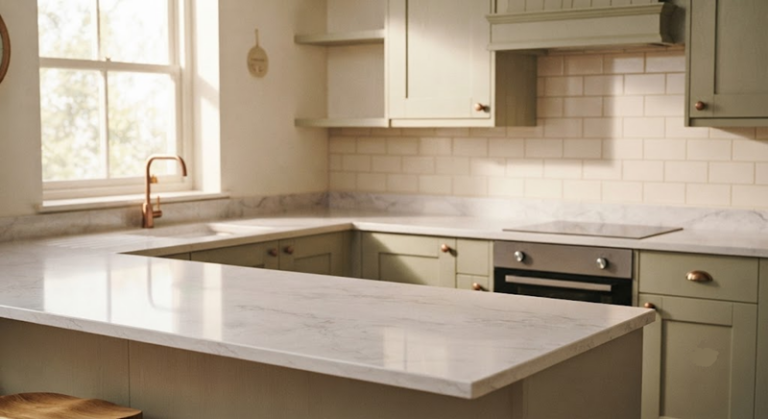
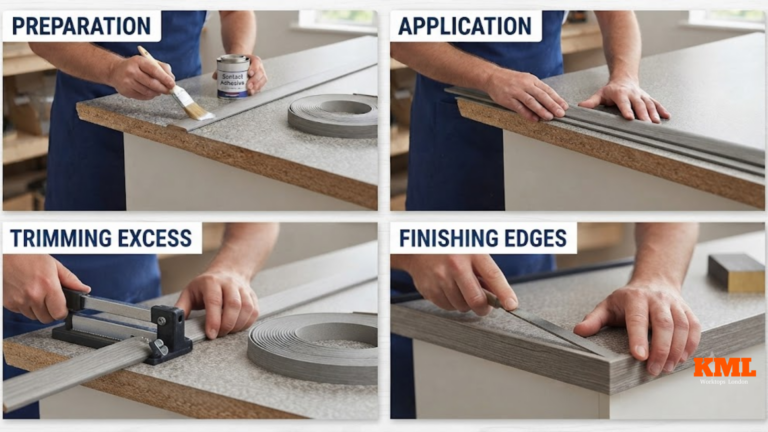
Key Takeaways
- Selecting the right kitchen worktop involves balancing style, colour, durability, maintenance, cost, and installation complexity.
- Quartz worktops offer a tough, non-porous surface that resists stains and bacteria without requiring any sealing.
- Granite provides exceptional hardness and heat resistance, though it needs periodic sealing to remain stain-resistant.
- Dekton surfaces are ultra-compact and virtually bulletproof, offering heatproof, scratch-resistant, and UV-resistant qualities with zero sealing needed.
- Choosing a worktop should be based on your cooking habits, preference for natural variations, and willingness to handle maintenance.
Selecting your worktop is one of the most important choices you will make. Food preparation, family conversations, morning coffee spills, and more all take place there.
However, choosing the best kitchen worktop can be overwhelming due to the wide variety of options available.
We’ve broken it down, so don’t worry.
We’ll go over the most common types of kitchen work surfaces in the UK in this guide, along with how they all function, look, and suit various price ranges and lifestyles.
You’ll know exactly which material meets your needs by the end.
Why Your Worktop Material Matters
More than just a surface, your worktop shows the style of your kitchen and must withstand frequent use.
The best choice balances:
- Style and colour
- Durability and maintenance
- Cost and installation complexity
Each material has its own personality — some say “luxury statement,” others shout “family-friendly and practical.” Let’s explore what’s out there.
Worktop Material Types
Choosing the right worktop for your kitchen is a big deal, as the material you select shapes the overall vibe and functionality of the area. From elegant natural stones to innovative engineered surfaces, every worktop type has its own set of advantages, quirks, and style. Join me as we explore the most sought-after kitchen worktops in the UK, highlighting what makes each one special — including their price points, performance, and ideal settings.
1. Quartz Worktops
A blend of around 90–95 % natural quartz crystals mixed with resin and pigments. The result: a tough, non-porous surface that looks like stone but is far easier to live with.
Pros & cons
✅ Pros
- Non-porous — resists stains and bacteria.
- Wide range of colours and patterns, including marble-effect designs.
- Strong, durable, and low maintenance.
- Doesn’t require sealing.
❌ Cons
- Can discolour if exposed to direct UV for long periods (not ideal for outdoors).
- Can chip under extreme impact.
- Heat resistance is good, but trivets are still recommended.
Cost in the UK
Typically £450 – £1,200 per m² fitted, depending on brand and style.
Maintenance / Care
Zero sealing needed. A quick wipe with warm, soapy water is enough.
Best for
Busy kitchens that want a luxurious finish without high maintenance.
2. Granite Worktops
Granite is a natural igneous rock cut and polished for your kitchen. The minerals inside create unique speckles and patterns, so no two worktops are ever identical.
Pros & cons
✅ Pros
- Exceptionally hard and heat-resistant.
- Natural beauty with unique veining and colours.
- Adds real value to your kitchen.
❌ Cons
- Needs periodic sealing to stay stain-resistant.
- Can chip on corners if struck hard.
- Limited consistency — patterns vary from slab to slab.
Cost in the UK
Around £400 – £1,000 per m² installed.
Maintenance / Care
Seal periodically; wipe spills quickly to keep the polish looking its best.
Best for
Classic or traditional kitchens where natural variation adds character.

3. Marble Worktops
The showstopper of all worktops — smooth, cool, and effortlessly stylish. It is a metamorphic stone formed from limestone over millions of years. Each Marble slab has unique veining and tone.
Pros & cons
✅ Pros
- Elegant, high-end aesthetic.
- Cool to the touch — great for baking and pastry work.
- Naturally luminous and sophisticated.
❌ Cons
- Porous — stains and etches easily.
- Requires sealing and gentle care.
- More fragile than granite or quartz.
Cost in the UK
Typically £500 – £1,200 per m², depending on the marble type.
Maintenance / Care
Seal every 6–12 months; use pH-neutral cleaners only.
Best for
Statement islands or feature areas where beauty outweighs rough-and-tumble durability.
4. Quartzite Worktops
It is a natural metamorphic stone formed when sandstone fuses under intense heat and pressure. Quartzite worktops give you the elegance of marble with the toughness of granite. Mostly pure quartz — that’s why it sparkles.
Pros & cons
✅ Pros
- Harder and more durable than marble.
- Resistant to heat, UV, and scratches.
- Natural veining with a shimmering, elegant look.
❌ Cons
- Slightly porous — needs sealing.
- Fewer colour options.
- Higher cost due to quarrying difficulty
Cost in the UK
About £550 – £1,200 per m² fitted.
Maintenance / Care
Seal every 1–2 years. Clean with mild detergent and water.
Best for
High-end kitchens that want natural stone beauty without marble’s fragility.
4. Quartzite Worktops
It is a translucent natural stone formed from layered calcite. Onyx Worktops swirling bands of colour look incredible — especially when backlit.
Pros & cons
✅ Pros
- Striking, one-of-a-kind visual appeal.
- Can be illuminated from behind for a “glow effect.”
- Adds luxury and drama to interiors.
❌ Cons
- Very soft and delicate.
- Prone to scratching and etching.
- Requires frequent sealing and gentle care.
Cost in the UK
Usually £700 – £1,800 per m², depending on translucency.
Maintenance / Care
Seal every 6–12 months. Clean gently — no acids or abrasives.
Best for
Breakfast bars, wall cladding, or display areas where you want to impress.

6. Dekton Worktops
Modern, tough, and virtually bulletproof — Dekton is for people who want zero fuss. An ultra-compact surface created by fusing quartz, porcelain, and glass under extreme heat. It’s man-made perfection.
Pros & cons
✅ Pros
- Heatproof, scratch-resistant, UV-resistant.
- Never needs sealing.
- Available in huge slabs with minimal joins.
- Mimics natural stone beautifully.
❌ Cons
- High cost.
- Can chip at edges if not handled carefully.
- Requires professional cutting and fitting.
Cost in the UK
Around £600 – £1,400 per m².
Maintenance / Care
No sealing. Wipe with warm water — that’s it.
Best for
Modern or outdoor kitchens where durability is everything.
7. Limestone Worktops
A sedimentary stone made from ancient marine fossils. Warm and tactile with subtle patterning. Limestone Worktops are best option for those who love a soft, natural, lived-in look, limestone is charmingly rustic.
Pros & cons
✅ Pros
- Organic texture and timeless appearance.
- Cool surface ideal for baking.
- Naturally beautiful and affordable for stone.
❌ Cons
- Porous — needs sealing.
- Can scratch or etch with acids.
- Sensitive to spills.
Cost in the UK
Typically £300 – £700 per m², making it an affordable natural stone option.
Maintenance / Care
Seal every 6–12 months; avoid acidic cleaners.
Best for
Country-style kitchens or bakeries where a slightly weathered patina adds charm.
Quick Comparing Cost, Longevity & Maintenance
| Worktop Material | Durability | Average Cost (per m², UK) | Expected Lifespan | Maintenance Level |
| Quartz | ★★★★★ | £450 – £1,200 | 20+ years | Very low – just wipe clean |
| Granite | ★★★★☆ | £400 – £1,000 | 20+ years | Moderate – wipe & reseal occasionally |
| Marble | ★★★☆☆ | £500 – £1,200 | 15–20 years | High – gentle care, reseal often |
| Quartzite | ★★★★★ | £550 – £1,200 | 20+ years | Low – mild cleaner & sealing |
| Onyx | ★★☆☆☆ | £700 – £1,800 | 10–15 years | Very high – delicate cleaning |
| Dekton | ★★★★★ | £600 – £1,400 | 25+ years | Minimal – wipe clean only |
| Limestone | ★★★☆☆ | £300 – £700 | 10–20 years | Moderate – oil & reseal regularly |
How to Choose the Right Worktop Type for You
Ask yourself a few quick questions:
- Do you cook a lot? Choose quartz or Dekton for durability.
- Do you love natural variation? Granite or quartzite will make you smile every day.
- Prefer low maintenance? Avoid marble or onyx.
- After a warm, classic feel? Limestone or timber pairs beautifully with shaker kitchens.
There’s no single “best” option — only what fits your space, habits, and taste.
Final Thoughts: Finding Your Perfect Worktop
Each material has its strengths. Some offer timeless beauty, while others offer practical ease.
The secret is striking a balance between the style that makes your kitchen feel like home and the amount of upkeep you are willing to do.
In order to avoid unpleasant surprises later, KML Worktops assists homeowners in the UK in comparing various kitchen worktop types side by side, matching them to your lifestyle, and providing clear quotes.👉 Request your free quote today and find out which worktop type best suits your budget and your ideal kitchen
FAQs
Q1. What is the most durable kitchen worktop material?
Granite and quartz are among the most durable options, offering excellent resistance to heat, scratches, and stains.
Q2. Which kitchen worktop requires the least maintenance?
Quartz worktops are low maintenance due to their non-porous surface that resists stains and doesn’t require sealing.
Q3. Can I install laminate worktops myself?
Yes, laminate worktops are relatively lightweight and easy to install, making them suitable for DIY projects.
Q4. How often should wooden worktops be oiled?
Wooden worktops should be oiled every few months to maintain moisture balance and prevent cracking.
Q5. Are glass worktops safe for busy kitchens?
Glass worktops look stunning but can be fragile and prone to scratches, so they may not be ideal for high-traffic kitchens.
Q4. What are the most durable types of worktops?
Quartz, quartzite, and Dekton are the most durable worktop types. They resist heat, scratches, and stains effortlessly, making them perfect for busy kitchens that need long-lasting, low-maintenance surfaces.