Key Takeaways
- Resin worktops offer a completely customisable, non-porous, and seamless surface with virtually unlimited colour and design options.
- They include various types such as bespoke epoxy, solid surface acrylics, phenolic resin, and resin-filled wood worktops.
- Key disadvantages include limited heat resistance, requiring the mandatory use of trivets to prevent permanent damage.
- Bespoke epoxy resin worktops in the UK typically range from £450 to £700 per square metre.
- Unlike natural stone, resin worktops can be repaired, recoated, and sometimes applied directly over existing surfaces to extend their lifespan.
Everything UK homeowners need to know before choosing a resin worktop, from epoxy resin kitchen worktop prices to how it stacks up against granite, quartz, and marble. Written by our worktop specialists.
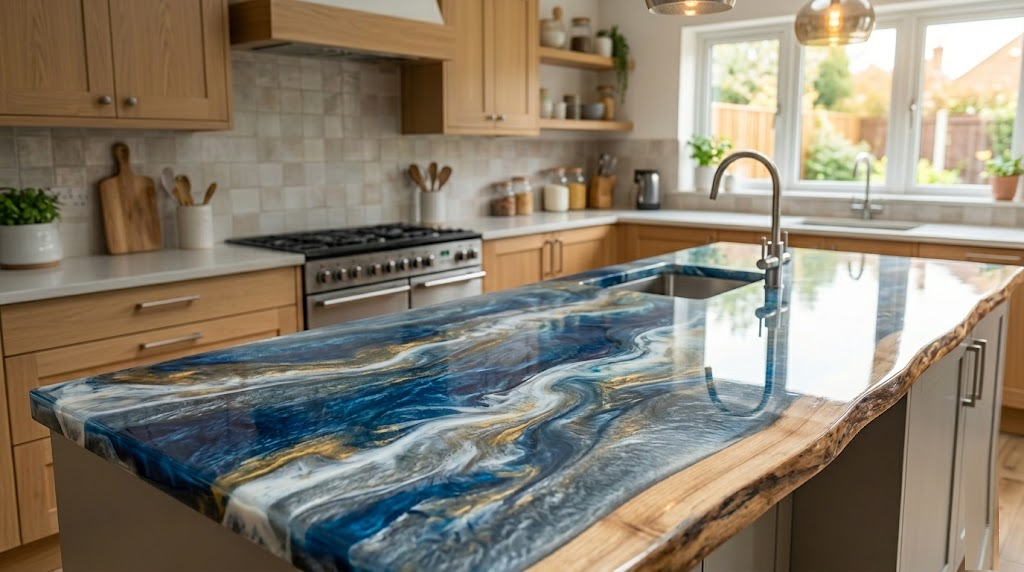
Walk through enough kitchen showrooms in the UK, and you start to see a pattern such as granite, quartz, a bit of laminate, and if you’re lucky, the occasional slab of marble. What you rarely see is a worktop that looks like someone poured a dark ocean into it, or one that shimmers with copper veins running through jet-black resin. Those are resin worktops, and they’re becoming increasingly hard to ignore.
| £450+Per m² for bespoke epoxy (UK) | 20+Year lifespan with good care | 4 daysTypical on-site installation | 100%Customisable, no two are the same |
What Is a Resin Worktop?
A resin worktop, often called a resin countertop or simply a resin top, is a work surface made primarily from synthetic polymer resins, most commonly epoxy. The resin is mixed with a hardener, and depending on the design, a range of pigments, metallic powders, natural elements, and fillers. Once poured and cured, the result is a solid, non-porous slab of extraordinary visual depth.
The term ‘resin worktop’ is often used as shorthand for ‘epoxy resin worktop,’ but the category is actually broader. Solid surface acrylics, phenolic resin panels, and polyurethane resin all fall under the same roof, each with slightly different performance characteristics and price points. What follows covers the full picture.
| Worth knowing: Many UK resin specialists can apply epoxy as a coating directly over your existing worktop surface, Formica, tiles, MDF, or old laminate, eliminating the cost and disruption of ripping out old surfaces. Most jobs can be completed within four days, working from home. |
Types of Resin Worktops
Resin kitchen worktops aren’t a single product, they’re a family of related materials with different personalities. Here’s how they break down.
1. Epoxy Resin Worktops
Epoxy is the most popular choice for homeowners who want something genuinely unique. It’s also the most expensive option when done professionally. When finished with a food-safe, scratch-resistant top coat, it’s perfectly suitable for kitchen use. Some suppliers go further, offering antibacterial additives built into the resin itself.
2. Solid Surface Resin Worktops
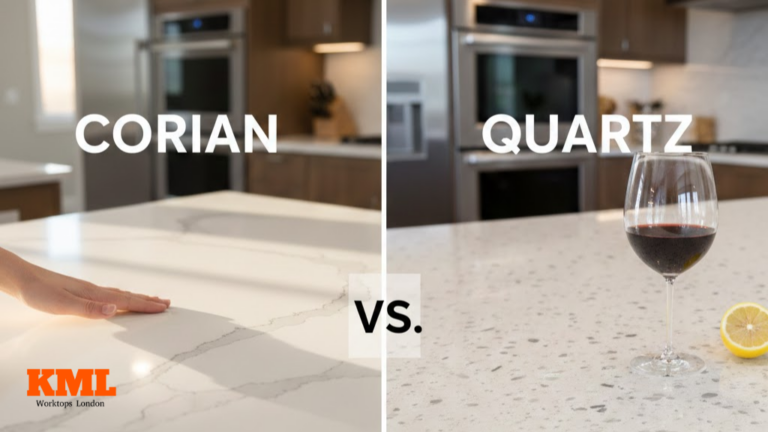
These are the engineered, factory-made cousins of bespoke epoxy. Solid surface worktops blend acrylic resin with natural mineral fillers to create a consistent, smooth surface. Brands like Corian sit in this category.
Solid surface resin worktops have their own practical advantages: surface scratches can often be sanded out entirely because the colour runs through the full depth of the material. They’re less dramatic-looking than epoxy but arguably more forgiving in everyday use.
3. Phenolic Resin Worktops
The utilitarian member of the family. Phenolic resin is made from layers of kraft paper saturated with resin and pressed under high heat. You’ll find it in laboratories, school workshops, and commercial catering kitchens, environments where chemical resistance and impact toughness matter more than aesthetics.
4. Resin-Filled Wood Worktops
A hybrid that’s become genuinely fashionable over the past few years. Here, a traditional solid wood slab, usually oak, has its natural knots, splits, and cracks filled with poured epoxy resin.
Resin Worktops: Pros and Cons
There’s no such thing as a perfect worktop material. Every surface asks you to prioritise some things and compromise on others. Here is an honest account of what resin does well, and where you’ll need to manage expectations.
| Advantages | Disadvantages |
|---|---|
| Virtually unlimited colour and design options | Limited heat resistance, trivets are non-negotiable |
| Completely non-porous, won’t harbour bacteria | Can yellow with prolonged UV exposure (use UV formulas) |
| Seamless finish with no grout lines or visible joins | Bespoke installs are expensive, from £450/m² |
| Can be applied over existing worktops | DIY results are rarely acceptable quality |
| Food-safe when professionally sealed | Longer lead time than standard slab worktops |
| Antibacterial protection available on request | Alcohol-based cleaners can damage the surface |
| Highly durable and scratch-resistant when sealed | Requires a skilled craftsperson, quality varies |
| Works in kitchens, bathrooms, bar tops, and tables | Abrasive cleaning products dull the finish |
| Can be repaired and recoated if damaged over time | Not ideal for very high-heat commercial-style kitchens |
| Bespoke designs available nowhere else on the market | Curing time means kitchen is out of use during install |
| Heat warning: This is the single most important limitation to understand before committing to a resin worktop. You must always use a trivet or heat mat. A hot pan placed directly on an epoxy resin worktop can cause permanent discolouration, surface softening, or cracking. This isn’t a quirk of cheap resin, it applies even to the finest bespoke installations. |
Epoxy Resin Worktop Prices in the UK
Pricing is one of the first questions people ask, and the answer is: it depends enormously on what type of resin product you choose. Bespoke epoxy and off-the-shelf solid surface sit at very different points on the cost spectrum. Here’s a clear breakdown.
| Worktop Type | Cost/m² | Typical 3.6m² Kitchen | Notes |
|---|---|---|---|
| Solid surface resin (trade) | £120–£250/m² | £430–£900 | Factory-made, consistent finish |
| Epoxy resin overlay (over existing) | £250–£400/m² | £900–£1,440 | Applied over existing worktop |
| Bespoke epoxy resin worktop | £450–£700/m² | £1,620–£2,520 | Fully custom, BEST CHOICE |
| Resin-filled oak worktop | £350–£600/m² | £1,260–£2,160 | Wood + resin hybrid |
| Phenolic resin worktop | £150–£280/m² | £540–£1,008 | Commercial-grade, utility spaces |
| DIY epoxy resin kit | £50–£120 (kit) | Variable | Not recommended for kitchen use |
For context: a standard kitchen worktop measuring 6 metres long by 60 cm deep works out to 3.6 m². At bespoke epoxy resin pricing starting from £450 per m², that puts the base figure at around £1,620, rising to £2,500 or more for complex multi-layered designs with premium finishes.
What Drives the Price Up?
Several factors push epoxy resin worktop costs higher: the complexity and number of poured layers in the design; the need for new substrate material; the installer’s travel and accommodation costs; curved or irregular kitchen runs; and any specification upgrades such as UV-resistant finishes or antibacterial coatings.
| A note on DIY kits: Epoxy resin kits for kitchen worktops are widely available online for £50–£120. The results, however, rarely match what’s achievable by an experienced professional. Achieving a level, bubble-free, glass-like finish requires controlled temperature, skilled pouring, and multiple cured layers. For worktops specifically, professional installation is strongly recommended. |
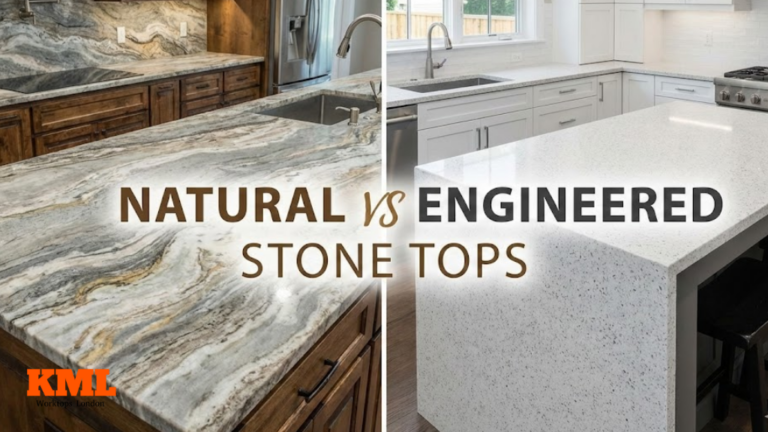
Resin Worktops vs Natural Stone: How Do They Compare?
The most common question asked by UK buyers is, and rightfully so. Here’s how resin stacks up against the three natural and engineered stone options it most frequently competes with: granite, quartz, and marble.
| Criteria | Resin/Epoxy | Granite | Quartz | Marble |
|---|---|---|---|---|
| Heat resistance | Low | Excellent | Medium | Medium |
| Scratch resistance | Medium | Excellent | Excellent | Medium |
| Stain resistance | Excellent | Good* | Excellent | Low |
| Design flexibility | Infinite | Limited | Good | Limited |
| Hygiene (non-porous) | Excellent | Needs seal | Excellent | Needs seal |
| Repairability | Good | Difficult | Difficult | Difficult |
| Cost per m² (UK) | £450–£700 | £300–£650 | £300–£700 | £400–£900 |
Granite requires periodic sealing to maintain its stain resistance. Without sealing, its porous surface can absorb oils, red wine, and acidic liquids.
How to Care for a Resin Worktop
One of resin’s genuine selling points, beyond the looks, is how uncomplicated daily maintenance actually is. There’s no sealing routine, no specialist cleaning products required, and no annual treatments to remember.
- Wipe clean with warm water and a soft cloth. A damp cloth or a small amount of mild washing-up liquid is all you need for daily cleaning. The non-porous surface means food residue and bacteria simply cannot penetrate, everything sits on top and wipes away.
- Avoid alcohol and spirit-based cleaners. Products containing alcohol, bleach, or acetone can gradually break down the resin’s protective top coat. Stick to pH-neutral cleaners for anything beyond a basic wipe-down.
- Always use trivets for hot items. Keep a trivet permanently positioned near the hob. Even a brief moment of contact with a hot pan can cause permanent whitening or surface softening.
- Use a chopping board. Quality resin worktops come with a scratch-resistant top coat, but cutting directly on the surface will eventually dull the finish and void your warranty.
- Consider periodic recoating. A professional top coat reapplication every several years restores the glass-like finish and significantly extends the worktop’s life. This option doesn’t exist with granite or quartz, it’s a genuine advantage of the resin format.
Who Is a Resin Worktop Best Suited To?
Resin kitchen worktops suit homeowners who want something genuinely individual and are willing to observe a few sensible ground rules. They’re ideal for design-forward renovations, open-plan kitchens where the worktop is a visual centrepiece, and anyone tired of choosing between identical stone slabs in a showroom.
They’re a less natural fit for households where hot pans go straight from the hob to the work surface without a second thought, or where the kitchen needs to handle the kind of constant high-heat abuse you’d find in a professional catering environment. For those use cases, granite or ceramic holds the practical edge.
Conclusion
If you are the kind of homeowner who opens a kitchen showroom catalogue and immediately thinks ‘there’s nothing here that’s actually mine’, resin is almost certainly worth exploring seriously.
A bespoke epoxy resin worktop delivers something that granite slabs and engineered quartz simply cannot: a surface that was designed for your kitchen, your colour scheme, and your aesthetic instincts. No two resin worktops are the same. That’s not a marketing line, it’s a literal truth of how the material works.
The practical trade-offs are real, but they’re manageable. Heat trivets need to become second nature. Cleaning products need to be mild. The installation requires patience and a good specialist. Get those things right, and you have a worktop that will hold its drama and its distinction for decades.
If absolute heat resistance is the priority, if your kitchen sees constant high-heat cooking and you’d rather not think about trivets, granite or ceramic will serve you better on that specific metric. But for design, for individuality, and for a kitchen that genuinely stops people in their tracks? Resin stands alone.
Frequently Asked Questions
Q1 Are resin worktops food safe?
Yes, when professionally installed and finished with an approved food-safe top coat, epoxy resin worktops are completely safe for food preparation.
Q2 How long do resin worktops last?
A well-made, properly maintained resin worktop can easily last 20 years or more. Unlike stone, resin can be recoated when the surface begins to show its age, a practical advantage that significantly extends its usable life and can restore it to a near-new finish.
Q3 Can a resin worktop be repaired if it gets damaged?
Yes, and this is one of the material’s genuine advantages. Minor scratches and surface dulling can be addressed with sanding and reapplication of the top coat. More significant damage, deep chips, heat marks, or surface cracks, may require a specialist repair, but unlike granite or quartz, the surface can be worked and refinished rather than replaced.
Q4 Can resin be applied over existing worktops?
In most cases, yes. An experienced resin craftsperson can apply epoxy over existing Formica, tiles, MDF, concrete, or plywood, eliminating the cost and mess of removing old surfaces.
Q5 Do resin worktops scratch easily?
Not easily, when properly sealed. A quality top coat provides good scratch resistance for everyday kitchen use. The advice is the same as with any fine surface: use a chopping board and avoid abrasive cleaning pads.