Key Takeaways
- Black kitchen worktops are timeless, confident, and work well with almost any cabinet color or kitchen style.
- Common material options include black granite, quartz, natural marble, and stone-effect laminates, each with distinct costs, maintenance levels, and durability.
- Design combinations like white cabinets, dark cabinetry, or warm natural wood tones create striking visual contrasts when paired with black surfaces.
- Worktop finishes heavily impact maintenance, with matte and leathered black finishes hiding fingerprints and watermarks much better than glossy options.
- Practical factors such as thickness, edge profiles, lighting, and obtaining physical samples are crucial before committing to a purchase.
There’s something about a black kitchen worktop that just looks right. It’s confident without trying too hard, it works with almost any cabinet colour, and it ages well, both in style and in use. Whether you’re doing a full kitchen renovation or simply replacing tired surfaces, a black worktop is one of those decisions that rarely disappoints.
But once you start looking at options, the choices can feel a bit overwhelming. Granite, quartz, laminate, marble-effect finishes, each one behaves differently, costs differently, and suits different kitchens. This guide is here to cut through the noise and give you something genuinely useful: honest comparisons, practical advice, and the kind of detail that helps you feel sure before you buy.
What Types of Black Worktops Are Available?
If you search ‘black worktop kitchen ideas’ online, you’ll get thousands of results, and there’s a reason for that. Black surfaces have been popular in kitchen design for years now, and that popularity shows no sign of slipping. A white kitchen with a black worktop creates a look that’s both classic and striking, like a fresh canvas with a bold frame. But black also holds its own against dark cabinetry, wood tones, sage greens, and navy blues. It doesn’t fight for attention; it lets everything else breathe.
Black Granite Worktop
Granite is the original choice for anyone who wants a worktop that feels genuinely luxurious. A black granite kitchen worktop is cut from natural stone, which means every slab is slightly different, you’ll see subtle variations in texture, mineral flecks, and movement that you simply can’t replicate in a man-made material.
The most popular varieties for black granite include Absolute Black (jet black, very little movement), Black Galaxy (dark with gold and silver mineral specks), and Indian Black (which can have grey undertones and slight veining). Each one reads slightly differently in natural and artificial light, so it’s worth seeing samples in person before you commit.
Cost: Mid-to-high end. Expect to pay more than laminate but typically less than engineered quartz, depending on the granite variety and slab thickness.
Best for: Busy family kitchens, cooks who use heat frequently, and anyone who wants the genuine look and feel of natural stone.
Black quartz is an engineered stone, made from around 90–95% crushed natural quartz bound with resin. Because it’s manufactured rather than quarried, it offers something granite can’t: complete consistency. If you want a totally uniform, deep black surface with no variation, black quartz is the answer.
It also tends to be slightly easier to live with than granite on a day-to-day basis. Quartz is non-porous, which means it doesn’t need sealing and is naturally resistant to staining from wine, oil, coffee, and other kitchen staples.
Durability: Quartz is very hard and resistant to chips and scratches. The resin content does, however, mean it’s less heat-tolerant, always use a trivet or heat pad when placing hot pans down.
Cost: Typically mid-to-high end, with premium brands (like Silestone or Caesarstone) sitting at the higher end of the market.
Best for: People who want a sleek, modern look, a low-maintenance surface, and consistency across the entire worktop area.
Black Marble Worktop
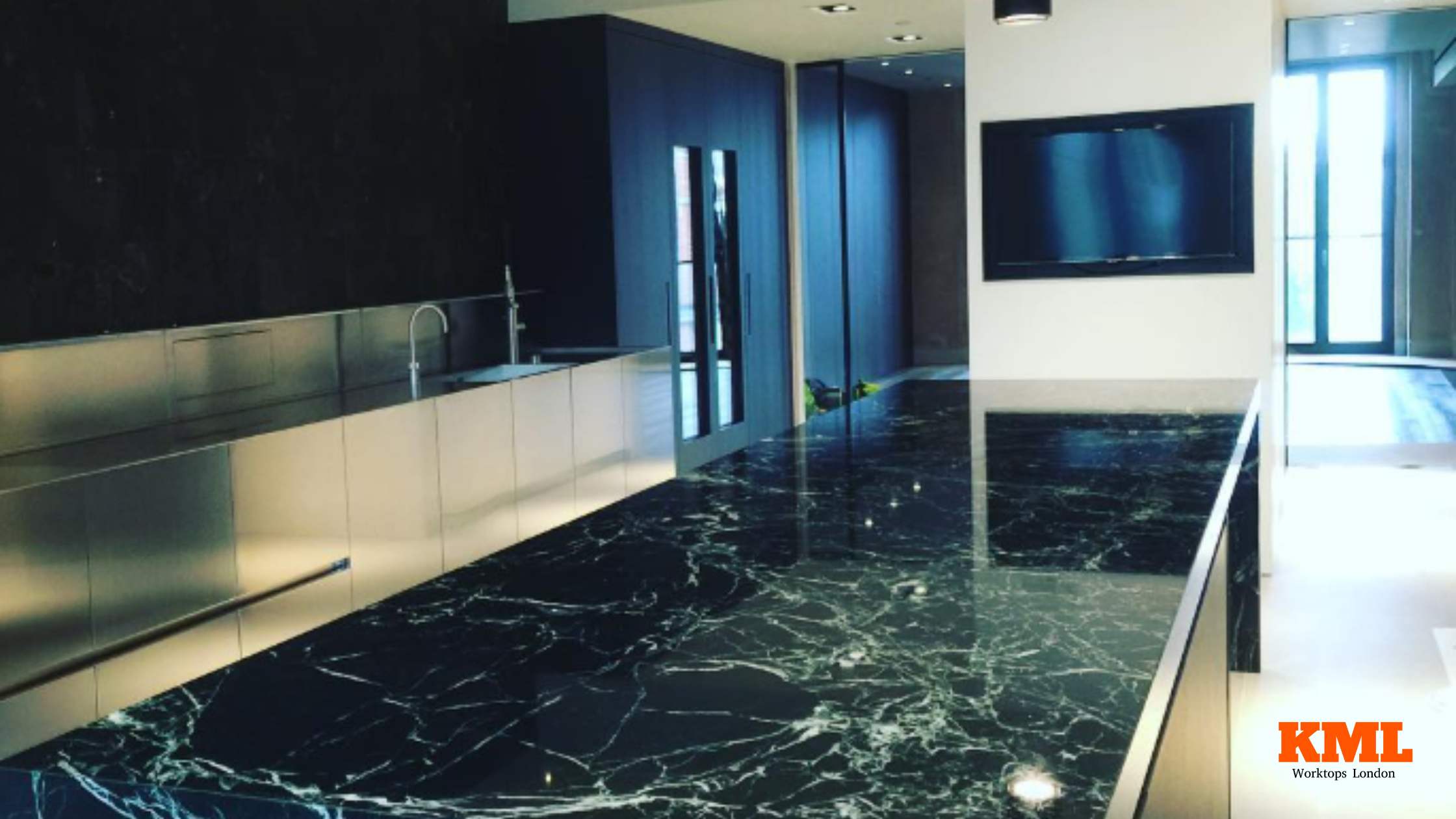
True black marble, think Nero Marquina with its distinctive white veining, is arguably the most visually dramatic of all black worktop options. It’s the kind of surface that stops people in their tracks. The deep black background with contrasting white or gold veins is unlike anything else.
But, and this is important, a marble worktop is a high-maintenance material, and it requires commitment from the person using it. It’s softer than granite or quartz, more prone to etching from acids (citrus juice, vinegar, wine), and needs regular sealing.
Durability: Less durable than granite or quartz. Prone to scratching, etching, and staining if not properly maintained.
Cost: High. Natural marble is expensive to source and install.
Best for: Design-conscious homeowners who appreciate natural stone, are willing to maintain it properly, or are using it in a less-intensive area of the kitchen, such as an island or a bar section.
Marble-Effect and Stone-Effect Alternatives
If you love the look of black marble but not the maintenance demands, the good news is that quartz and laminate manufacturers have both gotten very good at replicating marble’s visual qualities. Black quartz with white veining can be genuinely convincing, and it offers all the low-maintenance benefits of engineered stone. Similarly, a high-end black marble-effect laminate can deliver the aesthetic at a fraction of the cost.
It’s worth being honest with yourself here: if the look matters most and your budget is tight, an effective option gives you the visual result without the upkeep anxiety.
Design Ideas For Black Worktops
One of the most common questions when choosing a black worktop is: what will it actually look like in my kitchen? Here are some of the combinations that work particularly well.
White Kitchen, Black Worktop
This is the combination people keep coming back to, and for good reason. A white kitchen with a black worktop is timeless, it has the visual clarity of a classic monochrome scheme without feeling stark. The worktop grounds the kitchen, gives it definition, and provides a strong contrast that makes both elements pop. If you’re doing white shaker cabinets, a polished or matte black quartz or granite is a natural choice.
Dark Cabinets with a Black Worktop
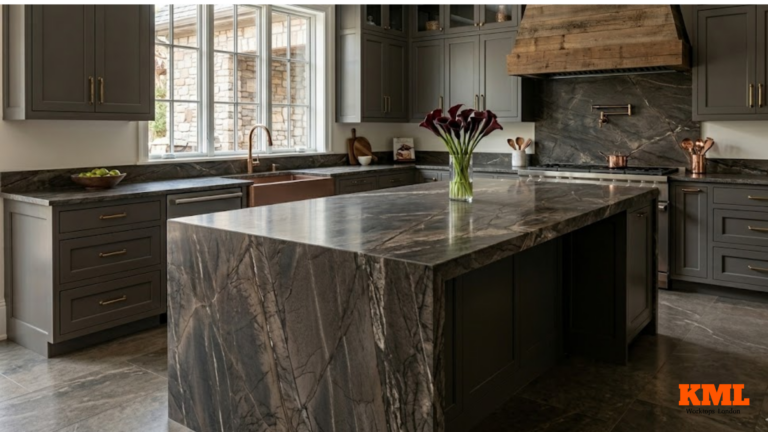
Going all-dark sounds risky, but when it’s done well, it’s stunning. The key is to break it up, with lighter flooring, open shelving, or metallic hardware. A black galaxy granite or textured black quartz adds visual interest without fighting the cabinets. Good lighting is essential here; under-cabinet LEDs make a significant difference.
Wood and Black, Warm Contrast
Natural wood tones, oak, walnut, and ash, sit beautifully alongside black worktops. The warmth of the wood prevents the black from feeling cold, and the combination has a contemporary but lived-in quality. This works particularly well in open-plan kitchens where the space needs to feel welcoming as well as stylish.
Coloured Cabinets with Black Worktops
Sage green, navy, dusty pink, forest green, all of these cabinet colours work with a black worktop. The black acts as a grounding neutral, meaning you can be fairly bold with your cabinet colour without the kitchen looking chaotic. If you’re going coloured, a matt black worktop tends to work better than high gloss, which can compete for attention.
Which Black Worktop Finish Is Best?
This is one of the most practical decisions you’ll make, and it’s worth thinking through carefully.
Gloss black: Reflective and dramatic. Looks incredible in photography and in showrooms. In use, it shows fingerprints, watermarks, and every smear, so you’ll be wiping it down frequently. Best in a kitchen where aesthetics are a priority and daily maintenance isn’t a concern.
Matt black kitchen worktops: Have a more subtle, velvety quality. They don’t reflect light, which means they don’t show marks anywhere near as readily. More forgiving in daily use, and currently very popular in contemporary and Scandi-influenced kitchen designs. Worth noting that some matt finishes can be slightly harder to clean if something really sticks, you lose the slip of a polished surface.
Leathered/brushed: A textured finish that sits between the two. More tactile than polished stone, it hides fingerprints well and adds a sense of depth and character. Increasingly popular in premium kitchen designs.
In terms of trends right now, matt black worktops are leading the way. They suit the understated, quality-focused aesthetic that a lot of modern kitchens are going for, less flashy, more considered.
What Should You Look for Before Buying a Black Worktop?
Beyond material type, there are a few practical things worth checking before you buy.
Thickness
Most stone worktops come in 20mm or 30mm thicknesses. 20mm is perfectly functional; 30mm has a more substantial, premium feel and suits kitchens where the worktop edge is a visible design feature. For laminate, 38mm or 40mm is standard, the chipboard core makes up most of the depth.
Edge Profile
The edge of your worktop affects both look and safety. Options include square/pencil round (clean and modern), half bullnose (gently rounded), full bullnose (fully rounded), and chamfered (bevelled edge). For families with young children, avoiding sharp square edges is worth considering. For a contemporary look, a square or waterfall edge is very popular right now.
Slab vs. Joined Sections
If possible, having fewer joins in your worktop is always preferable, particularly with stone, where joins can be visible and can accumulate grime over time. Discuss with your installer how to minimise joins, especially around hobs and sinks.
Upstands and Splashbacks
Think about what will sit above your worktop, particularly behind the hob. A matching black upstand or full-height splashback in the same material creates a seamless, high-end look. Contrasting materials, white metro tiles, brushed steel, or mirrored glass, can also work well and add visual texture.
Underlighting
A dark worktop benefits enormously from good under-cabinet lighting. It prevents the surface from feeling heavy and makes the kitchen more practical to work in. If you’re planning LED strips under your upper cabinets, factor this into your kitchen design from the start.
Samples Before You Commit
This is non-negotiable. Always get free samples. Black looks very different depending on the light in your kitchen, what appears almost charcoal in a north-facing room might look quite different in a bright south-facing space. Hold samples next to your cabinet doors, floor tiles, and any other fixed elements. View them in daylight and under your kitchen lighting. Don’t skip this step.
How Do You Clean and Maintain a Black Worktop?
The right maintenance routine will keep any black worktop looking its best for years. Here’s a quick summary by material:
- Granite: Seal on installation, reseal annually. Use pH-neutral stone cleaner. Avoid acidic products. Always use heat protection.
- Quartz: No sealing needed. Wipe with warm, soapy water. Use trivets for hot pans. Avoid abrasive pads or harsh chemicals.
- Laminate: Wipe clean with a damp cloth. Keep water away from seams and edges. Don’t drag rough or sharp items across the surface.
- Marble: Seal regularly (every 6–12 months). Clean immediately after spills. Use only marble-specific cleaners. Protect from acidic food and drink.
For any black surface, a microfibre cloth is your best friend, it lifts residue without scratching, and it won’t leave lint behind.
Final Thoughts
A black kitchen worktop is one of those design choices that tends to get better over time. Unlike trends that date quickly, black surfaces have a staying power that means your kitchen is unlikely to look tired five or ten years from now.
The key is matching the material to how you actually use your kitchen. A serious home cook who’s constantly moving hot pans around needs different things from their worktop than someone who uses their kitchen primarily for light meals and entertaining. Think about your habits honestly, factor in your maintenance appetite, and choose accordingly.
Get samples, see them in your space, and take the time to compare finishes side by side. That extra effort at the beginning pays off every time you walk into your kitchen.
Frequently Asked Questions
Q1 Are black worktops hard to keep clean?
It depends on the finish. Gloss surfaces show fingerprints and watermarks more than matte ones. In general, black is no harder to clean than any other colour, and it hides minor mess better than white or cream.
Q2 Will a black worktop make my kitchen look smaller?
Not necessarily. Dark surfaces can make a small kitchen feel more enclosed, but good lighting and the right cabinet colour can more than compensate. If you’re worried, a matte finish is less likely to feel oppressive than a highly reflective gloss.
Q3 Which is better, granite or quartz for a black worktop?
Both are excellent choices. Granite gives you natural variation and superior heat resistance; quartz gives you consistency, no-fuss maintenance, and a non-porous surface. If you cook a lot and often rest hot pans on the surface, granite has a slight edge. If low maintenance is your priority, quartz wins.
Q4 Can I have a black worktop on a tight budget?
Yes, laminate is a strong option at a much lower price point. Modern black laminate worktops have come a long way and can look genuinely smart, especially in contemporary kitchens.