Key Takeaways
- Quartzite is a natural metamorphic rock formed from sandstone under intense heat and pressure, offering marble-like aesthetics with granite-like toughness.
- In the UK, quartzite slabs generally cost between £150 and £600 per square metre, with total installed costs varying based on thickness, edge profile, and cut-outs.
- Buyers should always inspect the full slab in person rather than relying on a small sample, checking for clear patterns, natural veining, and structural soundness.
- Because quartzite is porous, it requires annual sealing and daily maintenance using pH-neutral cleaners while avoiding harsh chemicals and acidic substances.
- Quartzite is distinct from engineered quartz, being a 100 percent natural stone available in various finishes such as polished, honed, and leathered.
Quartzite gives you marble’s looks with something close to granite’s toughness. That’s the appeal, and it’s mostly deserved. But the stone trade is loose with the word “quartzite,” and a fair number of slabs sold under that name aren’t quartzite at all. This guide walks you through buying the real thing without overpaying or getting caught out.
What is quartzite?
Quartzite is a natural metamorphic rock made almost entirely of quartz. It starts life as sandstone, then heat and pressure deep underground fuse the grains into something dense, hard and incredibly tough. Because it forms naturally, no two slabs are identical. Each one has its own veining, which is part of the appeal.
Colours run mostly through whites, creams, greys and browns, with veins ranging from charcoal and tan to blue and gold. Now and then, you’ll find rarer pink or red slabs, where iron oxide has worked its way into the stone. Quartzite worktop is porous, so whatever you choose will need sealing to keep it looking its best.
How Much Do Quartzite Worktops Cost In The UK?
As a rough guide, expect to pay somewhere between £150 and £600 per square metre for the slab itself, with fabrication and fitting added on top. Rarer colours, such as the pink, red and gold-veined varieties, sit at the higher end. Across the wider worktop market, installed natural-stone surfaces commonly land in the £350 to £600 per square metre range once fabrication, edging and cut-outs are factored in.
Your final figure depends on the slab you choose, its thickness, the edge profile, the number of cut-outs for sinks and hobs, and how straightforward your kitchen is to access. It’s always worth getting a proper quote rather than relying on a headline price.
Where Quartzite Slab Works Best?
Kitchen worktops are where quartzite truly earns its keep, but it’s far from a one-trick stone:
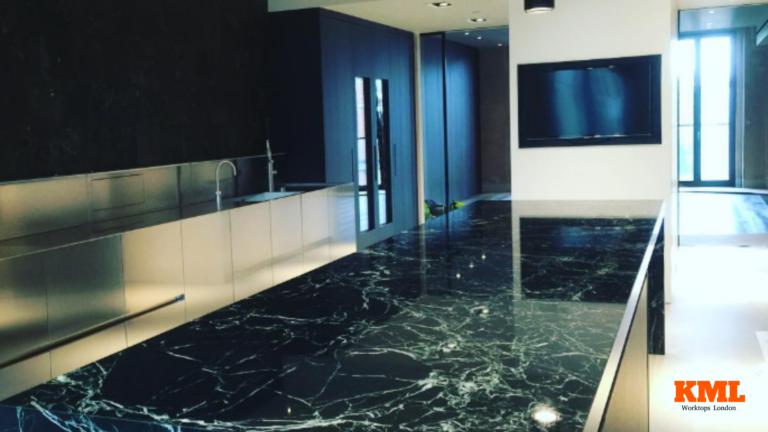
- Kitchen islands and worktops are where their strength handles daily wear with ease.
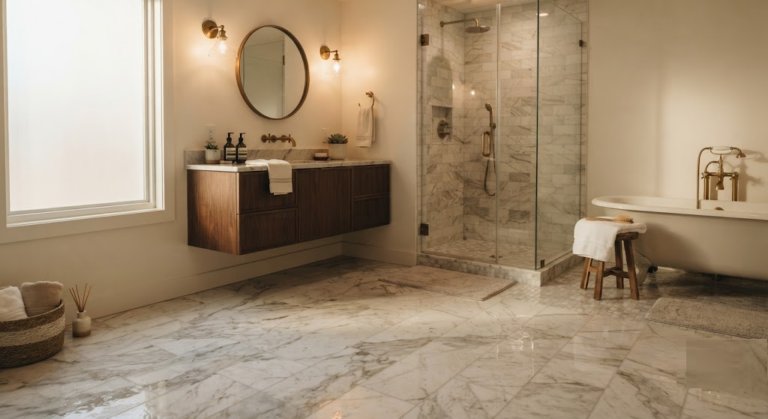
- Bathroom vanity tops bring a calm, natural finish to the room.
- Splashbacks and shower surrounds, where larger tiles create a spa-like feel.
- Hallway flooring and outdoor patio areas, adding a touch of grandeur underfoot.
How To Choose A Good-Quality Quartzite Slab?
Always view the actual slab before you commit, never just a sample chip. A small offcut can’t show you how the veining flows across a full worktop. Here’s what to look for:
- A balanced, clear pattern with no muddy or blotchy patches.
- Long veining with a natural, swirling movement rather than broken fragments.
- A smooth surface your hand glides across, free from open fissures that can trap food.
- Honest advice on whether the slab is hard or softer quartzite, so you know what you’re buying.
Caring for quartzite: dos and don’ts
Quartzite is low-maintenance compared with marble, but a few simple habits keep it looking new.
Do:
- Wipe up spills as soon as they happen.
- Clean daily with a soft cloth and a low-pH cleaner.
- Re-seal annually, paying attention to the edges and the area around the sink.
Don’t:
- Cut directly on the surface; always use a board.
- Use bleach, vinegar, or citrus-based cleaners, as they can damage the stone.
- Place hot pans straight onto it; use a trivet and pop coasters under mugs.
What to check before you buy
Verify it’s the real thing: Beyond the two tests above, ask for the material spec sheet, the stone’s origin, and water absorption and hardness figures. Reputable suppliers have this. Vague answers are a red flag.
Inspect the actual slab: Never buy off a small sample. Natural veining swings wildly slab to slab, and the offcut you saw won’t be what lands in your kitchen. Go to the yard and approve the exact slabs for your job.
Look closely under angled light: You’re checking for uneven, plasticky patches where resin has pooled. Many exotic quartzites get a factory resin treatment to fill micro-fissures, which is fine, but pooling looks bad once it’s installed.
Fissures versus cracks: Fissures are natural hairline gaps between crystals. They’re stable and harmless. Cracks are structural breaks from rough handling or transit, and they’re a problem. Run a fingernail across: a fissure sits flush, a crack catches and tends to run clean through the thickness.
Finishes
| Finish | Look | Holds up to |
| Polished | Glossy, deep colour, sharp veining | Easiest to wipe, but shows fingerprints |
| Honed | Matte, soft, modern | Hides etching and light scratches |
| Leathered | Textured, tactile | Best at hiding marks, water spots and crumbs |
For a busy family kitchen, leathered is the quiet workhorse. Polished suits anyone who wants the veining to sing.
Thickness
Two standards, plus a heavier option:
- 2 cm is lighter and cheaper, but usually needs a plywood subtop and a laminated edge to look substantial.
- 3 cm is the worktop standard. It’s stronger, handles breakfast-bar overhangs, and needs no subtop. For most UK kitchens, this is the one.
- 5 cm+ turns up only on special architectural jobs.
If you’re running an overhang of about 25–30 cm or more, ask the fabricator about bracket support, regardless of thickness.
Popular Quartzite Varieties
- Taj Mahal — warm creamy white, soft gold veining. The benchmark. Marble looks, quartzite density.
- Perla Venata — like Taj Mahal but whiter and lighter, with sandy veins.
- White Macaubas — crisp white with bold linear grey veins. Clean and contemporary.
- Sea Pearl — greys, muted greens and white. Calm and understated.
Living with it
Sealing: It’s porous, so it gets sealed at installation and roughly every one to two years after, depending on the stone. That keeps oil and water stains out.
Cleaning: pH-neutral stone cleaner, or mild washing-up liquid and warm water. No bleach, no abrasive pads, no harsh chemicals.
Heat: It can take a hot pan, but use a trivet anyway. The sealer on top is the thing you’re protecting, not the stone underneath.
Buying with confidence
Buy from a supplier who knows their stone and lets you see the full slab in person. A reputable wholesaler can match you with the right quartzite for your project, recommend a trusted fabricator if you need one, and talk you through measurements and quantities before you commit. If you already know the type and the size you need, send over your measurements and ask for a quote. If you’re still deciding, a quick conversation usually saves a lot of second-guessing.
Quartzite Frequently Asked Questions
Is quartzite the same as quartz?
No. Quartzite is a natural stone quarried from the earth; quartz is an engineered material made from ground quartz, resin and pigment.
What colours does quartzite come in?
Mostly whites, creams, greys and browns, with veining in charcoal, tan, blue or gold. Rarer slabs show pink and red tones from iron oxide.
What quartzite finishes are available?
Polished for shine and contrast, honed for a smooth matt look, and leathered for a softly textured surface with a gentle sheen.
Does quartzite need sealing?
Yes. All quartzite is porous, so seal it on installation and top it up roughly once a year, especially around the sink and edges.