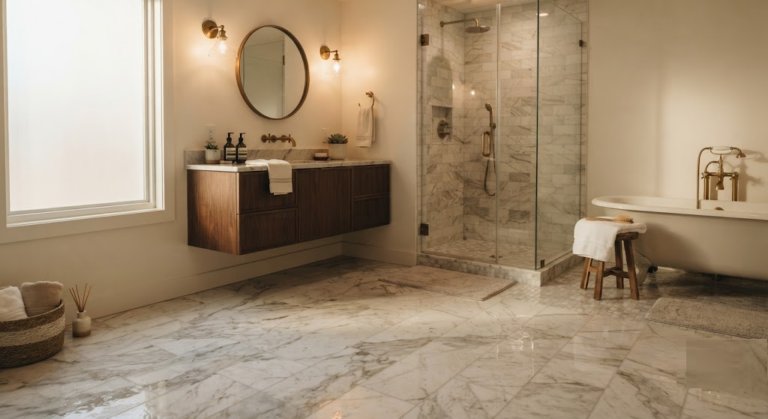
Key Takeaways
- Choosing the right bathroom worktop is crucial as it affects both daily functionality and overall aesthetics.
- Quartz is an engineered stone option that offers high durability, non-porous properties, and low maintenance.
- Granite provides unique natural veining and heat resistance, though it requires periodic sealing to remain non-porous.
- Getting bathroom worktops cut to size ensures a precise fit for complex layouts and prevents awkward gaps or overhangs.
- Water resistance, proper basin fitting methods, and suitable edge profiles are essential considerations around sink areas.
If you’ve been hunting for bathroom worktops and ended up more confused than when you started, you’re not alone. Between all the materials, finishes, sizes, and price points out there, it’s genuinely hard to know where to begin. This guide is here to walk you through everything you actually need to know, no fluff, no filler. Just the straight-talking advice you’d get from someone who’s helped hundreds of people find the right bathroom work surfaces.
Whether you’re fitting a brand-new bathroom from scratch or giving an existing space a bit of a refresh, getting your bathroom countertop right makes a bigger difference than most people expect. It’s not just about looks, it affects how your bathroom functions day to day.
A well-chosen worktop for bathroom sink areas doesn’t just look good. It holds up under daily use, is easy to keep clean, and ties the whole room together visually. A poorly chosen one chips, stains, swells, or just looks out of place within a year.
The good news? There are more great options available today than ever before, and getting a bathroom vanity top cut to size means even awkward or unusual bathroom layouts are totally manageable.
Why Your Choice of Bathroom Counter Matters More Than You Think
It’s easy to treat the bathroom counter as an afterthought, something you’ll sort once the tiles, flooring, and fixtures are in. But the surface you choose affects everything from how your bathroom looks to how much maintenance you’re signing up for.
Think about it this way: your bathroom sink worktop is one of the most touched surfaces in your home. It’s where you rest toothbrushes, set down makeup, run hot and cold water, and wipe things down with cleaning sprays multiple times a week. That’s a lot of wear for something people often choose based on aesthetics alone.
A surface that looks stunning in the showroom but warps when it gets damp or stains every time someone sets down a bottle of hair serum is going to become a source of frustration pretty fast. So before you decide anything, it’s worth understanding what each material brings to the table and where it falls short.
Which Material Is Best for Bathroom Work Surfaces?
1. Quartz Bathroom Worktops
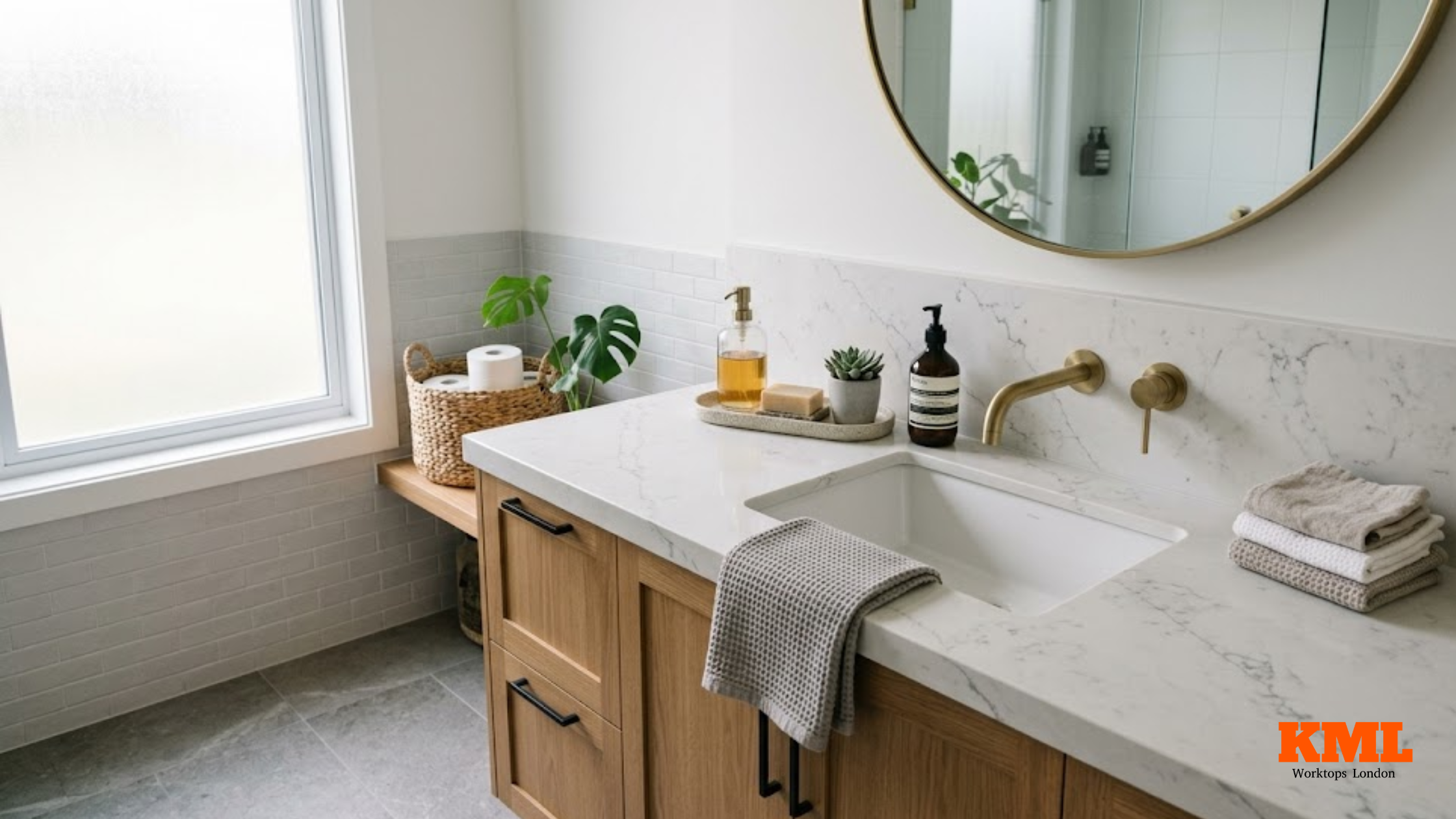
If you want something that looks premium and genuinely behaves that way too, quartz is hard to beat. It’s an engineered stone, usually around 90% natural quartz bound with resin, and it’s one of the most durable surfaces you can put in a bathroom.
Quartz worktops are non-porous, which means they won’t absorb water, won’t harbour bacteria, and won’t stain easily. They’re resistant to scratches, chips, and pretty much anything your daily bathroom routine can throw at them. The surface stays looking pristine with minimal effort, a wipe-down is usually all it needs.
The trade-off is cost. Quartz is a step up in price from laminate, and because it’s a heavy material, having it professionally fitted is generally a good idea.
| Pros | Cons |
| Non-porous, resists staining and bacteria | Higher upfront cost than other materials |
| Extremely durable and low maintenance | Heavy, usually needs professional fitting |
| Consistent patterning throughout the slab | Can be damaged by excessive heat |
| Available in a wide range of colours | Joins may be visible in larger bathrooms |
2. Granite Bathroom Countertops
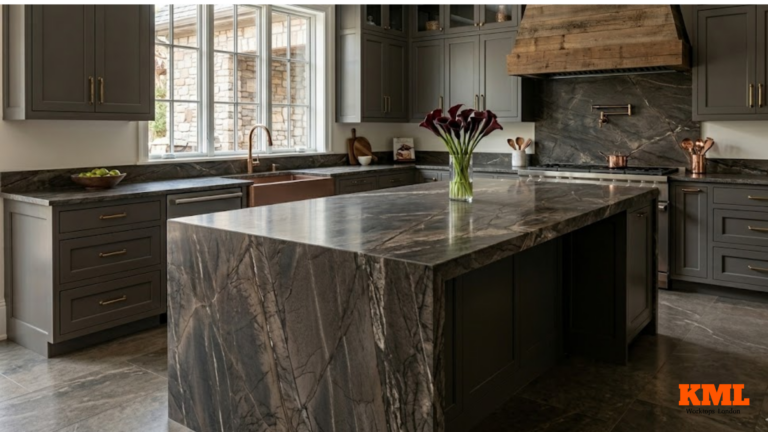
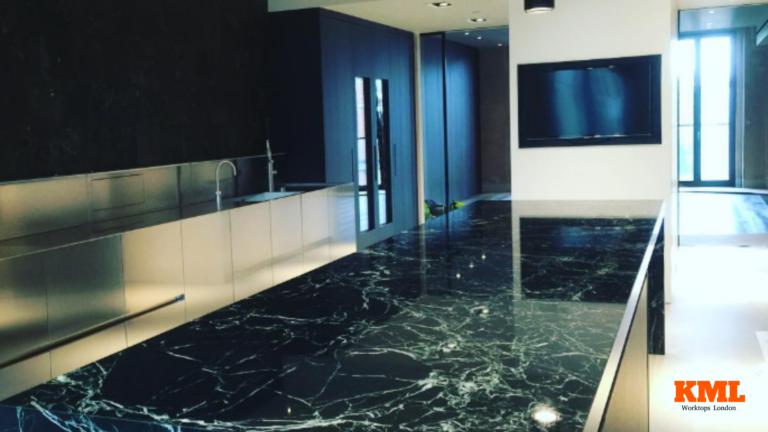
Granite is the original luxury bathroom countertop material, and it still has a lot going for it. Each slab is genuinely unique, the natural veining and flecks mean no two granite worktops are identical. If you want something that feels truly individual, granite delivers that in a way engineered stone simply can’t.
It’s extremely hard-wearing and heat resistant, though it is porous in its natural state. This means it does need to be sealed when first installed, and resealed periodically after that. Unsealed granite can absorb moisture and staining agents, so skipping this step is a false economy.
| Pros | Cons |
| Completely unique, natural veining is one-of-a-kind | Needs sealing on installation and periodically after |
| Extremely hard and scratch resistant | Very heavy and requires professional fitting |
| Heat resistant surface | Can be expensive depending on the stone |
| Adds real value to a property | Porous if not properly maintained |
3. Ceramic and Porcelain Bathroom Worktops
Tiles aren’t just for walls and floors, ceramic and porcelain are increasingly used as bathroom work surfaces too, particularly in contemporary and minimalist designs. Large-format porcelain slabs have become especially popular in recent years, offering a sleek, seamless look with excellent practical properties.
Porcelain in particular is extremely hard, non-porous, and highly resistant to staining, moisture, and UV fading. The main area of vulnerability is the grout lines in traditionally tiled surfaces, but large-format slabs largely eliminate this issue.
| Pros | Cons |
| Non-porous and highly resistant to moisture | Can crack if subjected to heavy impact |
| Comes in huge variety of designs | Grout lines on traditional tiles can harbour grime |
| Fade-resistant, colour stays true over time | Professional fitting strongly recommended |
| Very easy to clean and maintain | Large slabs can be brittle during installation |
Bathroom Worktops Cut to Size: Why It Matters
Standard off-the-shelf worktop sizes rarely fit a real bathroom perfectly. Bathrooms come in all shapes and sizes, and so do the units, pipes, alcoves, and features within them. This is where getting bathroom worktops cut to size becomes genuinely valuable.
When your bathroom sink worktop is precision-cut to match your exact measurements, you get a finish that looks intentional and professional rather than cobbled together. There’s no awkward overhang, no gaps, no cutting corners (literally) on site that leave rough or unfinished edges.
Most reputable suppliers will cut to size based on a template or measurements you provide. For more complex shapes, think around a basin, into an alcove, or around a boiler housing, a template made from cardboard or thin MDF is often the most reliable way to ensure accuracy.
Key Tips When Ordering Bathroom Worktops Cut to Size:
- Always measure twice, and then measure again. Mistakes are expensive when you’re ordering cut material.
- Account for the thickness of the worktop itself, not just the floor-to-ceiling height.
- If your walls aren’t perfectly square (and in most homes, they won’t be), allow for scribing or order slightly oversized so you can fit on site.
- Ask your supplier about edge treatments, a finished edge makes a huge difference to the final look.
- For stone or engineered stone surfaces, always request a professional template before cutting.
Choosing a Bathroom Sink Worktop: Special Considerations
The area around your sink takes more of a battering than anywhere else in the bathroom. Hot water, cold water, soap, toothpaste, face wash, hair products, it all ends up there. So your bathroom sink worktop needs to be able to handle it.
Here’s what to think about specifically when choosing the surface that will sit around your basin:
Water Resistance
This is non-negotiable. Whatever material you choose, it needs to handle standing water without deteriorating. Non-porous surfaces like quartz, porcelain, and solid surface materials are naturally better here. If you go for laminate or wood, the quality of sealing and finishing around the sink cut-out is critical.
The Basin Fitting Method
How your sink is fitted affects which worktop materials work best. There are a few main types:
- Inset (drop-in) basins, sit into a cut-out in the worktop surface, with the rim visible from above.
- Undermount basins, are fitted from below, leaving the surface of the worktop exposed and seamless. Works best with stone, quartz, or solid surface materials.
- Countertop (vessel) basins, sit directly on top of the worktop. Almost any material works with these since no cutting is required.
- Integrated basins, formed from the same material as the worktop itself. Common in solid surface materials like Corian.
Edge Profiles
The edge of your bathroom counter is often overlooked, but it’s one of the things that determines how finished the end result looks. A square cut edge is fine for budget installations, but an upstand, waterfall edge, or profiled bullnose finish can elevate the whole look considerably. Ask your supplier what’s available for the material you’re choosing.
Practical Things to Check Before You Buy
Before you place any order, there are a handful of practical questions worth working through:
What’s the ventilation like in your bathroom?
A poorly ventilated bathroom creates a consistently damp environment that will accelerate deterioration in any material. If condensation regularly runs down your walls and windows, factor that into your material choice, and consider sorting the ventilation at the same time.
Who’s going to fit it?
Laminate bathroom worktops can often be DIY-fitted by a competent home improver. Stone, quartz, and porcelain slabs are a different matter, they’re heavy, brittle, and unforgiving of mistakes. For anything beyond the basics, getting a professional fitter involved is money well spent.
What’s your actual budget?
Be honest with yourself about what you’re willing to spend, not just on the worktop itself, but on fitting, any supporting units, upstands, and edge treatments. A cheaper material that’s properly fitted will always look better than an expensive one that’s bodged in.
Does it need to match anything else?
If you’re fitting countertops for bathrooms that need to complement existing tiles, flooring, or cabinetry, take samples home before committing. Colours look different in showroom lighting than they do in your bathroom, and a near-miss match can look worse than no match at all.
How to Look After Your Bathroom Worktops
Even the toughest bathroom work surface will benefit from a bit of care. Here’s a quick summary of what each main material type needs:
| Material | Maintenance Notes |
| Laminate | Wipe regularly, avoid harsh abrasives, keep edges dry |
| Solid Wood | Re-oil every few months, wipe up standing water promptly |
| Quartz | Easy wipe-down, avoid harsh chemicals, no major upkeep |
| Granite | Annual resealing, avoid acidic cleaners, wipe regularly |
| Porcelain | Very low maintenance, just regular cleaning |
| Solid Surface | Wipe clean, minor scratches can be buffed out |
Pulling It All Together
Choosing the right bathroom worktops comes down to balancing a few things: what you want the space to look like, how much work you’re willing to put into maintenance, and what you’re realistically able to spend. There’s no single “best” material, there’s only the one that’s right for your bathroom, your lifestyle, and your budget.
If you’re after something low-cost and practical, laminate is hard to fault for the price. If you want something that looks genuinely special and will last for decades with minimal effort, quartz or porcelain are worth the investment. If you love the idea of a natural material with real character, granite or solid wood, maintained properly, can be truly beautiful.
Whatever you choose, getting your bathroom countertop cut to size makes a real difference to the finished result. And taking a little time upfront to get the material, fitting method, and measurements right will save you headaches (and money) further down the line.
If you’d like to explore bathroom worktops cut to size, or just want to talk through your options with someone who knows the materials inside out, get in touch, we’re always happy to help.
FAQs About Bathroom Worktops
Can I use kitchen worktops in a bathroom?
Technically, yes, many kitchen and bathroom worktops are made from the same materials. The key thing to check is how well the material handles moisture and humidity. A kitchen worktop designed for a dry area may not have the right edge treatment or sealing for sustained bathroom use. If in doubt, ask your supplier specifically about bathroom suitability.
What’s the best thickness for a bathroom countertop?
This depends on the material and the look you’re going for. Laminate and solid surface worktops often come in 28mm or 38mm. Stone and quartz slabs are commonly around 20mm or 30mm. Thicker is generally more robust, but also heavier, which matters if you’re fitting above standard bathroom units.
How do I get bathroom worktops cut to size?
Most specialist worktop suppliers offer a cut-to-size service. You’ll need to provide accurate measurements, and for anything complex or involving a sink cut-out, a physical template is strongly recommended. Some suppliers will also send someone to template on site, particularly for stone and quartz.
What’s the most hygienic surface for a bathroom counter?
Non-porous surfaces are the most hygienic because they don’t absorb bacteria, moisture, or cleaning products. Quartz, porcelain, and solid surface materials all score highly here. Granite is also excellent once sealed. Laminate is fine with proper maintenance, while wood requires the most attention to keep hygienically.
How long should bathroom work surfaces last?
A well-chosen and well-maintained bathroom worktop should last anywhere from 10 to 25 years or more, depending on the material. Stone and solid surface options tend to last the longest. Laminate, while durable, may start to show its age sooner, particularly if water gets into the edges or joints.