Key Takeaways
- A breakfast bar worktop typically overhangs 250–350 mm and sits at a standard height of 900–1,100 mm from the floor.
- Standard UK suppliers offer widths of 600 mm, 900 mm, 1,000 mm, and 1,200 mm+, with thickness varying by material from 12 mm to 40 mm.
- Correct knee clearance requires leaving 25–30 cm of space between the stool seat and the underside of the worktop.
- Exceeding maximum unsupported overhang limits—such as 300 mm for quartz and granite—requires concealed steel brackets, corbels, or T-bar reinforcement.
- Popular material choices in the UK include quartz, granite, solid wood, laminate, and sintered stone like Dekton, each offering different aesthetics and durability.
| A breakfast bar worktop typically overhangs 250–350 mm, sits at 900–1,100 mm from the floor, and is available cut to size in quartz, granite, solid wood, laminate, and sintered stone. Read on for exact dimensions and material comparisons. |
Whether you are fitting out a new kitchen from scratch or refreshing a tired space, a breakfast bar worktop can completely change how a room feels and functions. It adds seating without needing a separate dining table, creates a casual gathering spot for the family, and makes the kitchen feel more open and sociable. But getting one right, from choosing the correct height to picking the best material for your household, takes a bit of planning. This guide covers everything you need to know, including standard sizes, ideal heights, how much overhang works best, which materials hold up in a UK kitchen, and how to get your breakfast bar worktop cut to size.
Standard Breakfast Bar Worktop Sizes
UK suppliers stock the following standard widths, though most stone and wood specialists also offer a breakfast bar worktop cut to size for a precise fit:
| Width | Best Use |
|---|---|
| 600 mm | Narrow wall-mounted bars or small kitchens |
| 900 mm | Most popular, 300 mm overhang + 600 mm prep side |
| 1,000 mm | Kitchen island breakfast bar; generous seating depth |
| 1,200 mm+ | Large freestanding islands with double-sided seating |
Thickness: 20–30 mm for quartz and granite; 38–40 mm for laminate and solid wood; 12 mm for Dekton or porcelain. Thicker profiles look more premium and display edge detailing well.
| Thickness | Material | Character |
|---|---|---|
| 12mm | Compact laminate, Dekton, porcelain | Sleek, modern, minimal profile |
| 20mm | Quartz, granite, solid surface | Clean, contemporary — very popular |
| 30mm | Quartz, granite, solid surface | Substantial look, high-end feel |
| 38mm | Laminate, solid wood | Classic kitchen worktop thickness |
| 40mm | Solid wood, laminate | Traditional, chunky, very warm aesthetic |
Length per person: Allow a minimum of 600 mm per seat. A two-person bar needs at least 1,200 mm; a four-person setup typically starts at 2,000 mm.
Standard worktop lengths available from UK suppliers typically run at 1.5m, 2m, 3m, and 4m. For a breakfast bar cut to size, most stone suppliers, including specialist worktop companies, will fabricate to any exact measurement you need. This is worth doing if your kitchen layout is slightly irregular, as wasted material from cutting a 3m panel down to 1.6m can be costly.
Breakfast Bar Heights: Which Should You Choose?
| Bar Type | Height from Floor | Stool Seat Height |
|---|---|---|
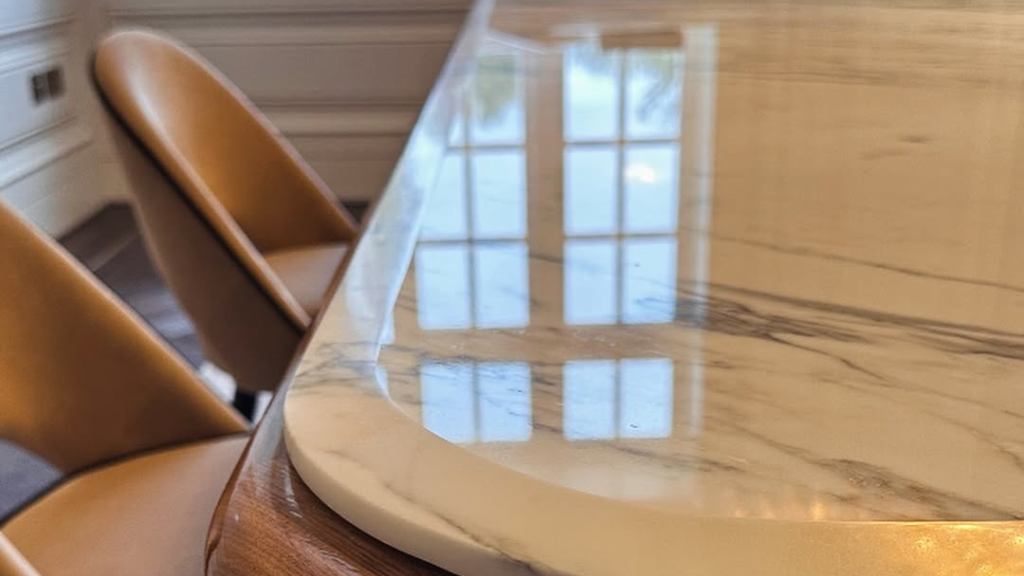
| Counter height (matches worktop) | 900–910 mm | 60–65 cm |
| Breakfast bar height (most common) | 1,000–1,100 mm | 65–75 cm |
| Bar/bistro height | 1,060–1,100 mm | 71–81 cm |
| Rule of thumb: always leave 25–30 cm of clearance between the stool seat and the underside of the worktop. This ensures comfortable legroom regardless of the bar height you choose. |
The 1,050 mm mark is the sweet spot for most UK households, high enough to visually separate the bar from the prep area, low enough to feel relaxed and comfortable for everyday use.
Breakfast Bar Overhang: Dimensions & Support
How Much Overhang Do You Need?
The standard kitchen worktop overhang for seating in UK kitchens is 250–350 mm. This range gives adequate knee clearance, keeps barstools tucked neatly underneath, and stays within the structural limit of most materials without requiring extra brackets.
Maximum Unsupported Overhang by Material
| Material | Max Unsupported Overhang | Support Needed Beyond That |
|---|---|---|
| Quartz | 300 mm | Concealed steel brackets or corbels |
| Granite | 300 mm | Hidden corbels recommended at 250 mm+ |
| Solid wood | 350 mm | Steel T-bar reinforcement for wide spans |
| Laminate | 600 mm | Bracing advised at 400 mm+ |
| Dekton/Porcelain | 250–300 mm | Always reinforce; brittle at edges |
For stone worktops, granite and quartz especially, hidden brackets beneath the overhang maintain a clean floating appearance while providing the structural support the weight of the material demands. Exceeding these limits without support risks cracking or, in worst cases, the worktop coming loose.
Overhang Edge Style Ideas
- Square edge, sharp, contemporary; pairs well with quartz or Dekton
- Bullnose or chamfer, softened edge; comfortable for seated guests and families with children
- Waterfall edge, worktop material folds down the island side to the floor; dramatic focal point
Best Materials for a Breakfast Bar Worktop in the UK
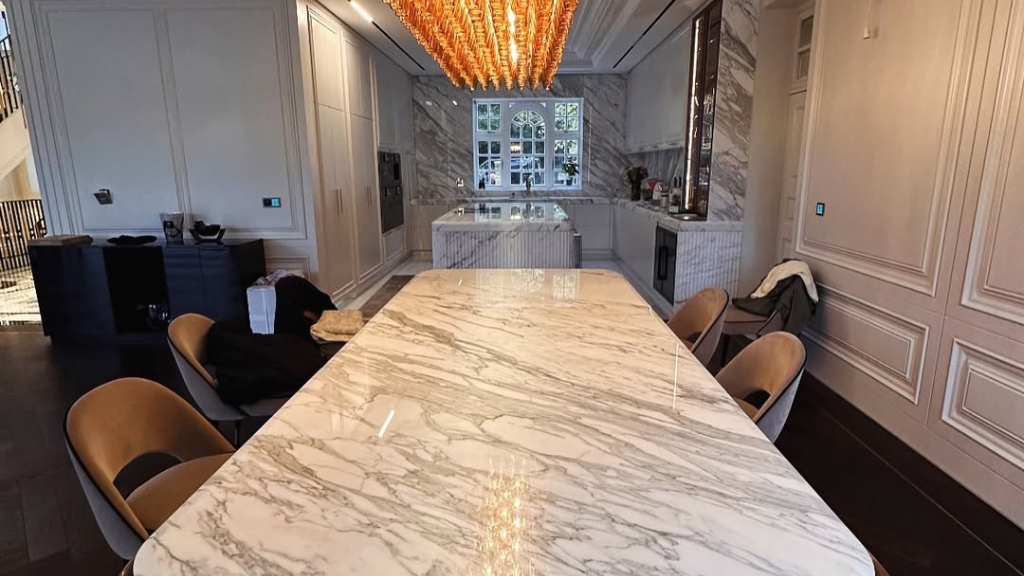
Choosing the right material is where most of the decision-making time goes when planning a breakfast bar. The good news is that virtually every worktop material available in the UK can be used, it is just a matter of matching your priorities around budget, maintenance, and appearance.
1. Quartz
Quartz is currently the most popular material for kitchen worktops in the UK, and it works brilliantly for a breakfast bar worktop. For a breakfast bar that will see daily use, coffee cups, juice glasses, keys, bags, and the occasional laptop, quartz worktops are a sensible and durable choice. The surface wipes clean effortlessly and holds up well to knocks and scratches, though it can be damaged by excessive heat, so trivets are still worth using.




2. Granite
A granite kitchen breakfast counter adds a premium, timeless quality to a space. It is particularly well suited to traditional or classic kitchen styles, though darker granite varieties like Absolute Black or Nero Assoluto look remarkably sharp in contemporary settings, too.
3. Solid Wood
Wood brings warmth and texture to a kitchen that stone simply cannot match. A solid oak, walnut, or iroko breakfast bar worktop has an earthy quality that makes a kitchen feel genuinely lived-in and welcoming. It is also one of the few materials where surface damage, scratches, small burns, and watermarks can be sanded out and refinished rather than replaced.
4. Laminate
For a breakfast bar worktop on a tighter budget, or for a rental property or second home, laminate is an entirely sensible choice. It is worth noting that standard laminate worktops in the UK are typically available up to 900mm wide, which limits options for very deep kitchen island configurations. Compact laminate, however, is a denser, more premium version that is more durable and available in thinner profiles.
5. Sintered Stone / Compact Surfaces (Dekton, Neolith, Porcelain)
Sintered stone, sold under brand names like Dekton and Neolith, is made by compressing 100 per cent natural minerals under extreme heat and pressure. The result is an incredibly dense, non-porous surface that is resistant to UV, heat, scratches, and staining. Unlike quartz, it does not contain resin, so it will not fade in direct sunlight, a useful quality if your kitchen gets a lot of natural light.
These materials are available in very slim profiles (as thin as 8mm or 12mm), which gives a breakfast bar a dramatic, architectural quality. The raw edges on a thin Dekton slab look particularly striking as a kitchen island breakfast bar in a minimalist or contemporary kitchen.
Breakfast Bar Worktop Cut to Size: Key Points
Ordering a breakfast bar worktop cut to size is the recommended approach for stone materials, non-standard kitchen dimensions, or any layout involving sink or hob cutouts. Most UK stone suppliers offer a full templating, fabrication, and fitting service.
- For stone: always use a professional template, laser-measured for accuracy
- For laminate and wood: standard panels can be cut on site by a competent fitter
- Measure at multiple points, UK walls are rarely perfectly straight
- Confirm whether quoted dimensions refer to the full panel or the finished surface
How to Measure for a Cut-to-Size Breakfast Bar Worktop
Accurate templating is essential. Most reputable stone worktop companies in the UK will send a templating specialist to your home before fabrication. This involves creating a precise template of your kitchen, often using laser measurement tools or a physical template made from thin board, to ensure the finished worktop fits exactly.
For simpler materials like laminate or solid wood, many homeowners measure themselves. If you are doing this:
- Always measure the actual space, not the drawings or plans
- Measure at multiple points, and walls are rarely perfectly straight
- Allow for any pipes, cables, or fixings that may affect the worktop position
- Confirm whether the quoted size refers to the full panel or the usable surface area
Final Thoughts
A breakfast bar worktop is one of the most versatile and rewarding additions you can make to a UK kitchen. Done well, it changes how the whole room functions, turning a purely practical space into somewhere people genuinely want to spend time. Whether you are planning a simple overhang extension from your existing worktops, a dramatic kitchen island breakfast bar in engineered quartz, or a warm and characterful solid wood peninsula, the principles are the same: get the height right, allow a proper overhang, choose a material that suits your lifestyle, and ensure it has adequate support.
If you are ordering a breakfast bar worktop cut to size, take the time to get accurate measurements or bring in a professional templating service. The cost of getting this step right is negligible compared to the cost of a poorly fitted worktop, or worse, a stone slab that cracks because the overhang was too deep and unsupported.
Frequently Asked Questions
Q1 What is the standard breakfast bar overhang in the UK?
250–350 mm is the standard worktop overhang for a breakfast bar in the UK. This provides comfortable knee clearance for bar stools and keeps the worktop structurally sound without requiring additional support brackets for most materials.
Q2 What height should a kitchen breakfast counter be?
A dedicated kitchen breakfast counter is most commonly set at 1,000–1,100 mm from the floor. A height of 1,050 mm is a widely used balance between comfort and a clear visual separation from standard prep counters at 900 mm.
Q3 Does a breakfast bar overhang need support brackets?
For overhangs up to 300 mm in granite or quartz, and up to 350 mm in solid wood, the base cabinet below usually provides sufficient support. Beyond those measurements, concealed steel brackets or corbels are strongly recommended, particularly for heavy stone worktops.
Q4 Which is the best material for a kitchen island breakfast bar?
Quartz is the most popular choice in UK homes for its combination of durability, low maintenance, and wide design range. For a warmer, more natural look, solid wood or granite works well. Budget-conscious buyers will find modern laminate a practical and attractive alternative.