
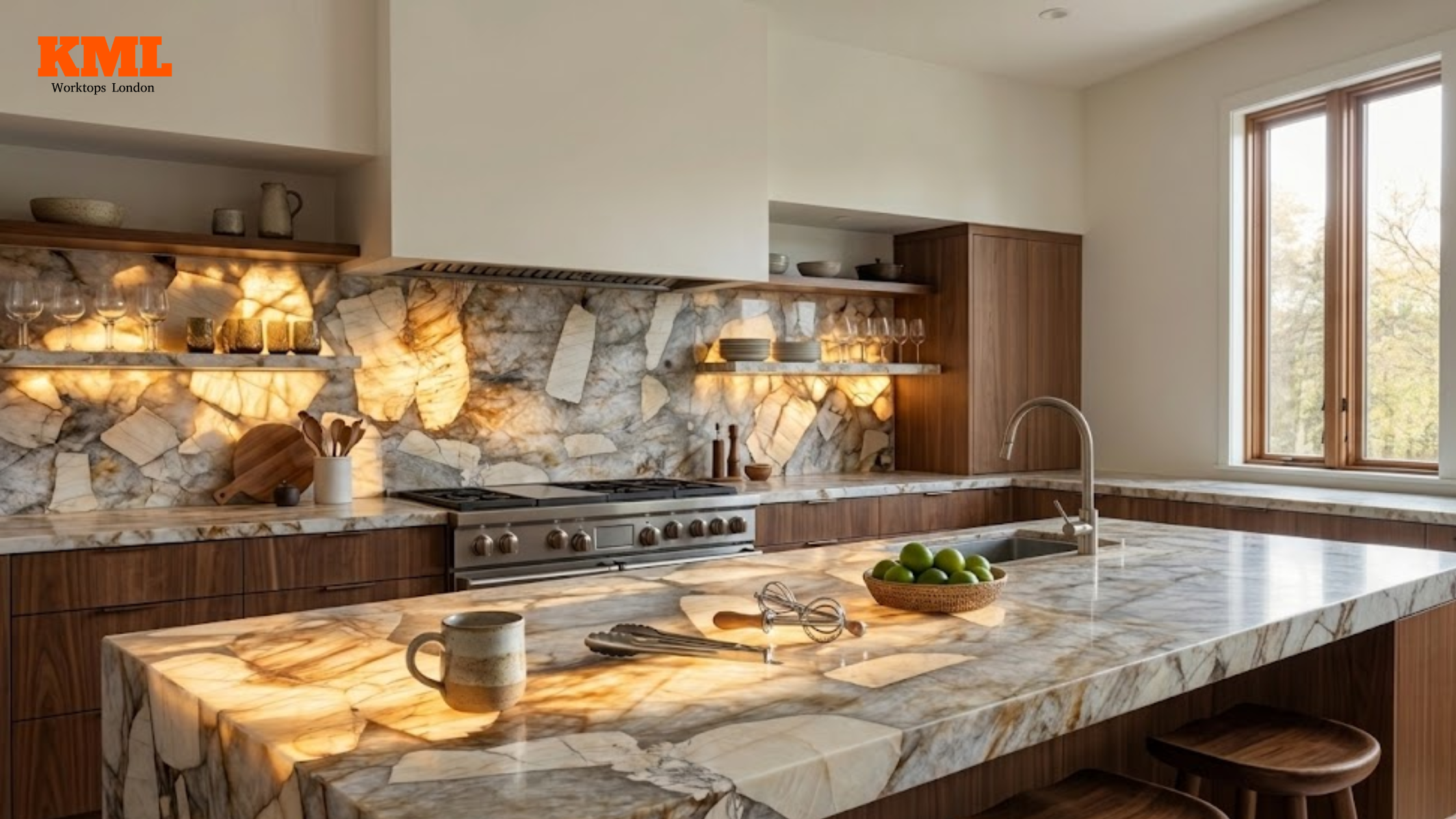
Premium interior design has always involved the use of natural stones. Onyx is one of the most striking natural stone materials utilised in luxury spaces. Onyx worktop surfaces are considered relatively opaque and feature a distinct pattern of veining, which makes an otherwise average interior appear like a statement environment.
However, while onyx worktops are admired for their beauty, they also require careful consideration before installation. Understanding the uses, advantages, and limitations of an onyx slab is essential for homeowners, designers, and architects looking to incorporate this material into their projects.
This article explores the characteristics, applications, and practical considerations associated with onyx stone, including its benefits, limitations, and factors influencing onyx stone cost.
What Is Onyx Stone?
Onyx stone is a semi-precious natural stone that is mainly formed out of stimulations of calcite and silica over millions of years. It is recognised due to its stratified look, transparent surface and the theatrical colour changes. Onyx is one of the few natural stones that are utilised in interior spaces in which light can go through the surface to give a distinctive effect of glow when it is backlit.
A typical onyx slab displays distinctive veins and swirling patterns in colours such as green, honey, cream, gold, red, and blue. Such patterns are formed naturally as the stone is being formed; this way, each slab is one of a kind. Because of its refined appearance, onyx worktops are often chosen for luxury design projects where aesthetics are the primary focus.
Although it is very visual, onyx stone has been found to be softer than granite and quartz, which is why it requires special attention during fabrication and installation.
Common Uses of Onyx Stone
Onyx stone is weighed down by the need to use it in a decorative mode and transparency, thus this kind of stone is normally applied in regions where aesthetics reclaim much priority over solid functionality.
1. Bar Counters and Feature Surfaces
An onyx worktop is most likely to be used in a bar counter or entertainment area because this is one of the most preferred applications. When paired with backlighting, an onyx slab can create a dramatic illuminated effect that instantly becomes the centrepiece of the room.
2. Splashbacks and Wall Cladding
Although onyx worktops may not always be ideal for heavy kitchen use, onyx stone performs exceptionally well as a splashback or decorative wall panel. Its unique designs add beauty to the entire appearance of high-end interiors.
3. Bathroom Surfaces
Onyx stone surrounding a vanity unit, bathtub surrounds, or the frame of a mirror is found in many luxurious designs of bathrooms. The use of the translucent material also contributes to the spa-style shower rooms in terms of depth and classiness.
4. Flooring and Decorative Panels
In controlled environments with minimal traffic, polished onyx slab flooring or decorative wall panels can deliver a premium finish. Such installations can be commonly found in entertainment hotels, reception sites and luxurious business premises.
Advantages of Onyx Stone
Although delicate, onyx stone presents a number of design advantages that qualify it to be used in high-end interiors.
1. Exceptional Visual Appeal
The greatest benefit of onyx stone is that it is naturally beautiful. Each onyx slab features intricate veins, swirls, and colour variations that cannot be replicated by engineered materials. As a result, onyx worktops can transform an ordinary interior into a luxurious space.
2. Unique Translucent Properties
Contrary to granite or quartz, the onyx rock is translucent and the light can penetrate it. When backlit, onyx worktops can create stunning glowing surfaces, particularly in bars, reception desks, and feature walls.
3. Lightweight Compared to Other Natural Stones
Another benefit of onyx slabs is their relatively lighter weight compared with many other natural stones. The property simplifies fabrication and transportation to some vertical stalemates and decorative panels.
4. Wide Range of Colours and Patterns
The onyx stone comes in many colours, including honey, green, blue and cream. These variations enable designers to choose onyx worktops that complement both contemporary and classical interior styles.
5. Long-Lasting When Properly Maintained
Onyx stone is delicate and can serve the purpose for many years if it is set in the proper place and is kept up properly. Proper sealing and regular care help preserve the beauty of onyx worktops.
Disadvantages of Onyx Stone
Although it is visually spectacular, onyx stone has a number of restrictions that need to be looked at closely.
1. High Onyx Stone Cost
One of the main drawbacks is the relatively high onyx stone cost. Due to its rarity and complex extraction process, onyx slabs are often more expensive than many other natural stone materials. Besides the cost of the material, the cost of installation may also be increased since the work of professional people is needed so that the stone is not damaged.
2. Lower Durability Compared to Other Stones
Onyx stone is fragile and soft as opposed to granite and quartz. This means onyx worktops can be prone to scratches, cracks, and chips if subjected to heavy use.
3. High Maintenance Requirements
The other limitation is the extent of care needed. Onyx worktops must be sealed properly and cleaned using specialised stone care products. Maintaining a shine on them as well as making sure that they are not damaged may require periodic polishing.
4. Sensitive to Chemicals and Acids
Onyx stone cannot withstand acidic and harsh cleaning chemicals. Exposure to these materials can cause surface damage or discolouration, making the maintenance of onyx worktops more demanding.
5. Limited Suitability for Heavy Kitchen Use
The fragility of onyx makes it not always suitable for working on high-traffic kitchen worktops. Instead, many designers prefer to use onyx slabs in decorative applications such as splashbacks or bar counters where wear and tear are minimal.
Factors Affecting Onyx Stone Cost
The overall onyx stone cost depends on several factors, including:
- Rarity and colour variation of the onyx slab
- Density and dimensions of the slab.
- Fabrication complexity
- Installation requirements
- The sourcing and transportation.
There are rare varieties, especially those with dramatic veining or vivid colours, that attracted higher prices in the market.
Is an Onyx Worktop the Right Choice?
Onyx worktop can be a unique design aspect when it is implemented in the appropriate setting. Its nature patterns and bright design predispose it to be one of the most interesting materials of interior design.
Nevertheless, since onyx stone needs to be properly taken care of and requires the work of a professional installer, it is rather suitable to be used in the field of decorative aspects, but not in the high-movement kitchen areas. When used strategically, such as in bar tops, illuminated wall panels, or luxury bathroom surfaces, onyx worktops can deliver a dramatic and sophisticated visual effect.
Conclusion
Onyx stone remains one of the most elegant and distinctive natural materials used in interior design. Its translucent properties, unique colour variations, and artistic patterns make onyx worktops an attractive option for luxury spaces. However, the relatively high onyx stone cost, delicate structure, and maintenance requirements mean it should be installed thoughtfully.
At KML Worktops, selecting the right natural stone surface is essential to achieving both functionality and aesthetic excellence. By understanding the uses, advantages, and limitations of onyx stone, homeowners and designers can make informed decisions when incorporating onyx worktops into modern interiors.
