Key Takeaways
- Quartz slabs are non-porous engineered stone surfaces made from crushed natural quartz bound with polymer resins, providing consistent appearance and durability.
- Quartz slabs come in several standard dimensions in the UK, ranging from standard sizes (3000mm x 1400mm) and jumbo sizes (3200mm x 1600mm) to mega jumbo sizes (3500mm x 2000mm) and half-size slabs.
- Quartz worktop thickness options typically include 12mm for vertical cladding, 20mm for sleek and modern designs, and 30mm or 40mm for traditional, robust finishes with superior structural strength.
- Slab size and layout design directly affect the need for joins, with larger jumbo and super jumbo slabs helping to eliminate seams on long worktop runs and expansive kitchen islands.
- Careful planning of slab dimensions relative to the kitchen layout helps minimize costly material waste and keeps the project aligned with the homeowner's budget.
Planning a new kitchen is one of the most exciting and most overwhelming home projects a UK homeowner can take on. Among all the decisions you’ll make, choosing the right quartz slab dimensions is one that can genuinely make or break both your budget and the final look of your space. Get it right, and you’ll enjoy a seamless, elegant worktop for decades. Get it wrong, and you could be left with unnecessary waste, costly joins, or a surface that simply doesn’t sit right in your kitchen.
This guide walks you through everything you need to know about quartz slab dimensions, quartz worktop thickness, and how to match the perfect slab size to your kitchen, without overspending.
What Is a Quartz Slab?
A quartz slab is an engineered stone surface made from approximately 93% crushed natural quartz bound together with polymer resins and pigments. Unlike natural granite or marble, which vary from slab to slab, quartz offers a highly consistent appearance, making it far easier to match multiple pieces across a large kitchen.
Quartz is non-porous, meaning it resists staining without ever needing to be sealed. It’s also scratch-resistant and exceptionally durable, which is why it has become one of the most popular worktop materials in UK kitchens. But because each quartz slab comes in a fixed size, understanding those dimensions before you begin is essential to planning your kitchen properly.
Standard Quartz Slab Dimensions in the UK
Quartz slabs are manufactured in several standard sizes, and knowing the difference between them will help you plan your kitchen layout efficiently and minimise costly material waste.
Standard Size: 3000mm x 1400mm
The most widely available quartz slab dimensions in the UK are 3000mm x 1400mm. This is the baseline size offered by the majority of quartz manufacturers and suppliers. If you’re working with a straightforward kitchen layout, runs of worktop along one or two walls, a standard slab will typically cover your needs comfortably.
Some well-known brands, such as Caesarstone, offer a slightly different standard size of 3050mm x 1440mm, while others may vary slightly. Always confirm the exact dimensions with your supplier before planning your cuts.
Jumbo Size: 3200mm x 1600mm
Jumbo slabs offer a meaningfully larger surface area, making them a popular choice for kitchens with longer worktop runs or modest kitchen islands. At 3200mm x 1600mm, they provide extra width and length that can reduce the number of joins required in your finished worktop.
Brands like Caesarstone offer jumbo dimensions at approximately 3240mm x 1640mm, while Cambria, known for some of the largest slabs in the industry, offers jumbo slabs at 3350mm x 1660mm. If you’re planning a kitchen island or a long breakfast bar, a jumbo slab is well worth considering.
Mega Jumbo / Super Jumbo Size: 3500mm x 2000mm
At the top end of the market, mega jumbo (also called super jumbo) slabs measure around 3500mm x 2000mm. These are the largest quartz slabs available in the UK and are particularly suited to expansive kitchen islands, open-plan kitchens, and commercial-style home kitchens where a seamless, join-free surface is the goal.
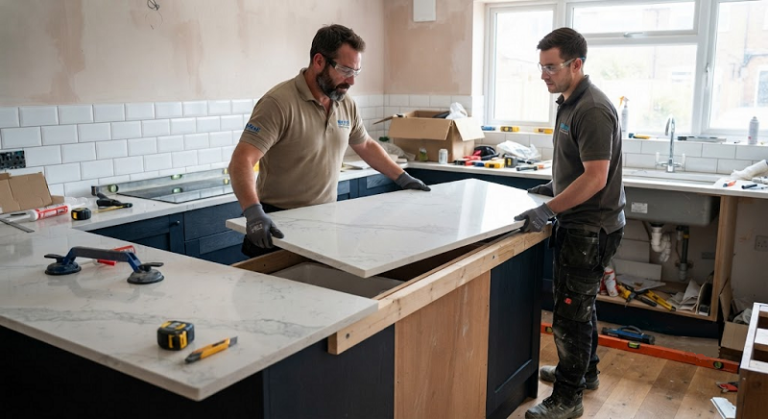
The trade-off with super jumbo slabs is that colour and pattern options are often more limited, as not every design is manufactured in this size. They also require specialist handling and installation, and access to your kitchen needs to be assessed carefully before ordering. A 3500mm x 2000mm slab is extremely heavy and requires careful manoeuvring.
Half-Size Slabs: 3040mm x 700mm or 3200mm x 800mm
Some suppliers, such as Arenastone, offer half-size slabs specifically designed for smaller projects. These are ideal for bathroom vanity tops, utility room worktops, or splashbacks where a full slab would result in significant waste. If you’re renovating a compact kitchen or adding a small section of quartz worktop, a half-size slab can be a genuinely cost-effective solution.
Quartz Slab Size at a Glance
| Slab Type | Typical Dimensions | Best For |
| Standard | 3000mm x 1400mm | Straight worktop runs, smaller kitchens |
| Jumbo | 3200mm x 1600mm | Medium islands, longer runs |
| Mega Jumbo | 3500mm x 2000mm | Large islands, open-plan kitchens |
| Half Slab | 3040mm x 700mm | Splashbacks, bathrooms, small worktops |
Quartz Worktop Thickness: What Are Your Options?
Alongside the overall slab size, quartz worktop thickness is one of the most important choices you’ll make. The thickness you choose affects not just the look of your kitchen but also its practicality, structural integrity, and cost.
12mm Quartz Worktops
The thinnest option available, 12mm quartz, is primarily used for vertical applications such as splashbacks and wall cladding rather than as a worktop surface. A small number of manufacturers now produce 12mm worktops, but if you do choose this thickness for a horizontal surface, it must be installed over a solid substrate, typically plywood, to prevent flexing or cracking.
20mm Quartz Worktops
The 20mm quartz worktop has grown significantly in popularity in recent years and is now a standard choice for many UK kitchen renovations. It strikes an excellent balance between a sleek, modern profile and practical durability.
A 20mm slab works particularly well in contemporary or minimalist kitchen designs, where thinner lines and clean aesthetics are the priority. It’s also a versatile choice because the same 20mm material can typically be used for your worktop, upstands, and splashbacks, giving a consistent look throughout the kitchen and reducing the number of different materials you need to order.
30mm Quartz Worktops
The 30mm quartz worktop is the traditional standard in UK kitchens and remains the most popular thickness overall. The extra depth gives a worktop a reassuringly solid, premium appearance that many homeowners associate with high-end kitchen design.
Practically speaking, 30mm worktops offer superior structural strength. This matters most when you’re installing a large kitchen island, a breakfast bar with an overhang, or a heavy undermount sink. A 30mm slab can typically support an unsupported overhang of up to 250–300mm before additional support brackets are needed, whereas a 20mm slab may require extra support at smaller overhangs.
If your kitchen has a traditional, country, or farmhouse aesthetic, or if you simply want that premium, chunky look, 30mm is the natural choice.
40mm Quartz Worktops
A small number of manufacturers produce 40mm quartz slabs, which are best suited to traditional-style kitchens where a substantial, weighty look is desired. They’re the most durable option available, though their additional weight increases installation complexity and cost. For most UK homeowners, 30mm represents a better balance of robustness and practicality, but 40mm remains a distinctive choice for those who want to make a statement.
How Slab Size Affects Kitchen Planning
One of the most common surprises for homeowners planning a kitchen refit is discovering how slab size interacts with their layout, particularly when it comes to joins.
Worktop Runs and Joins
If your worktop run is longer than the slab you’re using, your fabricator will need to create a join. For a standard 3000mm slab, this means any worktop run longer than 3000mm will require a seam. Opting for a jumbo or mega jumbo slab can eliminate joins on most standard worktop runs, giving you a cleaner, more seamless finish.
Kitchen Islands
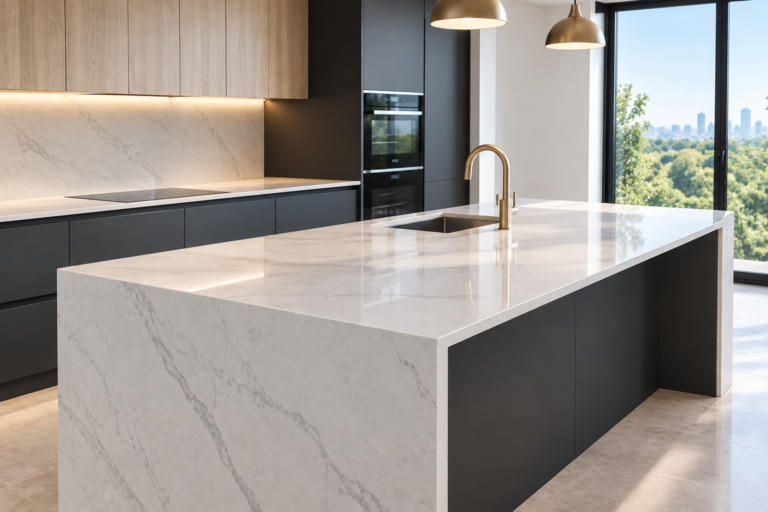
Kitchen islands present the greatest challenge when it comes to slab dimensions. An island that exceeds 3200mm in length or 1600mm in width will require a join if using a standard or standard jumbo slab. If avoiding a seam on your island is a priority, a super jumbo slab at 3500mm x 2000mm may be the right choice, though you’ll need to confirm this with your supplier early in the process, as colour availability in this size is more limited.
Waterfall Edges and Downstands
If you’re planning a waterfall edge or a downstand, you’ll need to account for the additional material this requires. These features are increasingly popular in contemporary UK kitchens, but they do add significantly to the amount of quartz slab you’ll need to order.
Minimising Waste
Every piece of quartz cut away during fabrication is, in most cases, material you’ve already paid for. Thinking carefully about your slab size relative to your kitchen layout can reduce waste significantly. Your fabricator should provide a cutting plan that shows how pieces will be taken from the slab. Ask to see this before work begins. Choosing a half-size slab for a compact kitchen, or a standard slab for a straightforward run, is almost always more economical than ordering a jumbo slab and cutting it down to a fraction of its original size.
Choosing the Right Slab Size for Your Budget
Quartz worktops are a significant investment, and the slab size and thickness you choose will have a direct impact on cost. Here’s a practical guide to making the most of your budget.
If you’re working to a tighter budget, a 20mm standard slab in a straightforward layout gives you the most value. By using the same material for your worktop and splashback, you can achieve a cohesive look while keeping costs controlled.
If you have a medium budget, a 30mm standard or jumbo slab gives you excellent durability and a premium appearance. The extra cost over 20mm is meaningful but rarely regretted; the thicker profile genuinely elevates the look of a kitchen.
If you’re investing in a premium renovation, a jumbo or super jumbo slab in 30mm allows you to achieve large, seamless surfaces across both your worktop runs and kitchen island. Fewer joins means a cleaner, more luxurious result.
Summary
Choosing the right quartz slab for your kitchen comes down to three things: your kitchen’s layout and dimensions, the aesthetic you want to achieve, and your budget. Understanding quartz slab dimensions, from the compact standard 3000mm x 1400mm slab through to the expansive 3500mm x 2000mm mega jumbo, puts you in control of that decision. Pair that knowledge with a clear view on quartz worktop thickness (20mm for a sleek, modern look or 30mm for a traditional, robust finish), and you’ll be far better positioned to have an informed conversation with your supplier and fabricator, and end up with a kitchen worktop you’ll love for years to come.