
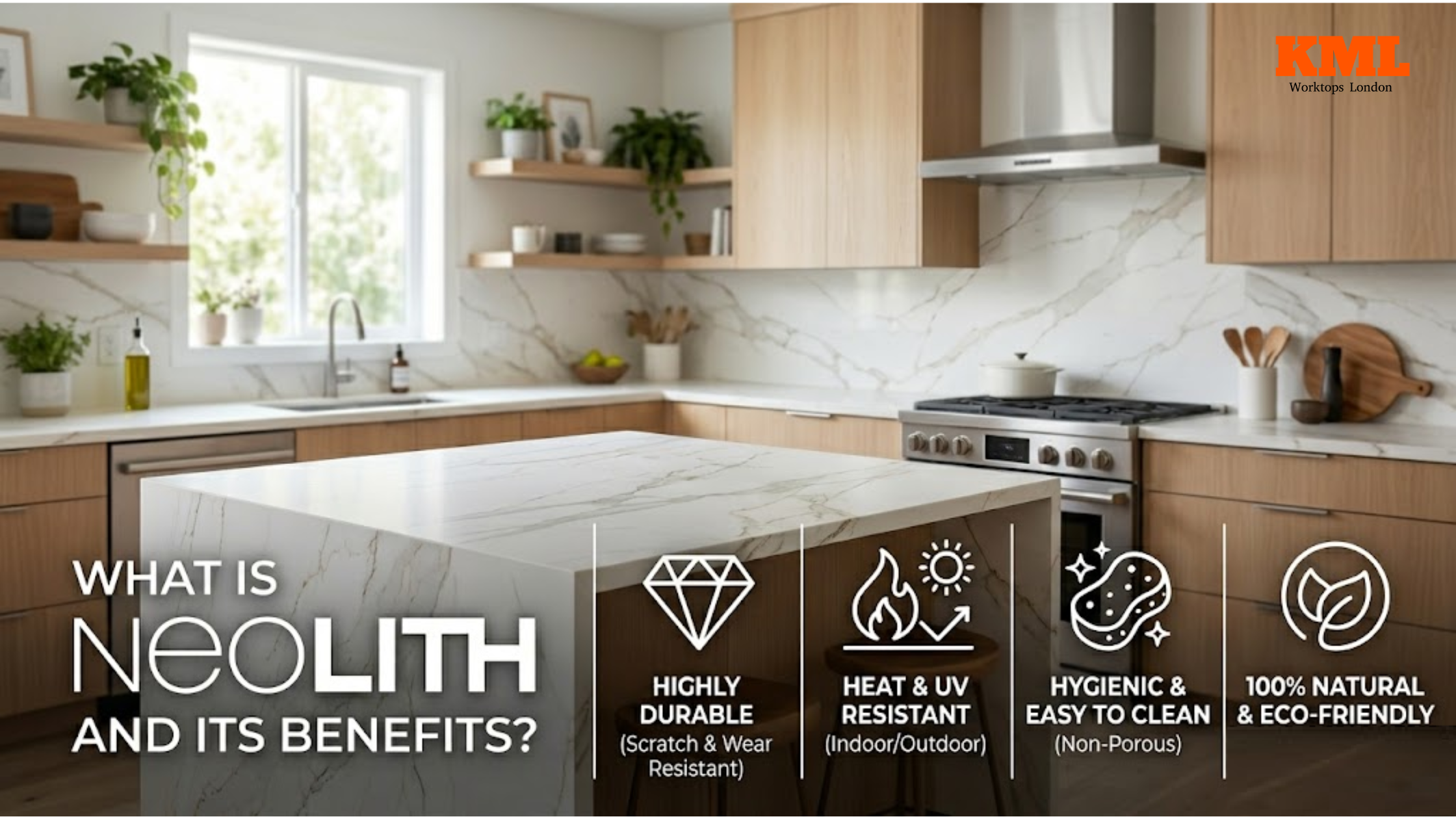
The need to implement a surface that will unite the three factors of interior design, durability, and sustainability has been on the increase in modern interior design and architecture. The Neolith worktop is one of the best-developed solutions on the market, which is introduced as a high-quality surface material that is getting more and more popular in households and commercial buildings. This new material is especially famous in the UK market of Neolithic when it comes to outstanding performance and a sharp look. Among homeowners, designers, and developers who want to have a long-lasting and luxurious solution, it is important to get an idea about what Neolith is and why it is remarkable.
What is Neolith?
Neolith is a sintered stone surface that is developed using 100 per cent of the natural raw materials, such as minerals, clays, feldspar, and silica. These materials are melted together into a very compact slab through a sophisticated manufacturing process that imitates the natural process of making the stone when it is at a very high level of heat and pressure. The outcome is a non-porous and immensely strong surface referred to as Neolith stone.
Neolith does not have resins or binders, as is the case with conventional engineered materials. This composition gives neolith worktops exceptional resistance to heat, scratches, stains, and UV exposure. As a result, a neolith worktop can be used not only in the kitchen environment, but also in bathrooms, flooring, the cladding of the walls, the appearance of the facade, and even in furniture.
It is commonly used in the Neolith UK market as a material for residential development of a luxury nature since it can be used to simulate the outdoor look of natural stone, and at the same time has better technical characteristics.
Key Benefits of a Neolith Worktop
Neolith benefits do not just stop at the aesthetic look; the material provides impressive technical functions both at home and in business.
1. Exceptional Durability
The strength of a neolith worktop is one of its major strengths. The sintering process is such that it produces a very hard surface which is able to resist scratches, impacts and abrasion. Compared to natural or lighter engineered stones, Neolith has an appearance that will not wear out even in the most difficult localities.
Also, Neolith is very resistant to thermal shock. Hot cookware can be fitted on the surface and not damaged, therefore suitable for the new kitchen.
2. Ultra-Hygienic and Non-Porous
Hygiene is a critical consideration in food preparation areas. Neolith countertops feature an absorption rate close to zero, meaning liquids cannot penetrate the surface. This prevents staining, odour retention, and bacterial growth.
Because the material is non-porous, it does not require sealing or specialised maintenance. Routine cleaning with mild soap and water is sufficient to maintain a pristine finish. For households prioritising cleanliness and safety, a Neolith worktop provides significant advantages over traditional stone surfaces.
3. UV and Weather Resistance
Unlike many engineered surfaces that fade or deteriorate under sunlight, Neolith maintains colour stability even with prolonged UV exposure. This factor generally makes it suitable for both indoor and outdoor applications, including garden kitchens and external cladding.
Within the Neolithic UK context, where weather conditions vary considerably, this resilience ensures long-term performance without warping or discolouration.
4. Lightweight and Versatile Thickness Options
Neolith slabs are available in multiple thicknesses, including ultra-thin formats as slim as 3 mm. Despite their strength, they are lighter than many natural stones, which simplifies installation and expands design possibilities.
This versatility allows designers to create seamless installations across worktops, splashbacks, islands, and vertical surfaces using the same material, resulting in a cohesive aesthetic.
5. Wide Range of Designs and Finishes
A major appeal of neolith stone is its ability to replicate the appearance of natural materials such as marble, granite, wood, and metal. For example, Neolith Calacatta offers the luxurious look of Calacatta marble with enhanced durability and minimal maintenance requirements.
Available in numerous colours, textures, and finishes, a Neolith worktop can complement both contemporary and traditional interiors. This design flexibility has contributed significantly to the growing popularity of Neolith UK installations.
6. Sustainability and Environmental Responsibility
Sustainability is an aspect that has gained more significance in material selection. Neolith contains some recycled material in its various product lines, and its production is done using natural raw materials. It can also be completely recycled when it is at the end of its life.
In the case of clients that deal with KML Worktops, a Neolith worktop can be cost-effective in the long-run because it helps save the customer on repairs, replacement, and maintenance costs.
Neolith Worktop Cost UK Considerations
Budget is a factor to consider when assessing materials. The neolith worktop cost UK typically reflects its premium quality, advanced manufacturing process, and long lifespan. Although the initial investment cost of the material can be somewhat higher than that of laminate and a few of the engineered stones, durability and low maintenance needs can mean lower long-term cost.
Factors influencing the neolith worktop cost in the UK include slab thickness, finish, edge detailing, installation complexity, and chosen design, such as premium options like neolith calacatta.
Why Choose Neolith for Your Project?
When deciding to go with a Neolith worktop in the Neolith UK market, one would be deciding on a surface which incorporates a blend of innovation, fashion and functionality. It is a better choice because of its durability, both in terms of daily use and aesthetic appeal, regardless of where it is used, either in the house or in the business.
Moreover, the adaptability of neolith countertops allows designers and homeowners to explore creative possibilities without compromising on performance. With the elegant look of Neolith Calacatta on one side, and Neolith stone with its strength and functionality on the other, the material promises to appeal to the very diverse tastes of designers.
Conclusion
Neolith represents the future of architectural surfaces, offering a perfect balance of durability, hygiene, versatility, and sustainability. For those seeking a high-performance solution, a Neolith worktop is an excellent investment within the Neolith UK market.
With its advanced properties and wide design range, Neolith continues to redefine modern interiors. When sourced and installed through trusted providers like KML Worktops, it ensures a premium finish that enhances both the functionality and visual appeal of any space.
