Key Takeaways
- Quartz is an engineered stone that offers excellent stain and moisture resistance with minimal maintenance and no regular sealing required.
- Granite is a natural stone that provides superior heat tolerance and a unique, timeless appearance for kitchen worktops.
- Granite requires periodic sealing to maintain its protective surface, unlike non-porous quartz.
- Quartz is generally preferred for homeowners seeking an economical, versatile, and modern aesthetic with predictable patterns.
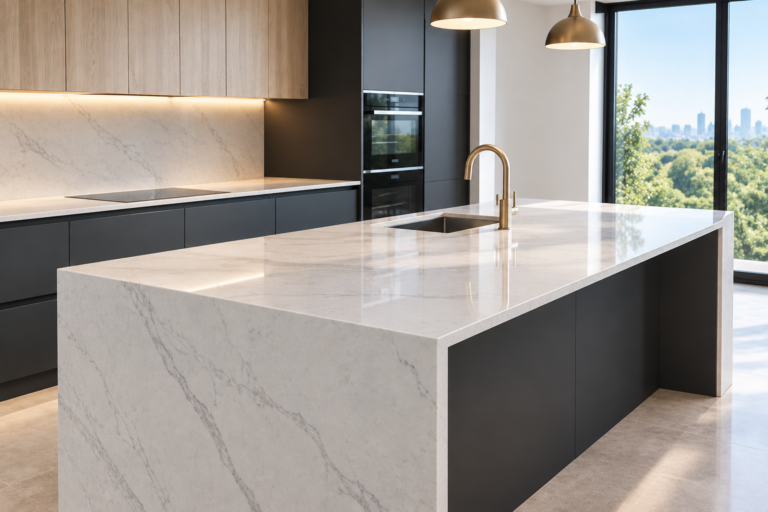
- Both materials work well for kitchen islands, with quartz offering uniform designs and granite providing a robust natural centerpiece.
While debating among the best kitchen worktops, there is often a distinctive and inevitable choice that needs to be made between quartz and granite. Both stones offer excellent finishes, where granite is more useful for everyday kitchens and natural quartz embellishes the modern outlook for a dreamy kitchen. It depends on your budget, cooking habits, preferred appearance, and willingness to maintain the surface. Quartz is better for homeowners who want an economical, stain- and moisture-resistant worktop, whereas granite is more heard wearing and heat tolerant.
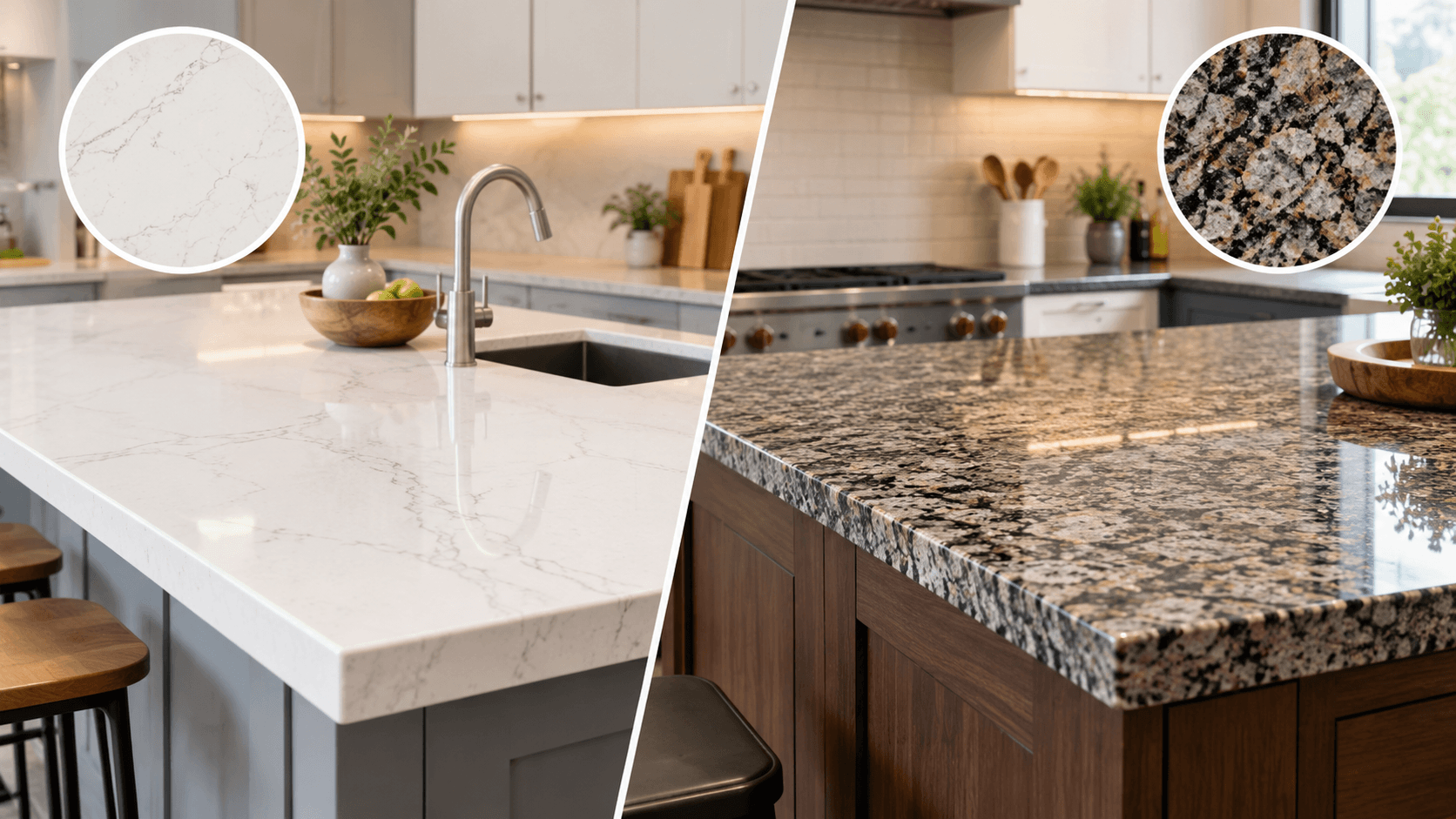
Quartz worktops vs Granite worktops
There is often a debate when it comes to choosing preferred stones for kitchen worktops, and the suitability of granite or quartz both seems to blind people.
| Feature | Quartz | Granite |
| Material and Composition | Engineered stone | Natural stone |
| Lasting | Durable and long-lasting | Durable, but edges can chip |
| Heat Bearing Capacity | Moderate | Excellent |
| Scratch Resistance | Very good | Very good |
| Stain resistance | Excellent | Needs temporary sealing at times |
| Upkeep | No sealing needed; everyday cleaning is useful | Sealing is needed from time to time |
| Colour Preference | Wide range of colours available | Natural tones |
Quartz vs Granite Pros and Cons
Quartz offers a practical combination of longevity and appeal and is more economical. Its moisture-resistant surface is also spillage-resistant, including coffee, tea, and oil. It is also available in modern white, grey, black, and marble-effect designs, helping homeowners achieve a coordinated interior.
Advantages of quartz:
- Low Cost: Quartz is low cost but needs regular maintenance and sealing.
- Stain resistance: It is moisture-resistant and prevents stains from liquids.
- Good Appeal: Colours and patterns are more predictable across sections.
- Simple Cleaning: Warm water and a microfibre cloth are needed to clean the worktop clean.
Demerits of Quartz:
- Heat tolerance: Quartz is heat tolerant and resistant to hot pans.
- Repair and Damages: Chips and cracks may require specialist attention.
- Price: Premium brands will be more expensive.
There is always a comparison between Is granite better than quartz, and the answer is that both metals enjoy a competitive comparison where quartz being more engineered and granite being rougher and tougher.
Advantages of granite:
- Natural beauty: Each slab has various colours which enhance the kitchen.
- Heat resistance: Granite generally tolerates more heat in comparison to quartz and is resistant to hot touches of a pan.
- Durability: If granite is maintained and properly installed with care, it can be long-lasting and sustainable.
- Timeless appearance: Natural stone complements traditional and contemporary kitchens.
Disadvantages of Granite:
- Sealing: Granite needs to be maintained and requires sealing regular sealing.
- Natural variation: The installed surface may differ from a small sample.
- Higher costs: Rare colours and premium slabs can be costly.
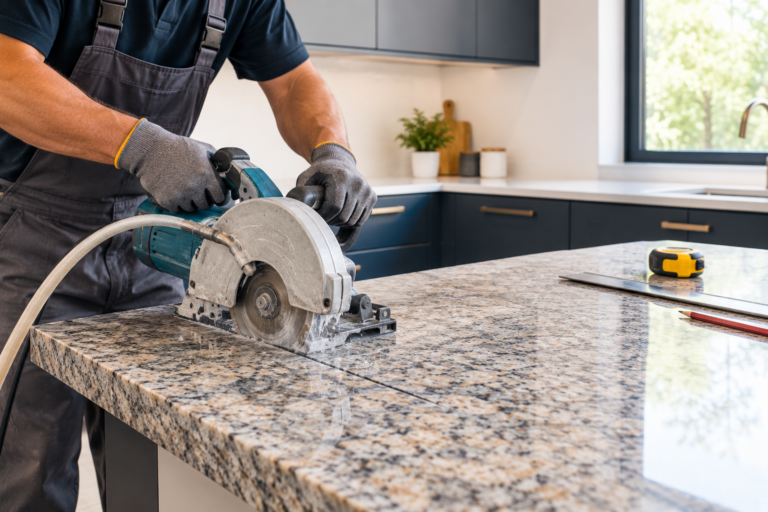
- Heavy Duty: Strong cabinets need a professional installation.
Which is Better Quartz or Granite?
While making a decent choice among the best kitchen worktop quartz or granite, quartz practically wins for its convenience, modular appeal and diversified range. Granite needs more attention, periodic sealing, and professional installation, on the other hand. The appropriate sealing frequency depends on the particular stone, finish and manufacturer’s recommendations.
For daily cleaning, follow these steps for either surface:
- Wipe spills of coffee, tea or oil quickly.
- The worktop can easily be cleaned with a microfibre cloth and less use of detergents.
- Rinse away soap residue and dry the surface to reduce streaks.
- Avoid polished pads, harmful chemicals and strong cleaners.
- Use chopping boards and trivets to prevent scratches, stains, and heat damage.
Quartz is generally the easier option for households wanting minimal upkeep, while granite rewards occasional maintenance with a durable natural surface.
Is quartz better than granite for a Kitchen Island?
Both materials work well for kitchen islands, but the best option depends on the design and how the island will be used. Quartz is more suitable for a kitchen island and can be found in the same colour. The slab dimensions and markings will display the technicalities behind the fixing or joining.
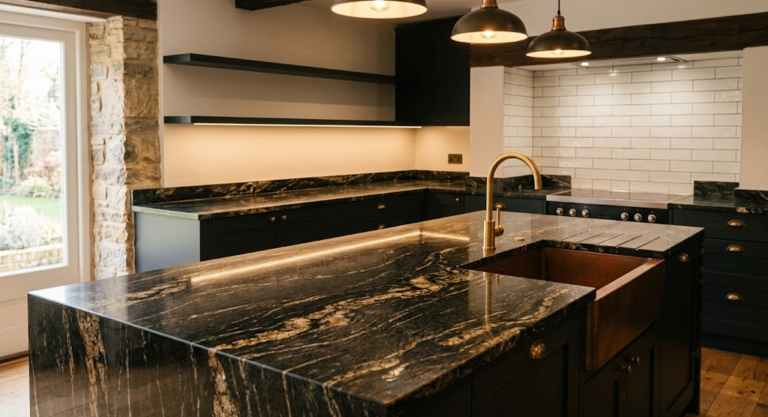
Granite is ideal for statement islands because its natural markings create a unique focal point. It also offers better heat tolerance, which can be useful in hardworking kitchens.
There is often a question ringing in minds about choosing countertops: which is better, quartz or granite? The answer lies in the usability and needs of the stone. The span of installing both granite slabs and quartz ones depends on the fabricator’s skill and outlook. Large and spacious islands might need more slabs to be installed, and visible seams may result, so inspect the entire layout before installation. Neither material should be treated as crack-proof or used to bridge unsupported cabinet gaps without professional advice.
FAQ
1. Which is better for kitchen worktops, quartz or granite?
Quartz and granite both serve as top picks for a kitchen countertop. On one hand, granite is more of a hard task master than quartz. Quartz is used for luxury spaces and is more expensive and heat-resistant. Granite needs periodic sealing and is suitable for everyday use.
2. Is quartz more long-lasting than granite?
Quartz and granite are both durable materials suitable for everyday kitchen use, but they perform differently. Quartz is non-porous, resists staining, and does not usually require sealing. Granite has better scratch and heat tolerance.
3. Is quartz cheaper than granite in the UK?
Quartz is slightly less expensive than granite, although prices vary on the range, colour palettes, and preferences of stone available.
4. Which is easier to maintain, quartz or granite?
Quartz is generally easier to maintain because its non-porous surface resists everyday staining and does not normally require sealing. Regular cleaning with a soft microfibre cloth is workable. Granite needs periodic sealing.
5. Is granite or quartz better for a kitchen island?
Both materials work well for kitchen islands, but the right choice depends on your priorities. Quartz is ideal for a modern island with a uniform colour, waterfall edges or a marble-inspired finish. Granite is a strong choice for a centrepiece table and is more robust.