Marble tabletops add elegance and sophistication to every living room and dining space. With a promising and more elegant setting, marble worktops provide a more modular and delicate setting that requires careful care and precision for everyday use. Dragging decorative objects and placing accessories or using too many detergents can harm the actual shine of the stone. Knowing how to remove scratches from a marble tabletop safely is important to maintain its shine without extending the life duration. The right cleaning and polishing techniques need to be followed for proper finishing.
Why Do Marble Tabletops Get Scratched?
Marble is a natural stone primarily composed of calcium carbonate, which makes it vulnerable to scratching and chemical damage. Everyday activities such as changing crockery, placing accessories, moving flowerpots, and rough cleaning cloths can leave permanent marks. Sometimes there can be dust or small particles beneath the ornamented objects, which can also create stains and scratches. Acidic substances like lemon juice, vinegar, and wine can react with marble and create bold patches.
How to Remove Scratches from a Marble Tabletop Safely
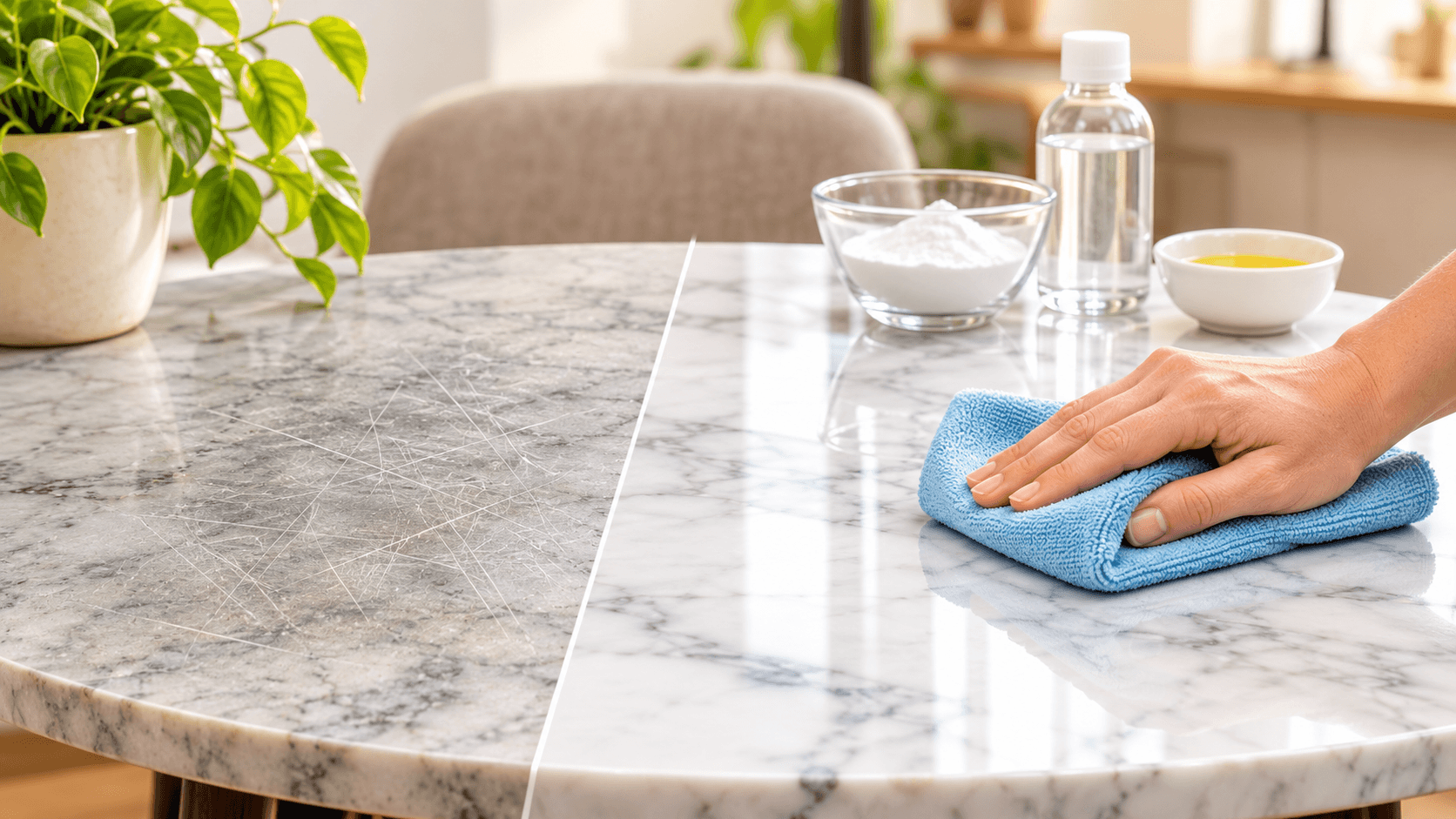
The first step in removing scratches from a marble countertop depends on the depth and severity of the damage. There are gentle ways to maintain the shine and appearance of marble with a cloth and polishing liquid. It’s important to remove all the decoration objects/things on the table and loose dust from the surface. Use a soft microfibre cloth and a pH-neutral stone cleaner to clean the tabletop. Avoid using regular bathroom cleaners, strong detergents or washing powders, or cleaning sprays.
Clean the Marble Surface Before Polishing
Proper cleaning is an important part of scratching marbles which can create extensive damage. It’s important to first start with a dry and soft microfibre cloth to remove loose particles. Next, use a marble-safe cleaner and read the information which is meant for the manufacturer and avoid scrubbing the surface too much. Remove any remaining cleaning solution using a clean, slightly damp cloth and dry the tabletop immediately. This process helps eliminate dirt, fingerprints, and surface residue that may make minor imperfections appear more noticeable.
When Should You Hire a Professional Marble Polishing Service?
It’s important to cater to the marble polishing with the help of a technician for a scratched marble countertop. Deep scratches, visible grooves, extensive etching, and irregular patches need to be repaired. Experienced professionals use abrasives, honing methods, and polishing materials to remove layers and provide a regular finish. Experienced stone specialists use appropriate diamond abrasive pads, honing techniques, and polishing compounds to remove damaged surface layers and restore a consistent finish.
The process may involve grinding, honing, and polishing, depending on the condition of the tabletop. Professional expertise is important for expensive marble varieties, old and intricate furniture, and decorations. Attempting to work on damaged equipment can make the affected area more noticeable and increase repair costs. A requirement of a technician or specialist can help to remove scratches which are unwanted and preserve the quality of the luxury worktop. Any strong or harsh substance moved on the countertop can cause cracks and scratches. Spills of beverages can easily be noticeable too.
How to Prevent Scratches on a Marble Tabletop
With proper care and cleaning it is important to protect marble furniture from daily wear. It’s best to use coasters beneath crockery for decorations. There should be no rushing when placing objects. Dragging heavy material on tabletops can cause friction and lead to some major marks on the floor. Prevent any spillage of beverages like coffee, wine and vinegar Clean spills immediately, particularly acidic liquids such as coffee, fruit juice, wine and vinegar. Use a soft microfibre cloth for routine cleaning and choose a pH-neutral cleaner formulated for marble. You can also consider applying a suitable penetrating stone sealer after consulting a professional. Although sealing does not make marble scratch-proof, it can help reduce the absorption of certain liquids and make routine maintenance easier.
Cleaning, Maintenance and Aftercare
It’s important to maintain marble furniture. Regular cleaning plays an important role in maintaining marble furniture. It’s best to use a pH-neutral cleaner and a microfibre cloth to clean any pollutants. Avoid products containing strong acids, detergents, or abrasive ingredients unless approved by the stone. For everyday cleaning, a soft cloth dampened with clean water is often sufficient for removing light dust and surface dirt. Always dry the tabletop after cleaning to prevent water spots and residue. Gentle maintenance can help to balance restoration.
Know When DIY Scratch Removal Is Not Enough
Although there can be slight scratches, home cleaning is important and requires complete attention. If the tabletop has deep cracks, chipped edges, or irregular patches, then there is a need for professional assistance. Similarly, if a polishing product creates a blurred appearance, then it is best to stop the treatment due to excessive product application. Marble varieties differ on the basis of hardness, mineral composition, and finishing. Its best to seek professional guidance, which helps to maintain tabletop value. Cleaning on a daily basis can be helpful to restore the luxury marble. It’s best to be a little particular while placing any countertop material.
Conclusion
The correct way to remove scratches from marble is by choosing the correct restoration method. While minor imperfections may improve with cleaning and polishing products, deep scratches need professional assistance. It’s best to avoid abrasive equipment, strong cleaners or detergents. Regular cleaning with a microfibre cloth can restore the beauty and elegance of marble tabletops. Avoid using acidic substances or abrasions which can be harmful and cause friction on the surface. Gentle and everyday care is a must to protect the shine and lustre of marble worktops.
FAQs
Can minor scratches be removed from a marble tabletop at home?
Yes, minor surface marks may improve with gentle cleaning and marble-safe polishing products. Use a soft microfibre cloth and a pH-neutral stone cleaner. Avoid abrasive materials that could cause further damage.
How do you remove scratches from a marble tabletop without damaging it?
Start by cleaning the surface with a pH-neutral marble cleaner and a soft microfibre cloth. For minor imperfections, use a suitable marble polishing product according to the manufacturer’s instructions. Deep scratches should be treated by a professional.
Can vinegar or lemon juice damage marble tabletops?
Yes, vinegar and lemon juice contain acids that can react with marble. They may cause etching, dull patches and surface damage. Always use a pH-neutral cleaner specifically formulated for natural stone.
How much does professional marble scratch repair cost?
The cost of professional marble scratch repair depends on the tabletop’s size, marble variety, scratch depth and restoration method required. Deep scratches or extensive etching may require grinding, honing and polishing, which can increase the overall cost.
How can I prevent scratches on my marble dining table?
Use coasters, placemats and protective pads beneath decorative objects. Avoid dragging crockery or heavy accessories across the surface. Clean spills immediately and regularly wipe the tabletop with a soft microfibre cloth and a marble-safe cleaner.