Key Takeaways
- Marble is a metamorphic rock that forms when limestone or other calcium-carbonate-rich rocks are exposed to intense heat, pressure, and geological movements.
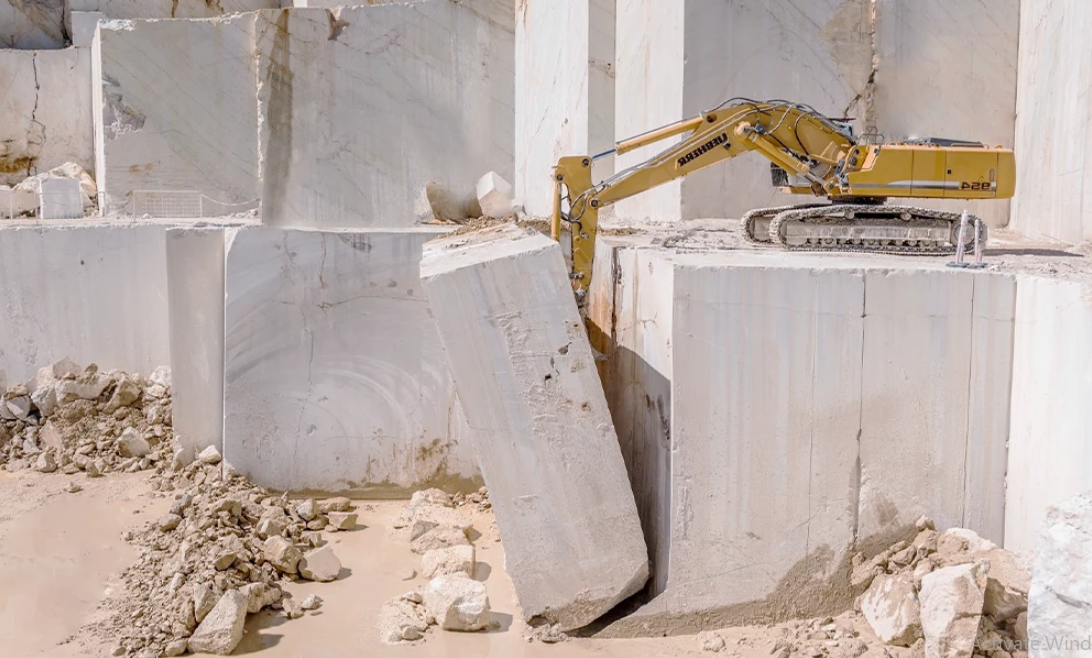
- Marble is extracted from organic deposits inside the Earth's crust through a process called quarrying, where large blocks are removed and processed into slabs.
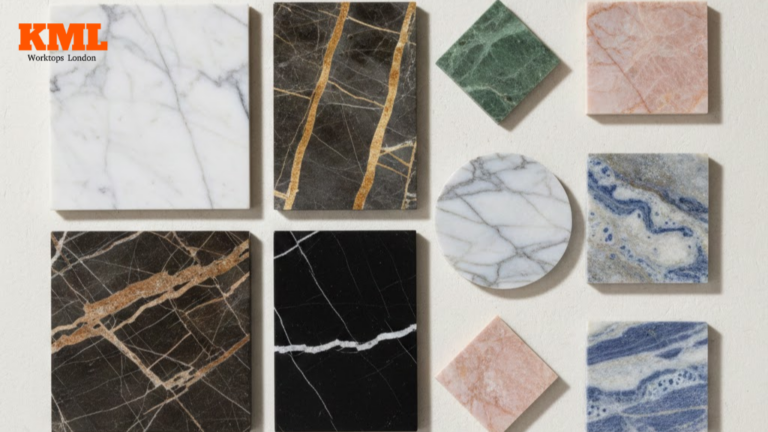
- The natural colour of marble is influenced by the minerals present in the original rock, resulting in a wide variety of whites, pastels, and contrasting streaks or bands.
- Marble is commonly used in residential interiors for kitchen worktops, flooring, staircases, fireplace surrounds, and bathroom vanities.
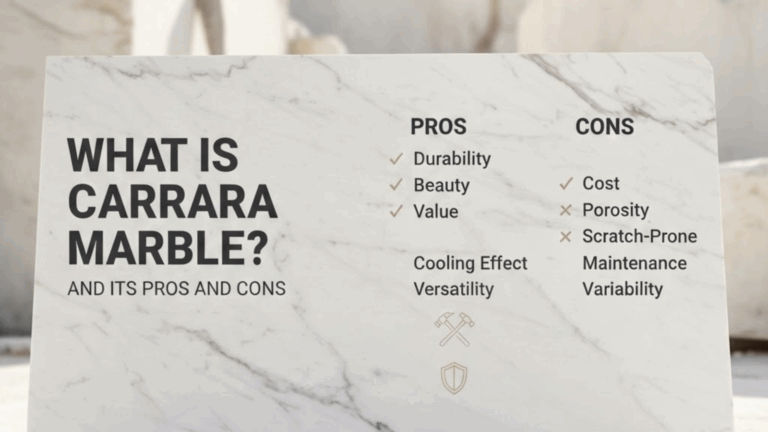
- While popular for its sophisticated appeal and luxurious look in interior design, marble requires proper maintenance and regular cleaning because it can be sensitive to acids and chemicals.
Marble is one of the most renowned natural stones used in interiors and construction. Known for its sophisticated appeal and available in many colours, marble has been used in buildings, monuments, and worktops. But how is marble formed, is the only question. Marble is a metamorphic rock that forms when limestone or another calcium-carbonate-rich rock is exposed to intense heat, pressure, and geological movements.
How Is Marble Formed?
Marble is formed from limestone. Limestone is a sedimentary rock that is formed from deep-down deposits in Earth’s crust that include materials like calcium carbonate, and those formed from shells. Over a span of continuous periods, layers of this material are compiled. When these rocks are placed below the Earth’s crust, they can be prone to thermal activity.
Limestone undergoes metamorphism. Its pure mineral grains recrystallise, forming the bulk and blending calcite or dolomite crystals. The shift from limestone to marble can take place easily through regional metamorphism.
How Is Marble Found?
Marble is found in organic deposits that are found inside Earth’s crust. There are many geological processes that have changed limestone. It is not ready to use as other materials and is formed beneath the Earth’s surface. Marble is known for its premium structure and styling. Marble is formed as layers of rock inside Earth’s crust. Quarrying is the process used to derive the deposits.
Before marble is quarried, many tests are done for quality check. Once the correct deposit is chosen, quarrying operations can remove large blocks from the base of the rock. These blocks are then moved for processing, where they are cut into slabs, segregated, polished, and moved for construction.
What Colours Are Formed in Marble?
Marble is available in a wide variety of natural colours, which include pastel formats and a range of whites and bright colours. The colour is mainly impacted by the minerals which are aligned with the original rock. Pure marble is light coloured. When other minerals are incorporated into the rock, they can produce contrasting colours, streaks, bands and patterns.
White marble is listed; it is known for its sleek appeal and extraordinary finish. Grey marble may consist of graphite or other minerals, while green marble may contain rare materials. Pink marble is formed from rare mineral compositions that provide a breakdown of dark white marbles and graphite. Darker marbles may contain graphite or other inclusions.
Where Is Marble Found in the Home?
Marble can be found in several areas of the home, like kitchen cabinets, flooring, room flooring, staircases, and restrooms. The use of marble worktops is essential for making kitchens feel more open and breathable. The smooth finishing touches enable people to add an element to their household and design. One of the most common applications is flooring. Marble floor tiles are used in living rooms, entrance areas, hallways, and other living areas.
Large-format marble tiles enable rich interiors. Marble is mainly known for worktops in kitchens. Marble can be used on te slab of a kitchen or in bathrooms for vanity tops, flooring, and godly design. Marble needs maintenance and regular cleaning with a cloth. Marble is not an ordinary stone and requires full maintenance and care.
Marble can also be found in staircases, fireplace surrounds, window panes, and decorations. It’s a status symbol to put marble in the house, which not only uplifts the standard of living but also provides elegance. In some interiors, marble is used as an accent rather than throughout an entire room. A marble backsplash, or a wall in a bathroom, can uplift interiors.
Why Is Marble Popular in Interior Design?
Marble is very appealing as a stone and is used in high-end mansions. Unlike manufactured surfaces, which carry the same texture and tone, natural marble develops over time under geological processes and revamps modern houses.
Marble can also be polished to create a smooth and shiny surface that is lustrous. Its long history as an ornamental stone has added to interiors in a rich way. However, marble is not completely maintenance-free. Because it is primarily composed of calcite or dolomite and can react with acids, chemicals, detergents, or acids can spoil its finish.
Conclusion
Understanding how marble is formed takes us into the structure and framework. Marble begins to form with limestone and then goes through metamorphism under severe heat and pressure. It is found in deep-seated deposits around the world and is extracted from quarries as large portions, which are broken down into slabs. India is an important source of marble, where green and pink are the main colours.
In homes, marble can be used for flooring, kitchen worktops, bathrooms and window panels. Its natural look and bright colour range make it well known for modern interiors and outlook. Ultimately, every marble surface indicates a blend of history, human craftsmanship and elegance.