Key Takeaways
- Overlay worktops allow a kitchen refresh without removing existing units, with fully fitted costs typically under £2,000 or £80 to £700 per square metre.
- Materials range from budget-friendly laminate at £80–£180/m² to more durable engineered quartz and stone options at £350–£700/m².
- The 6–8mm thick slabs weigh around 18kg per square metre, meaning existing cabinets require no structural reinforcement.
- The installation process involves a templating visit followed by a 3–5 hour fitting day, bonding the new surface directly onto the existing sound worktop using epoxy.
- Additional factors like sink and hob cut-outs, upstands, complex layouts, and business overheads can increase the final price.
Overlay worktops let you refresh your kitchen without ripping out the existing units, and most UK homeowners pay under £2,000 for a fully fitted average kitchen, or £80–£700 per square metre depending on the material chosen. Laminate overlays sit at the lower end; quartz and engineered stone overlays cost more but last longer and resist heat and scratches better.
Below is what drives that price, what the material options are, how the fitting process works, and whether your kitchen is a good candidate.
Overlay Worktop Cost by Material
| Material | Typical cost per m² | Best for |
| Laminate | £80–£180 | Budget refreshes, rentals |
| Engineered quartz | £350–£700 | Durability, heat and scratch resistance |
| Granite/recycled stone overlay | £350–£600+ | Natural stone look, longevity |
A straightforward kitchen with no sink or hob cut-outs will land at the low end of these ranges. Add cut-outs, upstands, splashbacks, or a more complex layout, and the price climbs, sometimes to the point where an overlay costs close to a full replacement, so it’s worth getting quotes for both before deciding.
What Are Overlay Worktops Made Of?
Overlay worktops are thin engineered-stone slabs, typically 6–8mm thick, designed to bond directly onto an existing worktop. Most are made from crushed natural stone mixed with a polymer resin and pigme commonly around 90%+ natural stone content, depending on the manufacturer. Some ranges use a higher percentage of recycled material, which reduces environmental impact both in production and transport.
Because the slab is thin, a finished overlay weighs roughly 18kg per square metre, a fraction of the weight of a solid 30mm stone worktop, which can weigh hundreds of kilograms per square metre. That matters because it means your existing cabinets don’t need reinforcing to take the extra load.
How Do Overlay Worktops Work?
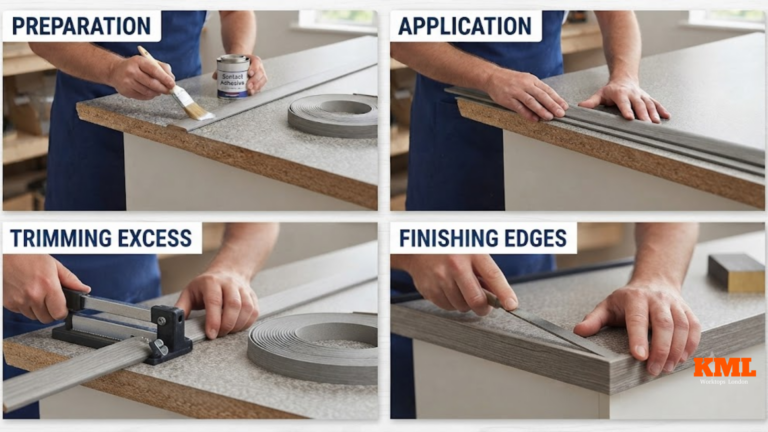
The existing worktop stays exactly where it is and becomes the structural base. The new surface is templated, cut to match your kitchen’s exact dimensions, including sinks, hobs, and any awkward corners, then bonded directly on top using a stone-specific epoxy. The front edge is finished separately and bonded on so the whole thing looks like one solid slab, with edge options typically including a pencil round or bevel profile.
The process usually runs in two stages:
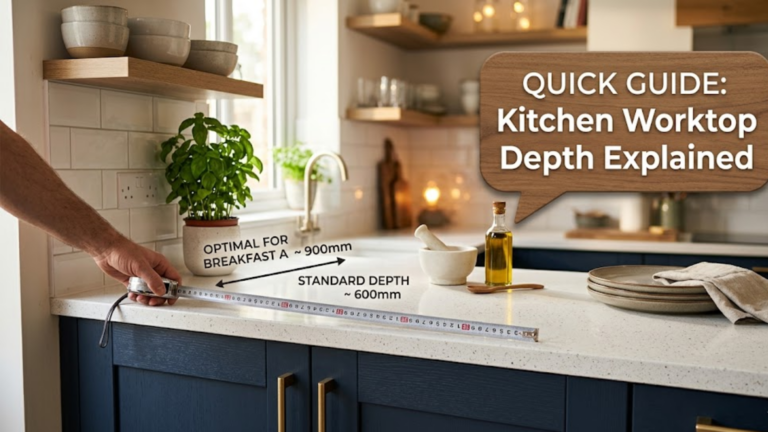
- Templating visit (1–3 hours): the installer measures your existing worktop precisely and discusses joins, appliances, and edge finish.
- Fitting day (3–5 hours), usually 2–4 weeks later: the sink and hob are removed, the new overlay is dry-fitted to check the fit, then bonded permanently and the appliances refitted.
Because nothing is demolished, there’s minimal mess and no need to empty the kitchen for days, a key reason overlays cost less overall than a full worktop replacement.
Is Your Kitchen Suitable for an Overlay?
Overlay worktops work best when:
- Your existing worktop is structurally sound and securely fixed, the overlay relies on it for support
- Your cabinets and layout are staying the same and you just want a new finish
- You’re not planning a full kitchen refit at the same time
They’re a poor fit if the current worktop is damaged, delaminating, or not level, or if you’re already installing a brand-new kitchen, in that case, a full new worktop fitted directly to the cabinets is usually simpler and better value than adding a substrate layer just to support an overlay.
Overlay materials aren’t limited to kitchen worktops, either, the same engineered surfaces are commonly used for bathroom vanity units, shower wall panels, and tabletops.
What Affects the Final Price
The headline per-m² price is only part of the picture. These extras typically add to the total:
- Sink and hob cut-outs
- Drainer grooves
- Upstands and splashbacks
- Window sills
- Awkward corners or multiple joins
Some fitters price upstands and splashbacks separately; others cut them from the same slab as the worktop at no extra material cost, so it’s worth asking exactly how a quote is built before comparing prices between fitters. Franchise operators and businesses that subcontract fitting or use salespeople for home visits also tend to charge more, since that adds extra links to the supply chain.
Overlay vs Full Worktop Replacement
A full replacement means removing the old worktop, disposing of it, and fitting a new one from scratch, more labour, more disruption, and generally a higher cost. An overlay keeps the existing worktop in place as the base, which cuts down on demolition, waste, and time on site. If your kitchen units and layout are already in good shape and you’re happy with everything except the worktop finish, an overlay is usually the more cost-effective route.
Final Thoughts
Overlay worktop cost depends mainly on material choice and the complexity of your kitchen, expect £80–£180/m² for laminate or £350–£700/m² for quartz and stone, with most fully fitted kitchens coming in under £2,000. Get quotes from a few installers, ask how cut-outs and extras are priced, and confirm your existing worktop is in good enough condition to support the new surface before booking a template visit.