Key Takeaways
- Granite worktops combine a natural, one-of-a-kind finish with genuine durability, making them ideal for contemporary kitchens.
- Granite is highly heat-tolerant, allowing hot pans to be placed directly on the surface without scorching or discolouring.
- Maintenance is relatively straightforward, requiring daily cleaning with mild soap and occasional resealing every 12 to 18 months.
- UK prices for granite worktops typically range from £150 to £900+ per square metre depending on rarity and colour, plus fabrication and fitting costs.
- While quartz offers uniformity and zero sealing requirements, granite provides superior heat resistance and unrepeatable natural patterns.
If you’ve spent any time comparing worktop options, granite keeps turning up on the shortlist, and it’s not just because it looks expensive. Granite worktop designs suit modern kitchens because they combine a natural, one-of-a-kind finish with genuine day-to-day toughness: they shrug off heat, resist scratching, and don’t need much upkeep beyond an occasional reseal.
This guide covers what actually matters if you’re weighing up granite for your kitchen: how it fits contemporary design, what it costs in the UK right now, how it compares to quartz, and the practical side of living with it day to day.
Does Granite Suit a Contemporary Kitchen Design?
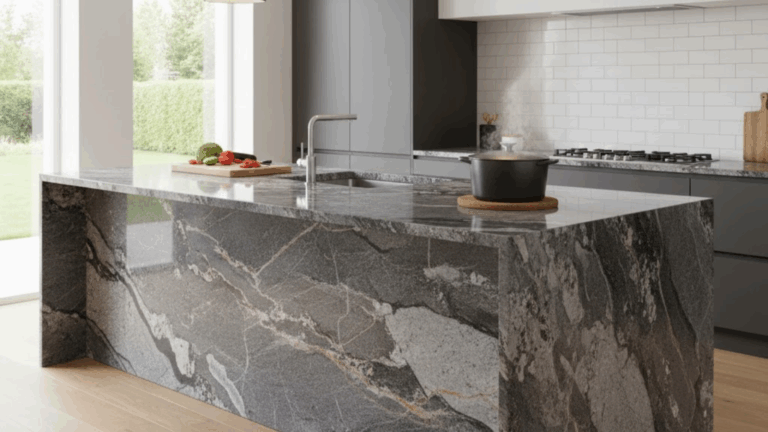
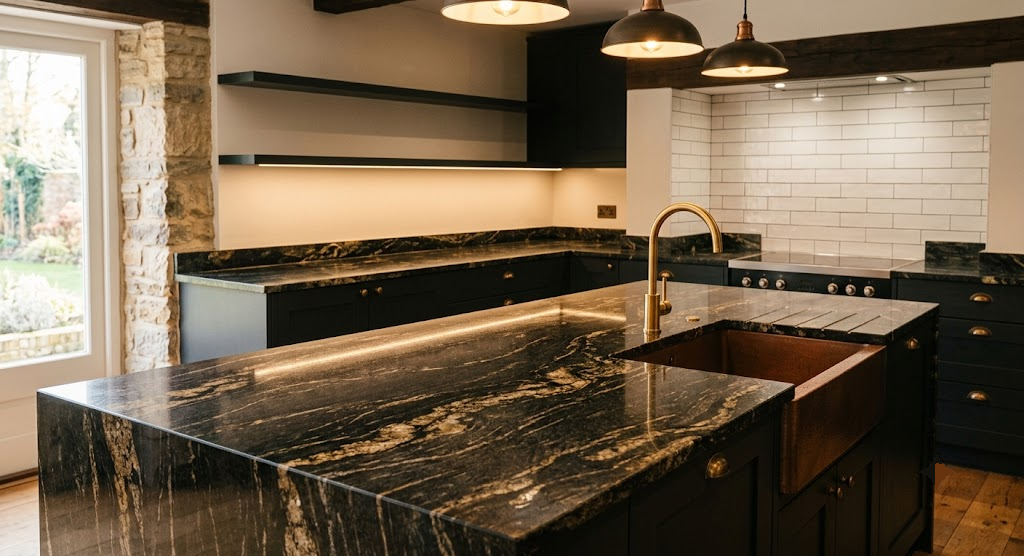
Yes, arguably more than most other worktop materials. Contemporary kitchens tend to favour clean lines, handleless cabinetry and a fairly restrained colour palette, and a natural stone surface is often exactly what stops that look from feeling flat. A granite worktop brings texture and depth that man-made surfaces can’t quite replicate, whether that’s a glossy black slab against white units or a pale, speckled grey that softens an all-white kitchen.
Because every slab is quarried, not manufactured, no two granite worktops are identical. That’s part of the appeal for homeowners who want their kitchen to feel considered rather than off-the-shelf.
Is a Granite Worktop Durable Enough for a Busy Family Kitchen?
For most households, yes. Granite is an igneous rock, formed under enormous heat and pressure, which is exactly why it holds up so well to daily wear. Hot pans, chopping boards left too close to the edge, kids doing homework at the counter, a kitchen granite worktop is built to take that kind of everyday use without chipping or scratching the way laminate or wood sometimes will.
It’s also non-porous once sealed, so spills from wine, oil or fruit juice sit on the surface rather than soaking in, provided you wipe them up reasonably promptly.
Are Granite Worktops Heat Resistant?
Yes, granite is one of the most heat-tolerant worktop materials you can buy. You can rest a hot pan straight from the hob on most granite surfaces without it scorching or discolouring, which isn’t true of laminate and can void the warranty on some quartz. It’s still good practice to use a trivet for very high, sustained heat, but the risk of accidental damage from a hot pot or oven tray is genuinely low.
Do Granite Worktops Add Value to a Property?
Estate agents and kitchen fitters both tend to agree that natural stone reads as a premium feature to prospective buyers. A well-fitted granite worktop signals that a kitchen has been properly invested in, which can help a property stand out, particularly against a laminate or budget composite alternative in a similar house nearby. It won’t single-handedly add thousands to a valuation, but it’s consistently cited as one of the kitchen upgrades buyers notice first.
How Do You Maintain a Granite Worktop?
Day to day, granite is genuinely low-maintenance: warm water, a mild washing-up liquid and a soft cloth are enough for most spills. Avoid abrasive scourers and strong acidic cleaners (neat vinegar or lemon juice left to sit), as these can dull a polished finish over time.
The one job worth staying on top of is resealing, typically every 12–18 months, depending on the stone and how it’s used. A quick water-droplet test tells you if it’s due: if water beads on the surface, the seal is still doing its job; if it soaks in, it’s time to reseal.
What Granite Worktop Colours and Finishes Are Available?
One of the real draws of granite worktop colours is the range, you’re not limited to a handful of manufactured shades. Common options include:
- Jet black or steel grey, a classic, versatile base for most colour schemes
- A white granite worktop with subtle grey or gold flecking, brightens smaller kitchens without looking clinical
- Warm beige or sand tones, pairs well with wood cabinetry and traditional kitchens
- Bold blue, green or burgundy veining, a statement choice for a feature island
Finish matters as much as colour. A polished finish gives maximum shine and makes colours pop; a honed (matte) finish suits an industrial or minimalist kitchen; and a leathered finish has a subtle texture that’s good at hiding fingerprints and light watermarks.
How Much Does a Granite Worktop Cost in the UK?
Granite is priced by rarity and colour as much as by size, so costs vary more than with engineered stone. As a rough guide for 2026:
| What you’re paying for | Typical UK price (per m²) | Notes |
| Standard granite (common colours, e.g. black, grey) | £150–£300 | Good everyday choice; widely available |
| Mid-range granite (patterned or lighter stones) | £300–£500 | More colour and veining variety |
| Premium / imported granite (rare colours) | £500–£900+ | Statement pieces, e.g. bold veining or blue-toned stone |
| Fabrication & fitting | £150–£350 | Templating, cut-outs, edge profiles, delivery |
So a typical mid-sized kitchen (around 4–5m² of worktop) in a common colour might land somewhere between £1,000 and £2,500 fully fitted, while an imported or rare-veined stone could push that considerably higher. Always ask suppliers whether their quote includes templating, cut-outs and delivery, these are sometimes charged separately.
Granite vs Quartz: Which Should You Choose?
This is the comparison most homeowners actually want answered. Quartz is engineered, so its colour and pattern are completely consistent from slab to slab, and it doesn’t need sealing. Granite is natural, so no two worktops are alike, and it needs occasional resealing, but it edges out quartz on raw heat resistance, since quartz’s resin content can scorch or discolour under a very hot pan.
Price-wise, the two overlap more than people expect: a common granite colour can be cheaper than a premium quartz, while rare granite can cost considerably more than a mainstream quartz. If you want a uniform, low-maintenance surface, quartz is usually the easier choice. If you want a natural, unrepeatable finish and don’t mind an occasional reseal, granite tends to win out.
Choosing a Granite Cut to Size for Your Kitchen
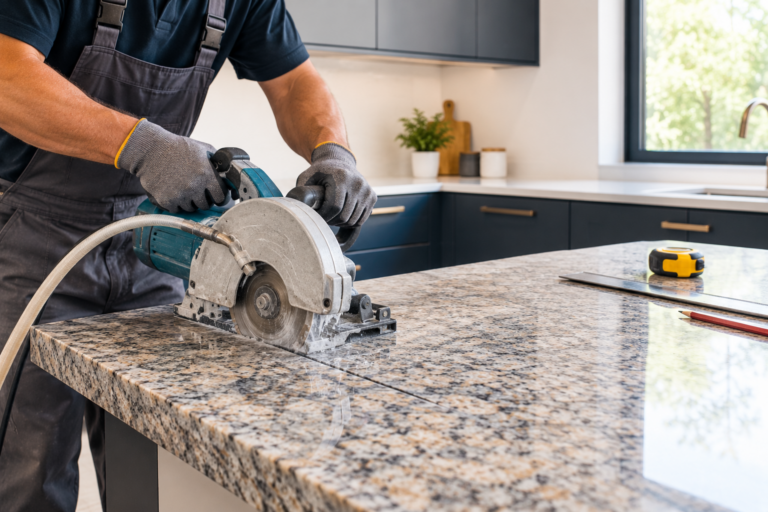
Because granite is supplied as slabs rather than standard boards, a granite cut to size service is how most kitchens actually get fitted, a fabricator templates your cabinets on site, then cuts the slab (or slabs) to match your exact layout, including sink and hob cut-outs and any joins. This is worth factoring into your timeline: templating usually happens after your cabinets are installed, and fabrication typically adds one to two weeks before fitting.
Final Thoughts
Granite worktop designs suit a contemporary UK kitchen because they deliver on both fronts that matter: they look genuinely distinctive, and they’re tough enough to handle a busy household for decades. The trade-offs, a higher upfront cost and occasional resealing, are modest compared with the practical benefits, particularly if you’re planning to stay in the property for the long term.
If you’re at the point of comparing quotes, get itemised pricing from at least two or three fabricators, ask what’s included, and take a sample of your chosen slab home to see it under your own kitchen lighting before you commit.
Frequently Asked Questions
Q1 How much do granite worktops cost in the UK?
Most homeowners pay between £150 and £900 per square metre depending on colour and rarity, plus £150–£350 for fabrication and fitting. A typical kitchen worktop runs roughly £1,000–£2,500 fully installed.
Q2 Is granite better than quartz for a kitchen worktop?
Neither is universally ‘better’, granite offers a natural, unrepeatable pattern and superior heat resistance, while quartz is more uniform and doesn’t need sealing. The right choice depends on whether you prioritise natural variation or low maintenance.
Q3 How long does a granite worktop last?
With proper sealing and reasonable care, a granite worktop typically lasts 20–30 years or more, often outliving several kitchen refits.
Q4 Do granite worktops need to be sealed?
Yes. Most granite worktops need resealing roughly every 12–18 months to maintain stain resistance, though this varies by stone type and how heavily the kitchen is used.
Q5 Can granite be cut to size for any kitchen layout?
Yes. Granite is templated and cut to fit your specific cabinets, sink and hob, including any joins needed for larger kitchens or islands.
Q6 Are granite worktops heat resistant?
Yes. Granite tolerates direct contact with hot pans far better than laminate or wood, though a trivet is still recommended for prolonged, very high heat.