Key Takeaways
- Square edge kitchen worktops feature a straight, flat, and contemporary profile that complements minimalist and modular kitchens.
- They offer advantages such as a less cluttered look, easy installation, cost-effectiveness compared to decorative edges, and compatibility with various materials.
- Various materials are available for square edge countertops, including marble, granite, quartzite, engineered quartz, and timber, each with unique maintenance needs.
- Square edge worktops are ideally suited for modern, handleless, and industrial kitchen styles, though households with young children might prefer softer edges.
- Practical considerations before choosing include assessing foot traffic, cabinet style, edge finish durability, and safety for toddlers.
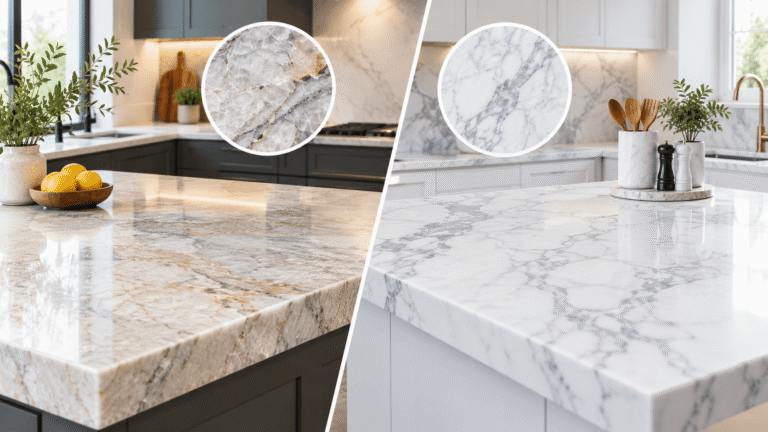
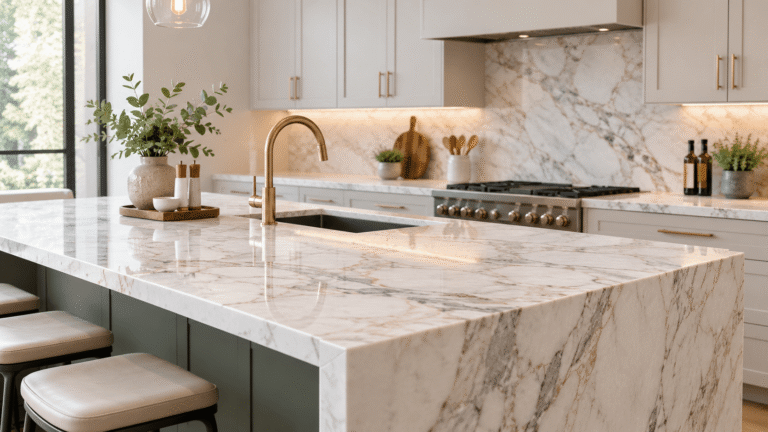
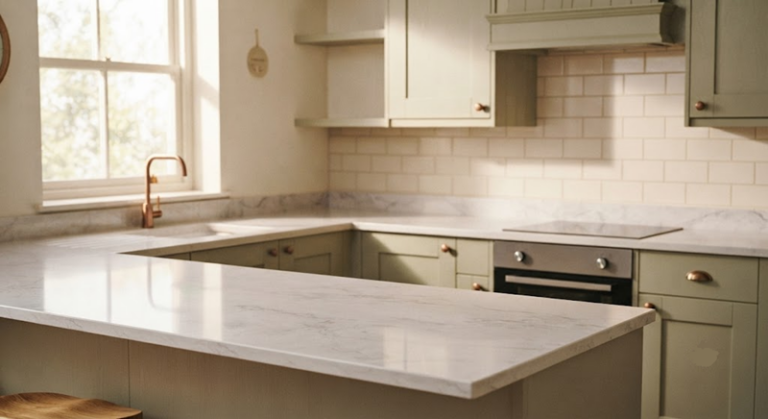
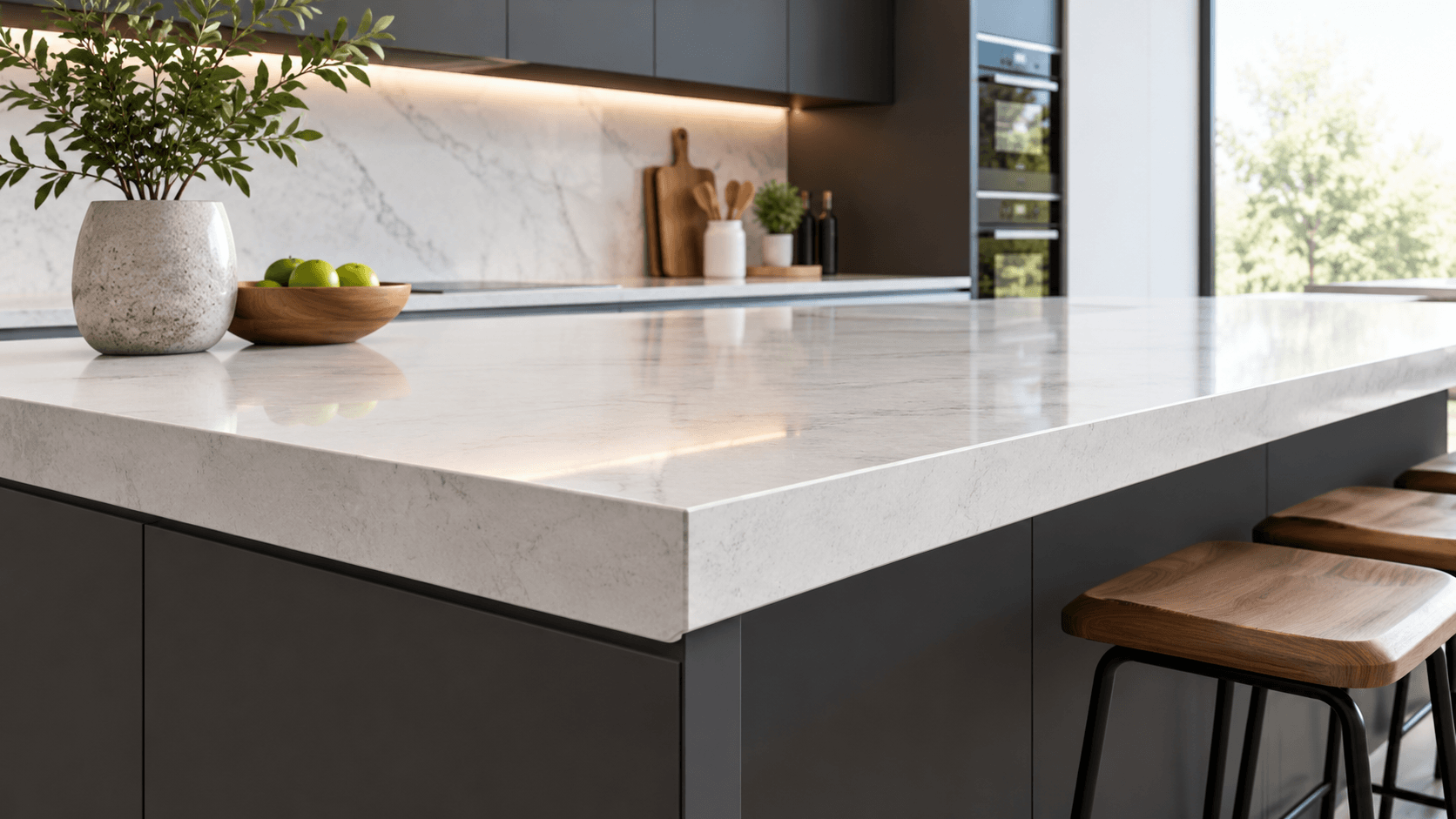
A square edge kitchen worktop is straight, flat, unique, and suitable for a minimalist home. They basically have a contemporary profile with their blunt edges and chunky appearance, which makes them go beyond traditional round table concepts. They create a clean, presentable appearance that suits modular kitchens and is more convenient. They are also available in materials such as quartz, granite, marble, quartzite, and timber; square edge worktops combine simple styling with practical everyday functionality.
What Are the Advantages of Square Edge Countertops?
Square edge countertops offer several benefits, as they complement modular kitchens with a cleaner outlook.
- The straight structure and neater boundary between the worktop and cabinetry make the kitchen look less cluttered and more appealing.
- Modular kitchens look more appealing with square edge worktops, which complement cabinets without handles, modern elements, or a wide range of colour palettes.
- The installation of squared edge countertops is simple and straightforward. Fabricators can easily cut and take measurements for the best fit.
- Standard square edges often cost less than decorative materials and help to achieve a waterfall edge.
- They work with natural stone, engineered quartz, and timber, which allow homeowners to have an element in their home.
- A straight and aligned structure is easy to clean with a thick microfibre cloth.
Which Materials Are Available in Square Edge Countertops?
Square edge profiles can be created in several countertop materials, each offering different benefits.
1. Marble:
Marble provides natural veining and an enriching appeal that makes square edge kitchen worktops look more dynamic. However, it can also be prone to scratches and stains. Marble requires much more cleanliness and maintenance than granite and is the best and most doable element for modular kitchens. Choose marble if appearance is your priority and you are prepared for careful maintenance.
2. Granite:
Granite is a durable natural stone that best complements the structure of busy kitchens and more demanding work profiles. Its heat tolerance and scratch resistance can vary depending on the stone quality and sealing. Granite is a befitting option for homeowners that can strike a balance between practicality, daily essentials, and natural character.
3. Quartzite:
Natural quartzite offers more exclusive veining, a stone-like appearance, and a more robust quality of stone. It creates a clearer and unique presence, which can uplift a modular house. As porosity differs, confirm sealing requirements with your supplier and use appropriate care products.
4. Quartz:
Engineered quartz is the most suitable and widely chosen element for a square edge worktop in UK, which has a preferable range of colours, distinguished patterns, and finishes, making it smooth and suitable for contemporary kitchens. However, resin-based quartz can be damaged by excessive heat, so always use trivets.
5. Timber:
Timber worktops bring warmth and natural texture to contemporary and traditional kitchens. A square edge emphasises the grain and gives the surface a neat finish. Wood needs appropriate oiling or sealing and protection from standing water, heat and scratches.
Which Kitchen Styles Suit Square Edge Worktops?
Square edge countertops are mainly effective in modern kitchens with cabinets without handles, integrated tools and colourful palettes. Their straight lines complement minimalist interiors, where smooth surfaces and uninterrupted surfaces provide a calm appearance. A thin, square-edge kitchen worktop can look elegant against the contrast of dark and bolder granite.
They also work well in industrial kitchens, which feature brick, metal, composites, and concrete finishes. In Shaker kitchens, square edges offer a more immaculate finish in contrast to more congested cabinet doors, in relation to a traditional round table.
It’s important if your kitchen has decorative cabinetry, ornamental fixtures, and traditional design. A bullnose edge may complement these details better. Similarly, households with young children or narrow walkways may benefit from softened corners to reduce the risk of painful bumps.
Practical Considerations Before Choosing a Square Edge Worktop
Square and pencil round edges are usually standard; bevelled and bullnose are modest add ons and add fabrication, so they cost more. Match the edge to your cabinet and kitchen style and check it against everyday life. There should be clean and kindest on toddlers and elbows, while squared edges have a sharper look.
For family kitchens, consider the position of the island and the amount of foot traffic around it. Rounded corners or a pencil-round profile can be more forgiving for young children. Also check how joints and exposed ends will be finished, as these details influence the countertop’s durability and appearance.
FAQ’s
1. What is a square edge kitchen worktop?
A square edge kitchen worktop is a countertop that is straight, smooth, and ensures a clean structure. The requirement for a square kitchen worktop is different from traditional round-table kitchen tops.
2. What are the advantages of square edge worktops?
Square edge worktops provide a cleaner and more practical experience for homes with minimalistic interiors and handleless cabinets. Square edge countertops are useful for smoother finishes and more appealing kitchens.
3. Are square edge kitchen worktops suitable for modern kitchens?
Yes, square kitchen worktops are most suitable for modular and contemporary kitchens where there is a need for neat and precise worktops. They provide more durability, longevity, and better sustainability.
4. How do square edge worktops compare with rounded edge worktops?
Square edge worktops feature straight edges and sharp-looking corners, creating a modern, more suitable appearance. Rounded edge worktops have curved profiles that provide a softer look and reduce the risk of injury from accidental impacts.
5. What materials are available with a square edge finish?
Square edge worktops are available in several materials, including quartz, granite, marble, laminate, porcelain, and solid surface. Quartz is popular for its continuous patterns; marble is used for luxury appeal, and granite is used for a sturdier appearance in modern homes.