Key Takeaways
- Granite offers great durability, thermal tolerance, and natural beauty, though it is porous and requires periodic resealing.
- Quartz is a popular, low-maintenance, and non-porous material that resists stains and does not require sealing, making it ideal for busy family bathrooms.
- Marble provides unmatched elegance and a regal look, but requires careful maintenance and protection from acidic products to preserve its finish.
- When choosing a bathroom countertop material, homeowners must consider factors such as daily usage, moisture resistance, budget, slab quality, and maintenance expectations.
- Proper maintenance for all three stones involves avoiding standing water, using appropriate cleaning products, and handling professional inspections for sealants or repairs.
Choosing the best material for your bathroom is a wonderful idea that not only revamps the look into a modern statement but also helps people choose the best worktop. A vanity countertop is more or less prone to extra water splashes, stains, and cosmetics or perfumes. Therefore, the material chosen for bathroom granite countertops with sink should offer a balance of sustainability, moisture resistance, easy maintenance, and aesthetic appeal. Among the most popular options, granite, quartz, and marble stand out for their distinct characteristics. While granite is known for its durability, quartz is known for its moisture resistance, and marble for its extreme elegance.
Rolling the Dice Among the Three Most Suitable Options for Bathroom Worktops
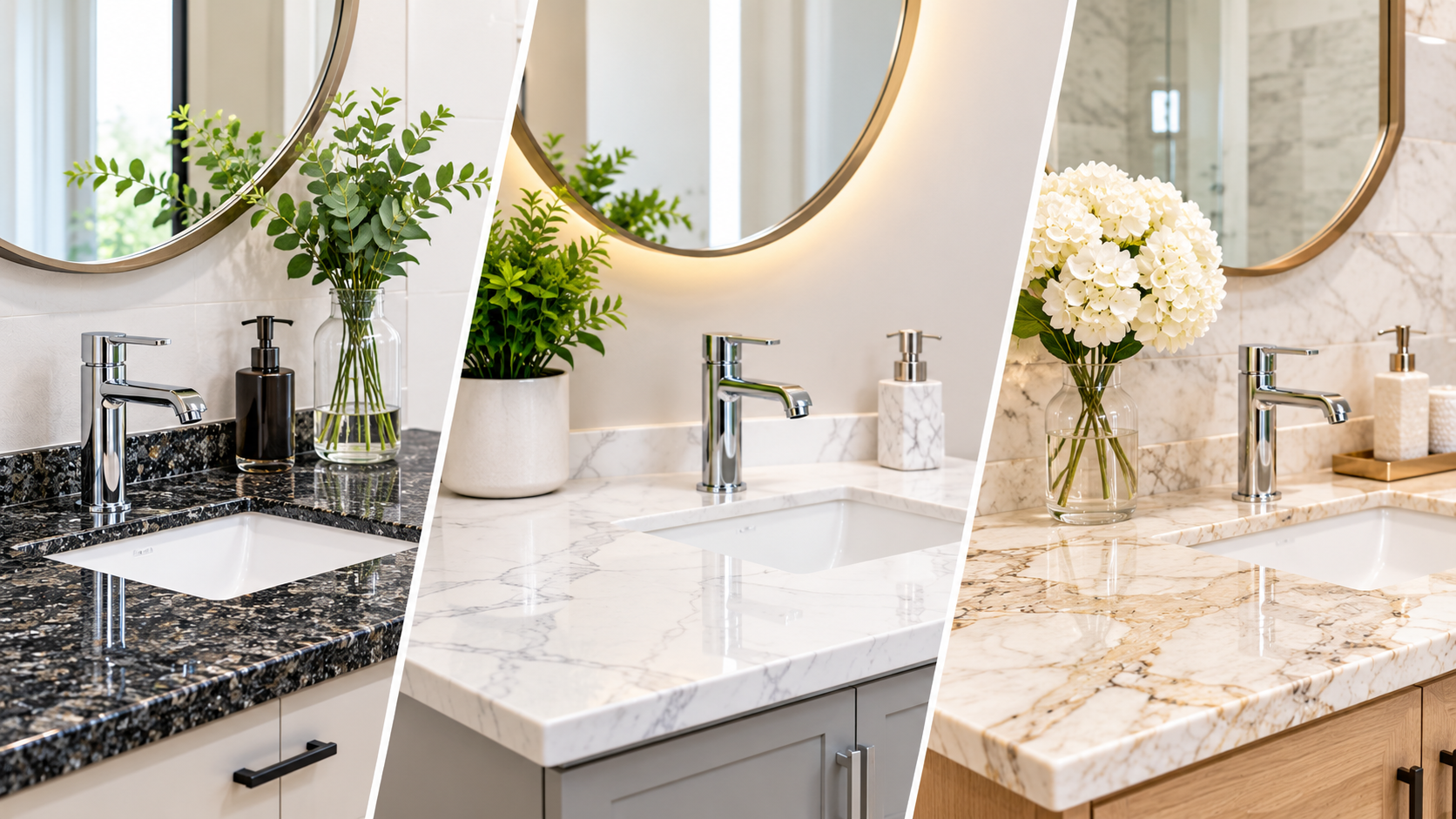
There are several options that can be chosen for the most befitting and perfect choice of bathroom worktops among statement Granite, premium marble, and reliable quartz.
1. Granite Bathroom Vanity Countertops:
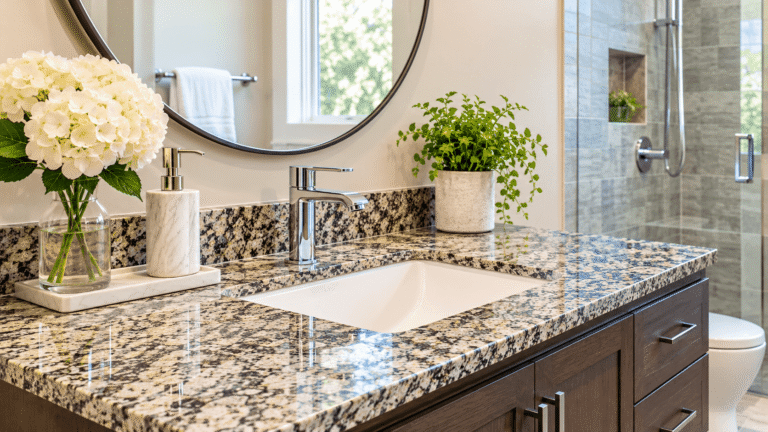
Granite is one of the most sustainable and natural stones when it comes to maintaining a vanity worktop. Granite is used extensively for high end cooking, is quarried locally, and is available in a dozen colours; it is the most heat-resistant countertop material for active Indian cooking. Formed through the slow cooling of molten rock, it has direct contact with hot pots and prevents damage. Homeowners can choose between black, white and beige shades.
One of the best benefits of granite countertops for bathroom vanity is that it is stain-resistant and properly sealed. Since bathroom worktops come into contact with water, toothpaste, cosmetics, and personal-care products, a stone sealer helps to retain stains. However, granite is naturally porous, so periodic resealing may be based on suggestions.
2. Quartz Bathroom Vanity Countertops:
Quartz is one of the most popular kitchen countertop design materials in Indian urban homes in 2026. Made from 90-95% quartz crystals bonded with resins its non porous, stain resistance and maintenance free where no sealing is needed. This makes them particularly suitable for contemporary bathrooms where homeowners prefer clean surfaces and coordinated interiors.
One of the main benefits of quartz is its non-porous structure. It does not readily absorb water, making it highly resistant to everyday stains caused by toothpaste, makeup, soap, and other bathroom products. It also does not require periodic sealing, which reduces maintenance requirements and makes it convenient for households with busy routines.
3. Marble Bathroom Vanity Countertops:
Marble bathroom vanity tops offer unmatched elegance and impart a regal look to any bathroom design style. A complete privilege of attaining bathroom granite countertops with a sink requires elegant patterns that can transform an ordinary bathroom vanity into a striking design feature. Popular varieties include Carrara, Calacatta, Statuario, and other white, grey, beige, and darker marble options. Each slab provides a unique and detailed touch.
One of the biggest benefits of marble is its ability to complement interior designs and modern bathrooms with minimalist looks. It pairs well with brass, gold, and solid bathroom fixtures. Polished marble creates a reflective finish, while honed marble provides a softer, understated appearance.
Granite vs Quartz vs Marble: Which Bathroom Countertop Is Better?
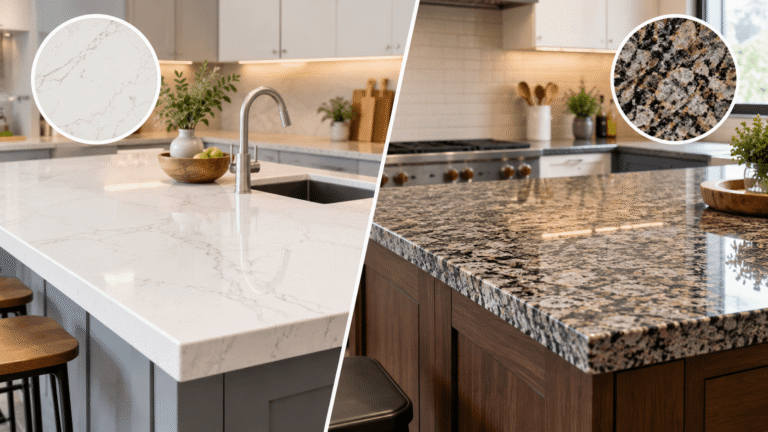
The best bathroom granite countertops with sink material depends on the homeowner’s budget. Granite is best suited for differential patterns and strong thermal tolerance. Quartz is a practical option for homeowners who prioritise stain resistance and spectacular finishes. Marble is ideal for those who want a premium natural finish and are willing to invest time in its maintenance.
When comparing these materials, moisture resistance, sustainability, and installation costs should be considered. Granite needs periodic sealing, and marble needs proper maintenance against acidic products. Prices differ on the basis of stone quality, thickness, and fabrication.
How to Choose the Best Material for Your Bathroom Vanity
Start by considering how frequently the bathroom will be used and how much maintenance you are willing to undertake. For a shared family bathroom, quartz can be a convenient choice because of its non-porous surface and easy cleaning requirements. Granite is worth considering when natural stone aesthetics, durability, and heat resistance are priorities. For guest bathrooms or luxury master bathrooms, marble can create an elegant focal point when properly maintained.
Factors to Consider Before Buying a Bathroom Vanity Countertop
Before purchasing a bathroom vanity countertop, homeowners should consider the everyday essentials on the surface. A shared family bathroom may benefit from durable granite or low-maintenance quartz, since there can be an accommodation of decorative marble if it receives less use. Exposure to moisture can also be an important concern. Although all three materials can be used in bathrooms with appropriate installation and care, proper sealing, edge finishing, and waterproofing are essential for natural stone surfaces.
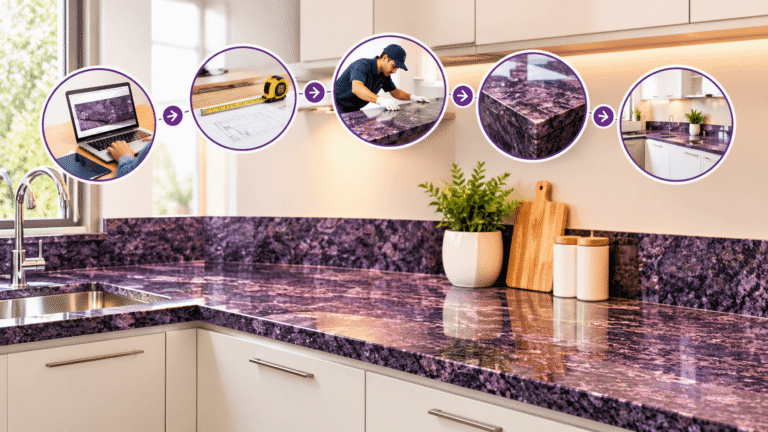
Cost management is an important factor that reflects the price of the material. Slab quality, thickness, cutting, polishing, edge profiles, sink openings, transportation, and installation cost more. Houseowners should consider a more modular basin, undermount sink or make choices as per the material cost.
How to Maintain Granite, Quartz, and Marble Bathroom Countertops
Proper maintenance helps preserve the appearance and performance of bathroom vanity countertops. Granite should be cleaned with mild soap and water, and its sealant should be renewed according to the manufacturer’s recommendations. Quartz generally requires less maintenance because of its non-porous surface, but harsh chemicals, abrasive pads, and excessive heat should be avoided. Marble requires more careful cleaning. Homeowners should use pH-neutral stone cleaners, wipe away spills immediately, and avoid acidic products that can damage its finish.
Regardless of the material, there should not be any standing water allowed under the skinks, taps or worktops. There should be complete cleaning done with a soft cloth which should avoid any cosmetic stains or watermarks. Professional inspection and maintenance can also help address chips, cracks, or damaged sealants before they become bigger problems.
Conclusion
Granite, quartz, and marble offer preferential features for bathroom countertops. Granite provides more endurance and strength; quartz provides low maintenance and timeless luxury. There is no single material that suits bathrooms and the finesse. By understanding the factors carefully, you can select a worktop that uplifts your bathroom’s presence with a long-lasting appeal.
FAQs
Q1. Which is the best material for bathroom vanity countertops: granite, quartz, or marble?
Granite, quartz, and marble are all suitable for bathroom vanity countertops. Granite is ideal for durability and natural stone patterns, quartz is a practical choice for low maintenance and stain resistance, while marble is best for homeowners who prefer a luxurious and elegant appearance.
Q2. Are granite countertops for bathroom vanity resistant to water and stains?
Yes, properly sealed granite countertops for bathroom vanity offer good resistance to water and everyday stains caused by toothpaste, cosmetics, and personal-care products. However, granite is naturally porous and requires periodic resealing to maintain its protective surface.
Q3. Is quartz a good choice for bathroom vanity countertops?
Quartz is an excellent choice for bathroom vanity countertops because of its non-porous surface, stain resistance, and easy maintenance. It does not require periodic sealing, making it suitable for busy family bathrooms and contemporary interiors.
Q4. How do you maintain marble bathroom vanity countertops?
Marble bathroom vanity countertops should be cleaned using a soft cloth and a pH-neutral stone cleaner. Wipe away spills immediately and avoid acidic products, harsh chemicals, and abrasive cleaning pads to protect the marble’s finish.
Q5. What factors should you consider before buying bathroom vanity countertops?
Consider durability, moisture resistance, maintenance requirements, material cost, slab quality, thickness, sink openings, edge finishing, and installation expenses. Granite, quartz, and marble should be selected according to your bathroom’s usage, design preferences, and maintenance expectations.