Key Takeaways
- Granite worktops are durable, natural stone surfaces that resist daily wear and are typically sealed by fabricators before installation.
- Everyday cleaning requires only warm water, a mild neutral washing-up liquid, and a soft microfibre cloth to avoid damaging the finish.
- Harsh chemicals, acidic substances like vinegar or lemon juice, bleach, and abrasive pads should be avoided to protect the sealant.
- Spills should be wiped up promptly, and using trivets under hot pans helps protect the stone and the seal near cooking areas.
- The water-drop test can determine when a worktop needs resealing, which helps maintain its resistance to stains over time.
Granite worktops are popular in UK kitchens because they stand up well to daily use and bring a natural stone look to the room. They don’t need complicated routines or harsh chemicals to stay in good condition; a simple, steady approach works best. Most fabricators seal the stone before it leaves the workshop, and from there it’s mainly about using the right products and dealing with spills in a sensible way.
This guide walks through how to clean your granite worktop day to day, how to handle spills and marks, and when to think about resealing.
Why Granite Worktops Are Straightforward to Care For
Granite is a hard, dense stone that shrugs off most everyday knocks and scrapes. That’s one reason it’s still widely used for kitchen worktops. When sealed properly, it is relatively resistant to stains and doesn’t soak up liquids as quickly as many other natural stones.
Because of this, you don’t need specialist cleaners for every wipe down. Warm water, a touch of mild washing-up liquid and a soft cloth are enough for most kitchens.
Everyday Cleaning Routine Of Granite Worktops
Clear spills and crumbs promptly
Although sealed granite is fairly resistant to staining, liquids that sit on the surface for a long time can still leave marks, especially oils or dark drinks. UK fabricators and stone-care companies advise wiping spills as soon as you notice them, rather than letting them dry on the worktop.
A quick wipe after food prep also keeps grit and crumbs from being dragged across the surface, which reduces the chance of light scratching.
Wash with a mild, neutral cleaner
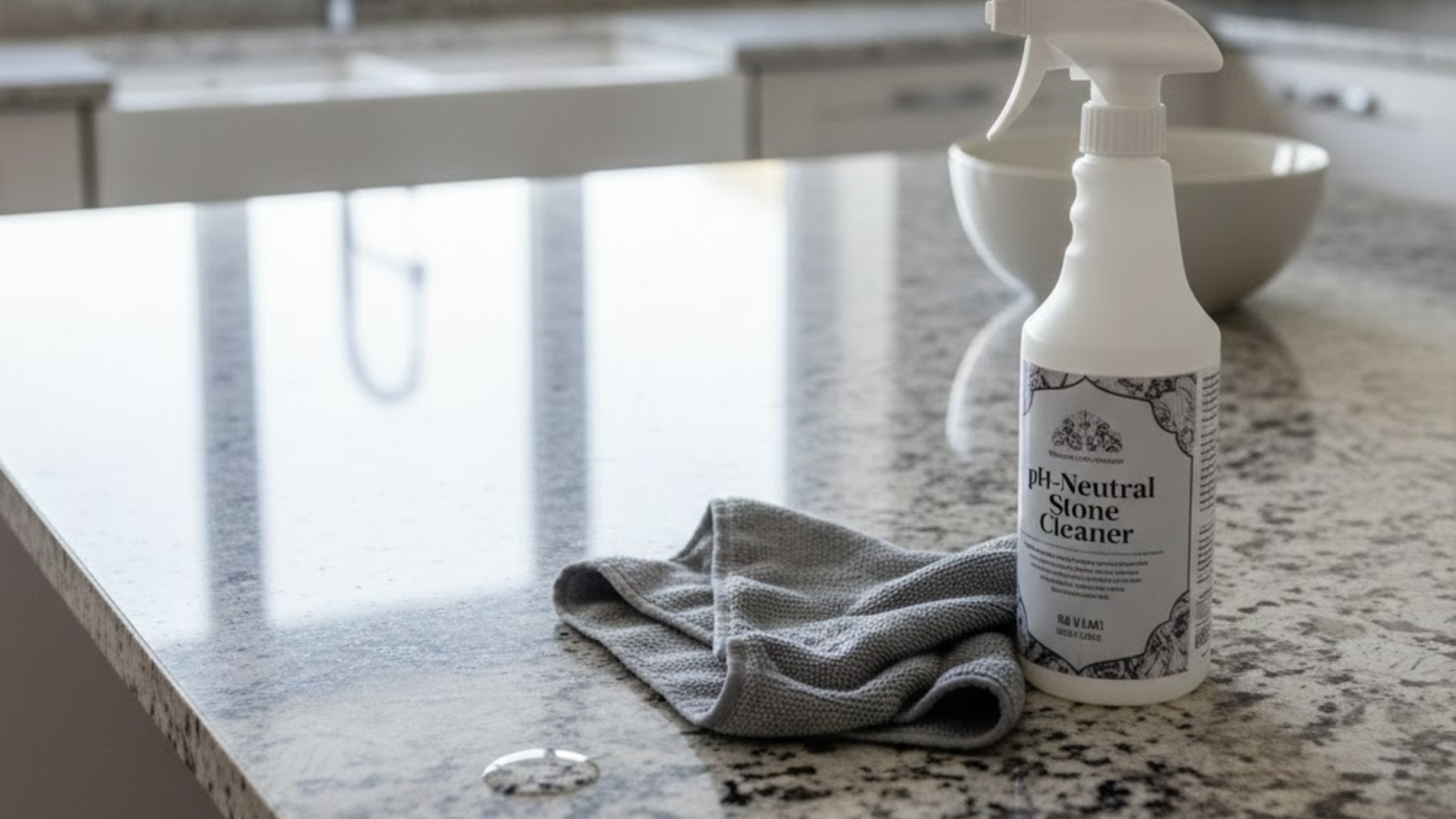
For daily cleaning, mix warm water with a small amount of neutral washing-up liquid in a bowl or spray bottle. Brands such as LBS Stone Collection and Quartz Supply specifically suggest using a pH-neutral detergent or a small amount of washing-up liquid like Fairy in warm water for granite worktops.
Use a damp microfibre cloth or soft sponge to wipe the worktop. UK guides stress avoiding strong bleaches, ammonia-based products and anything acid-based such as vinegar or lemon cleaners, because they can damage the seal and dull the surface over time.
Always dry the worktop
Once you’ve wiped down the surface, follow with a dry microfibre or soft towel. This helps prevent water spots and streaks, especially in hard-water areas, and keeps the surface looking bright. Several UK care guides recommend cleaning with a pH-neutral product and then drying with a soft cloth for the best finish.
Products and Tools That Are Safe
Cleaners that work well on granite
Stone-care specialists and UK fabricators broadly agree on the same safe options:
- Warm water with a little neutral washing-up liquid
- pH-balanced stone cleaners designed for granite worktops
- Soft microfibre cloths or soft sponges rather than rough pads
These are gentle enough for daily use and won’t strip the seal prematurely.
Things to steer clear of
There’s wide agreement on what not to use on granite:
- Vinegar, lemon juice or citrus-based cleaners (too acidic)
- Bleach or strong disinfectants (too aggressive and can damage the finish)
- Abrasive powders and scouring creams
- Rough pads or steel wool, which can dull or scratch the surface
If you’re unsure about a product, check that it is labelled as safe for natural stone or granite before using it on your worktop.
Heat, Acids and Everyday Kitchen Hazards
Hot pans and baking trays
Granite copes well with normal kitchen temperatures; it won’t blister in the way some man-made surfaces can. Even so, UK worktop specialists still advise using a trivet or wooden board under very hot pans or oven dishes. Sudden extreme heat can stress any stone, and using trivets also protects the seal near the hob, where heat is concentrated.
Acidic and chemical spills
While granite itself is less sensitive to acid than marble, the sealant and any polished finish can still be damaged by harsh products. Guides from UK companies such as Omega Stone, Omega PLC and Royal Stone Care warn against using vinegar, lemon, limescale removers, oven cleaners or bleach on stone worktops.
If you spill wine, fruit juice, tomato sauce or oil, wipe it up straight away with a damp cloth, then dry the area. This reduces the chance of dark patches or marks forming.
Dealing With Stains and Marks
Most light marks respond to the same warm water and neutral detergent used for daily cleaning. For more stubborn stains, stone-care specialists often recommend a poultice – a paste that draws the stain out of the surface – or targeted treatments depending on the type of stain.
For ink or certain oil-based stains on dark granite, some stone-care guides suggest a very small amount of pure acetone, used carefully and only on the affected spot. Always test any stronger treatment on an inconspicuous area first, and if in doubt speak to your worktop supplier or a stone restoration specialist before proceeding.
Avoid strong solvents such as lacquer thinner; these can damage the seal or leave their own marks and are not generally recommended for home use on kitchen worktops.
Resealing Your Granite Worktop
How often should you reseal?
Sealing helps your worktop resist stains by slowing down how quickly liquids can soak into the stone. The right interval depends on the type of granite, how light or dark it is, the sealer used and how busy your kitchen is.
UK and international guides suggest anything from yearly for lighter, more porous slabs in heavy-use kitchens to every few years for darker, denser stones.
The simple water-drop test
An easy way to check your worktop is to sprinkle a few drops of water on a clean, dry area and watch what happens:
- If the drops sit on the surface and bead, the seal is still doing its job.
- If the water spreads out and darkens the stone within a few minutes, it’s time to reseal.
Basic resealing steps
If you’re comfortable doing the work yourself, the process is straightforward:
- Clean the worktop with a mild, pH-neutral cleaner and let it dry completely.
- Apply a granite-specific sealer in a thin, even layer using a soft cloth or sponge, following the manufacturer’s instructions.
- Allow the sealer to soak in for the recommended time.
- Wipe away any excess with a clean, dry cloth to prevent streaks or a cloudy film.
- Repeat if the product instructions suggest a second coat.
If you’re not sure which sealer to use or how often to apply it, your original worktop installer or a local stone-care company can give advice tailored to your specific granite.
Closing Thoughts
Keeping a granite worktop clean comes down to a few simple habits: wipe spills promptly, clean with mild, neutral products, dry the surface after washing and reseal when the stone starts to absorb water instead of letting it bead.
Follow those steps and your granite should stay looking good, feel pleasant to work on and continue to serve your kitchen well for many years. If you ever run into a stain or mark that doesn’t respond to normal cleaning, it’s worth speaking to a stone specialist before trying anything too aggressive – in most cases, the problem can be fixed without risking the worktop itself.