Key Takeaways
- Quartz is an engineered stone made from natural quartz crystals mixed with resins, offering a uniform appearance, non-porous surface, and low maintenance.
- Quartzite is a natural metamorphic rock formed from sandstone, featuring organic veining, high heat resistance, and a distinct luxury aesthetic.
- Quartz surfaces are highly resistant to stains and daily wear without requiring sealants, while quartzite is porous and demands frequent sealing to prevent staining.
- Quartzite generally commands a higher price than quartz due to quarrying complexities, natural rarity, and exclusive slab qualities.
- The choice between quartz and quartzite depends primarily on lifestyle, budget, and design preferences, such as prioritizing low maintenance versus natural stone aesthetics.
The process of choosing an appropriate kitchen worktop is a lifetime investment which determines performance, stability and general outlook. Among premium stone surfaces, the debate of quartz vs quartzite is one of the most common considerations for modern homeowners. While the names sound similar, quartz and quartzite are quite different in terms of their composition, performance, and required maintenance. These differences are all you need to know to select your kitchen wisely.
We are specialists in high-quality surfaces at KML Worktops, and we are able to make the surfaces both practical and elegant. This guide explains the key distinctions in the quartz vs quartzite comparison and helps you determine which option aligns best with your kitchen needs.
Understanding Quartz and Quartzite
To accurately evaluate quartz vs quartzite, it is essential to understand how each material is formed and used in kitchen environments.
What Is Quartz?
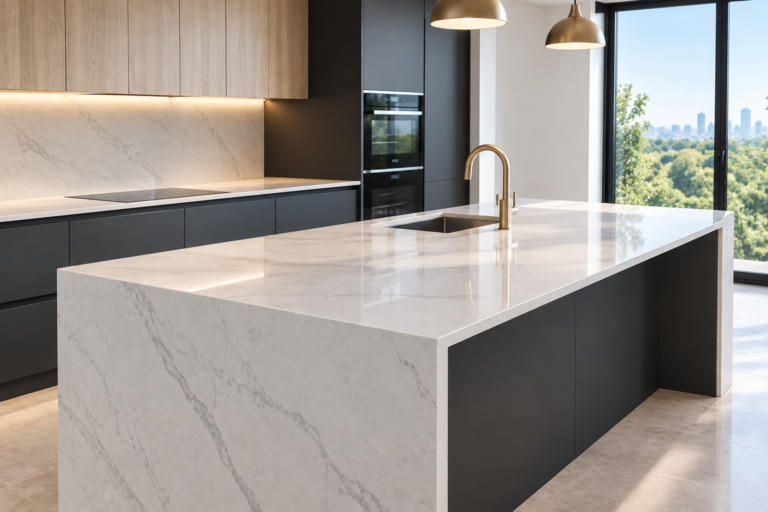
Quartz is a man-made stone that is mainly made of natural quartz crystals mixed with resins and colours. The manufacture is such that this produces the slabs in highly uniform patterns, colours and finishes. Today, quartz kitchen countertop materials are among the most popular options for contemporary homes due to their reliability and low maintenance.
Composition and Manufacturing
The quartz worktops are usually mixed with 90-93% of natural quartz, with polymer resins, which hold them together. The mixture is moulded, pressed under high pressure, and polished in order to form a continuous dense, non -porous slab.
Appearance
Quartz is engineered, and hence it has outstanding design capabilities. Starting with minimalist solid tones to marble-inspired veins, quartz worktop provides uniformity and consistency of colour, which natural stone does not always have to do.
Durability and Maintenance
In the quartz vs quartzite discussion, quartz stands out for ease of maintenance. It has a non-porous surface, which prevents getting stained, infected, and being wet without any sealants. Mild soaps and water are enough to clean it, hence quartz is ideal to be used in busy kitchens.
What Is Quartzite?
Quartzite is a converted rock that is metamorphic and is created from sandstone, which has been subjected to heat and pressure. The outcome of this change is a crystalline, hard surface, which is highly desired because of its natural grace.
Composition and Manufacturing
Quartzite is silica with a minor amount of feldspar, forming a strong and hard stone. Each quartzite countertop is quarried from the earth and cut to preserve its natural character.
Appearance
Quartzite also has veining and organic colour variations in comparison to engineered quartz. Many homeowners choose quartzite countertops for kitchen spaces where natural beauty and exclusivity are a priority.
Durability and Maintenance
Quartzite is extremely durable and very heat-resistant. Yet, it is porous in nature and needs frequent sealing; it is likely to be stained. In the quartz vs quartzite comparison, quartzite demands more ongoing care to maintain its appearance.
Quartz vs Quartzite: Key Differences Explained
When comparing quartz vs quartzite, it is essential to understand how these two premium worktop materials differ in composition, performance, and maintenance. Even though the names are quite close, quartz and quartzite have various advantages which can be used to meet various needs in the kitchen.
Appearance and Design Versatility
When assessing quartz vs quartzite, appearance is often the first consideration.
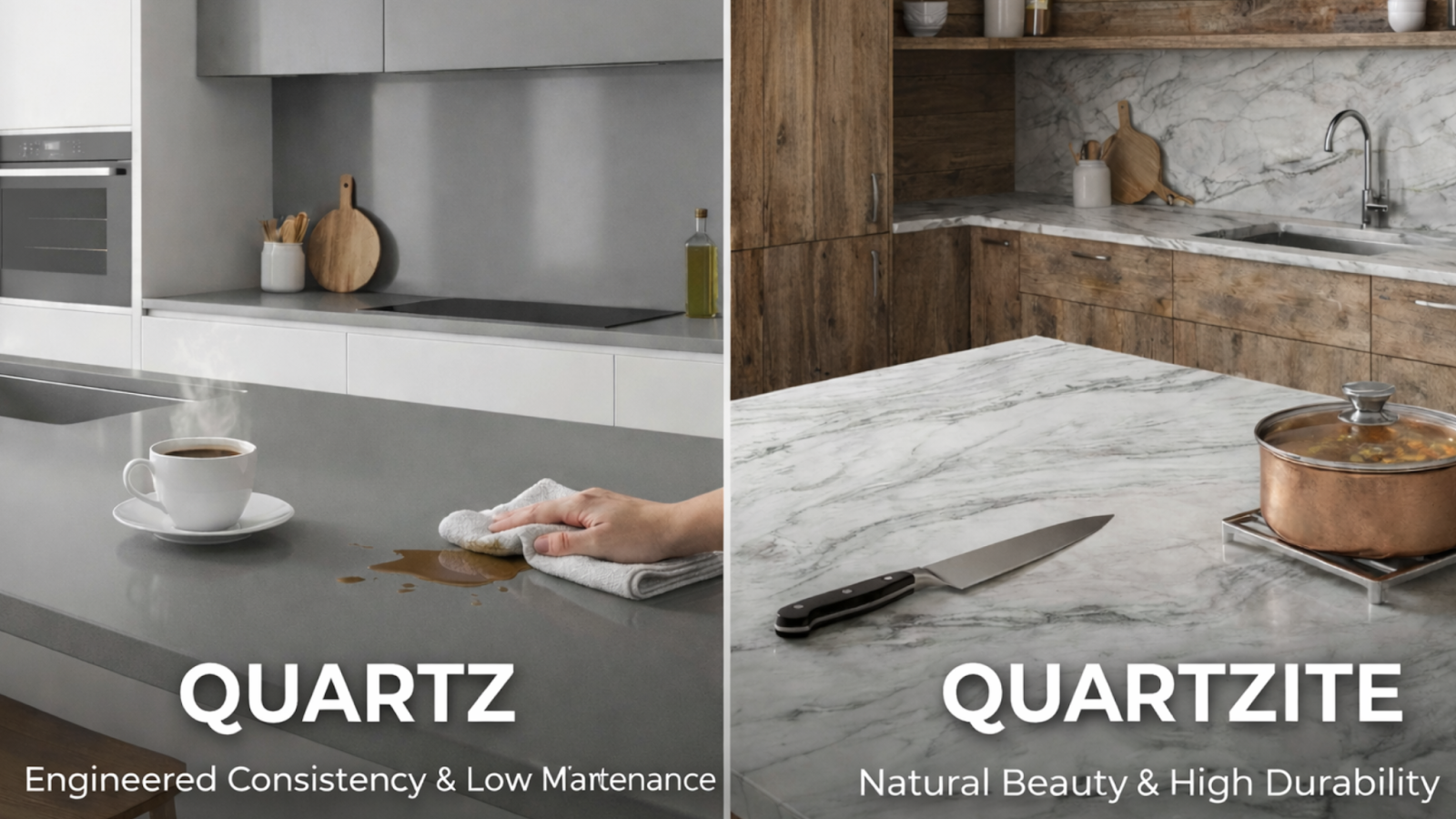
Quartz kitchen countertop materials provide exceptional design flexibility. Being engineered, quartz can be offered in a broad selection of colours and finishes and even marble or granite replicas. This consistency ensures that quartz is the best choice of surface among homeowners who like homogenous surfaces and modern kitchen designs.
Quartzite countertops for kitchen applications deliver a more organic and distinctive appearance. Each quartzite slab displays natural veining and texture, making it highly desirable for luxury kitchens. Nevertheless, colour is usually restricted to whites, greys and earthy softs depending on the mineral content.
Durability and Performance
Durability plays a central role in the quartz vs quartzite comparison, particularly in high-use kitchen environments.
Quartz seldom gets scratched, chipped or stained. It has a non-porous surface and thus does not render itself receptive to liquids, and therefore, it remains hygienic and perfect in busy households. Nevertheless, quartz is fairly prone to exceptionally high temperatures, and such precautions should be taken as trivets.
Quartzite is a type of hardest natural stone in the market, and it can withstand even the heat and scratches very well. Quartzite countertops for kitchen use can safely withstand hot cookware without surface damage. However, the quartzite is more likely to crack with heavy impact, and it should be handled with care when the installation process takes place.
Maintenance and Care Requirements
Maintenance is a defining factor when comparing quartz vs quartzite for long-term kitchen use.
Quartz does not need a lot of maintenance. It is non-porous; therefore, it does not require sealing and periodic cleaning using mild soaps, and water is adequate. These qualities make quartz kitchen countertop materials particularly appealing for homeowners seeking convenience.
Quartzite is a durable material, but it is porous in nature, so it is necessary to seal it frequently to prevent stains and water absorption. The spills should be washed immediately to save the surface. As such, quartzite countertops for kitchen spaces demand a higher level of ongoing maintenance.
Cost Considerations
Cost differences are another important element in the quartz vs quartzite decision-making process.
Quartz tends to be cheaper, considering that it is engineered and is manufactured effectively. Pricing varies depending on design complexity and thickness, but quartz kitchen countertop materials typically offer excellent value for money.
Quartzite tends to be of a higher price. The influence of the place where the quarry is, the rarity, the quality of the slabs and the installation in a complex manner all contribute to the increased costs. A premium quartzite slab reflects exclusivity and natural beauty but requires a larger investment.
Installation and Sealing
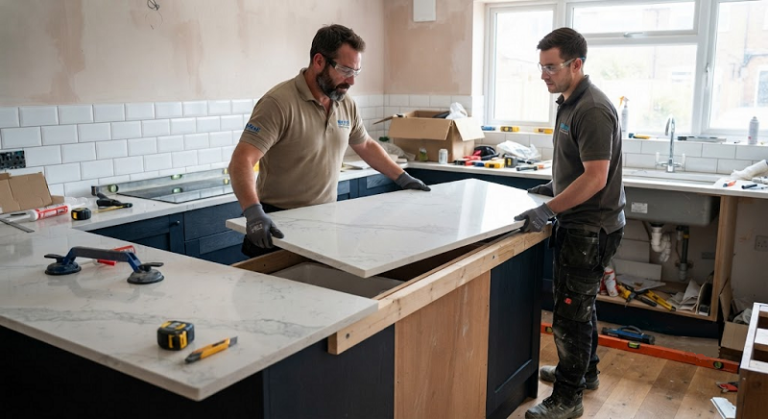
Quartz and quartzite are heavy materials which can be installed by professional workers. Installation of quartzite is more tedious as it requires sealing and cutting with precision. The performance and durability of both quartz and quartzite surfaces in KML Worktops are ensured by the installation of the respective effects and surfaces by skilled people.
Quartz also does not demand post-installation sealing, and quartzite also demands periodical sealing to ensure its outlook and strength.
Which Is Better for Your Kitchen?
The choice between quartz and quartzite ultimately depends on lifestyle, budget, and design preferences.
Quartz can be recommended to those homeowners who want:
- Low-maintenance surfaces
- Consistency and amortability in design.
- High resistance to both stains and daily wear.
Quartzite will be suitable for people who appreciate:
- Natural stone aesthetics
- Superior heat resistance
- Exclusive, high-end visual beauty.
The two materials will be of high quality once procured by qualified personnel and installed. At KML Worktops, we guide homeowners through the quartz vs quartzite decision with expert advice, premium materials, and professional installation. Our products are meant to bring functionality and style to either engineered quartz or natural quartzite, whichever you select.
Read Also: Kitchen Worktop Installation Guide
Conclusion
The debate of quartz vs quartzite highlights two premium worktop solutions with distinct strengths. Quartz kitchen countertop materials offer practicality, durability, and effortless maintenance, while quartzite countertops for kitchen environments provide unmatched natural beauty and heat resistance. When choosing the appropriate surface, the choice has to be balanced in terms of aesthetics and functionality.
The customers of KML Worktops are guided professionally, offered the highest quality of materials and craftsmanship in order to make sure that the worktops built by them in the kitchen improve both the looks and the working capacities of the kitchen, even after several years. Whether choosing an engineered quartz surface or a striking quartzite slab, the right decision begins with informed expertise.
FAQs
Q1. What stains more easily, quartz or quartzite?
Quartzite stains more easily than quartz. Quartz is non-porous due to its engineered composition, which prevents liquids from penetrating the surface. Quartzite is a natural stone and porous, so it can absorb spills and stains if not properly sealed and maintained.
Q2. Which is most expensive, quartz or quartzite?
Quartzite is generally more expensive than quartz. Quartzite costs more because it is a natural stone that must be quarried, cut, and sealed, and prices vary based on rarity and slab quality. Quartz is engineered, mass-produced, and typically offers better cost consistency and value.
Q3. Is Taj Mahal a quartz or quartzite?
Taj Mahal is a quartzite, not quartz. Taj Mahal is a natural quartzite stone known for its soft veining, durability, and heat resistance. Despite its marble-like appearance, it is formed naturally and requires sealing like other quartzite slabs.
Q4. Can I use Clorox wipes on quartzite?
No, Clorox wipes are not recommended for quartzite. Clorox wipes contain bleach and harsh chemicals that can damage the sealer and dull the stone’s surface. For quartzite, use a pH-neutral stone cleaner or mild soap with water to preserve its finish.