Key Takeaways
- Luxury vinyl tile (LVT) remains the best all-round flooring choice for most UK bathrooms in 2026 due to being fully waterproof, warmer underfoot, and cost-effective.
- Porcelain and ceramic tiles offer superior durability and longevity, making them ideal for high-traffic bathrooms and underfloor heating despite feeling harder and colder.
- Sustainable options like rubber and cork provide eco-friendly alternatives, with rubber offering excellent slip resistance and water resistance for family bathrooms.
- Bathroom flooring trends for 2026 lean away from cool greys toward warmer, textured colors and patterns like herringbone, alongside a preference for matt finishes over high-gloss.
- Proper subfloor preparation, budgeting for professional installation, and ensuring materials are genuinely rated for wet-area use are critical factors to avoid common pitfalls.
The best flooring for most bathrooms in 2026 is luxury vinyl tile (LVT), it’s fully waterproof, warmer underfoot than tile, works with underfloor heating, and typically costs £40–£90 per m² fitted. Porcelain tile is the more durable, longer-lasting step up for busy or high-end bathrooms, while natural stone suits those wanting a premium look and can justify the extra cost. The right choice ultimately depends on how the bathroom is used, your budget, and whether comfort underfoot or maximum durability matters more to you.
Bathroom flooring has to do more work than almost any other surface in the house, it copes with standing water, temperature swings, bare feet, and constant cleaning, while still needing to look good. This guide compares the main options available to UK homeowners in 2026, what they cost, and how to choose between them based on how your bathroom is actually used.
Why Bathroom Flooring Choice Matters
Bathrooms are the most demanding room in the house for flooring: they’re exposed to standing water, humidity and temperature changes far more than any other space, and a poor choice shows up quickly as swelling, staining or a slippery surface. The right flooring needs to be water-resistant or fully waterproof, easy to keep clean, and safe to walk on with wet feet, durability and style matter too, but they come after those three basics.
According to Howdens, one of the UK’s largest kitchen and bathroom suppliers, natural textures and sustainable materials are a growing focus in current bathroom flooring, alongside the practical need for a clean, moisture-resistant surface.
Match Flooring To How You Use The Bathroom
Start with usage rather than looks. A family bathroom used by several people a day needs tougher, more slip-resistant flooring than an occasional-use en suite. A wet room or a bathroom with underfloor heating narrows the choice further, since not every material performs well when heated or constantly wet. Working through these questions first makes the material choice much easier:
- How many people use this bathroom, and how often?
- Is there underfloor heating, or is it planned?
- Is it a wet room, or does water mostly stay in the bath/shower?
- What’s the budget, including fitting, not just materials?
- Are young children or anyone with mobility concerns using this bathroom regularly?
Comparing The Main Bathroom Flooring Options
| Flooring | Typical UK cost (per m², fitted) | Durability | Comfort underfoot | Slip resistance | Best for |
| LVT (luxury vinyl tile) | £40–£90 | Good, 15–20 yrs | Warm, slightly soft | Good, textured finishes best | Most family bathrooms, budget renovations |
| Porcelain tile | £50–£120 | Excellent, 25+ yrs | Hard, cold underfoot | Good with matt/textured finish | High-traffic bathrooms, underfloor heating |
| Ceramic tile | £40–£90 | Good, 15–20 yrs | Hard, cold underfoot | Good with matt finish | Budget-conscious tiled look |
| Natural stone | £90–£220+ | Excellent, decades | Hard, cold unless heated | Variable, needs honed/textured finish | High-end bathrooms, statement en suites |
| Waterproof laminate | £30–£60 | Fair, 8–12 yrs | Warm, cushioned | Moderate | Lightly used cloakrooms, guest WCs |
| Rubber | £40–£80 | Good, 15+ yrs | Very soft, warm | Excellent | Family bathrooms with children, wet rooms |
| Cork | £45–£85 | Fair–good with sealing | Very soft, warm | Good | Low-traffic bathrooms, eco-conscious homes |
Luxury Vinyl Tile (LVT)
LVT is the most popular choice for bathrooms in 2026, and for good reason: it’s fully waterproof, feels noticeably warmer underfoot than tile, comes in a huge range of wood- and stone-look finishes, and is compatible with most underfloor heating systems. It’s also more straightforward to install than natural stone, which keeps both material and labour costs down. The main trade-off is longevity, a good LVT floor typically lasts 15–20 years against 25+ for porcelain, though for most homeowners that’s a reasonable trade for the lower cost and warmer feel.
Porcelain and ceramic tile
Porcelain and ceramic tile remain the classic bathroom flooring choice, and porcelain in particular is hard to beat for durability, it’s denser and less porous than ceramic, which makes it more resistant to water and staining, and a well-laid porcelain floor can last 25 years or more without losing its finish. The trade-offs are a colder, harder feel underfoot (worth pairing with underfloor heating if budget allows) and grout lines that need periodic cleaning to avoid discolouration. Ceramic tile offers a similar look at a lower price point but is somewhat less durable and less water-resistant than porcelain.
Natural stone
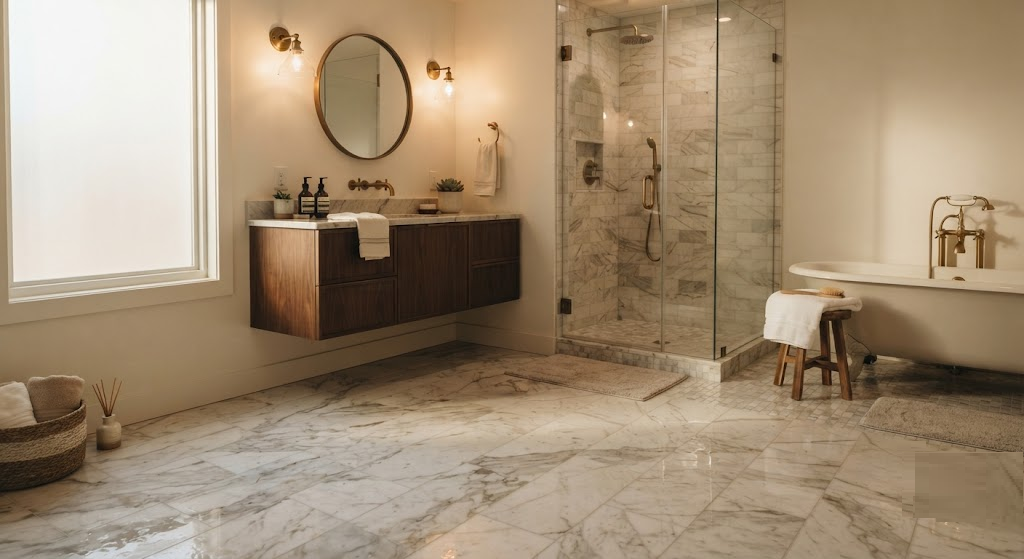
Slate, limestone and marble give a genuinely high-end look that other materials can’t fully replicate, because each slab is naturally unique, no two floors look quite the same. Natural stone is water-resistant and long-lasting, but it’s also the most expensive option here and, in a polished finish, can be more slippery than tile or LVT. A honed or textured finish is worth specifying for safety, particularly in a family bathroom.
Waterproof laminate
Engineered wood-look waterproof laminate has improved significantly and is a genuinely low-cost option, but it’s worth being clear-eyed about its limits: even “waterproof” laminate isn’t as water-resistant as LVT or porcelain, so standing water should be wiped up promptly rather than left to sit. It suits a lightly used cloakroom or guest WC better than a busy family bathroom.
Eco-Friendly And Sustainable Options
Rubber and cork are the two main sustainable choices for bathrooms, and they suit different priorities. Rubber flooring is highly slip-resistant, fully water-resistant and comfortable underfoot, which makes it a genuinely practical choice for family bathrooms with young children, not just an eco-conscious one. Cork is warmer and softer still, and a renewable material, but it needs proper sealing to resist moisture and isn’t as inherently waterproof as rubber, it’s a better fit for a lower-traffic bathroom than a busy family one.
Neither is yet common in bathrooms compared with LVT or tile, but both are worth considering if sustainability and underfoot comfort are priorities alongside water resistance.
2026 Bathroom Flooring Trends
The clearest shift in bathroom flooring for 2026 is away from plain white and cool grey tones and towards warmer, more textured colours, clay, taupe, sage green and soft terracotta are all showing up heavily in new bathroom schemes. Alongside colour, pattern is having a moment: herringbone and basket-weave porcelain layouts, and bolder grid or checkerboard designs, are replacing the plain single-colour floors that dominated the last decade. Matt and textured finishes are also increasingly preferred over high-gloss, both for the look and because they show fewer watermarks and stay less slippery.
Expert Tips And Mistakes To Avoid
- Choose a matt or textured finish over high gloss, it shows fewer stains and watermarks, and is less slippery when wet.
- Budget for fitting, not just materials, installation for porcelain, ceramic or natural stone should be done by an experienced fitter, and typically adds £20–£40 per m² on top of material costs.
- Check the subfloor before ordering flooring, cracks, unevenness or squeaks should be fixed first, since they’ll show through many flooring types and can void tile adhesive warranties.
- Don’t choose flooring on looks alone, confirm it’s genuinely rated for bathroom/wet-area use, not just water-resistant in a general sense.
- Factor in underfloor heating early if you want it, not every flooring type is rated for it, and retrofitting later is far more disruptive than planning for it up front.
Conclusion
For most UK homeowners in 2026, LVT remains the best all-round flooring for bathrooms for its combination of full waterproofing, comfort, and value for money. Porcelain tile is worth the extra cost where durability and a premium finish matter most, and natural stone remains the choice for those prioritising a genuinely high-end look and willing to pay for it. Whichever you choose, match it to how the bathroom is actually used, check the subfloor first, and don’t skimp on professional fitting for tile or stone.
Frequently Asked Questions
Q1 What is the best flooring for a bathroom in the UK?
LVT (luxury vinyl tile) is the best all-round choice for most UK bathrooms, it’s fully waterproof, warmer underfoot than tile, and typically costs £40–£90 per m² fitted. Porcelain tile is the better choice where maximum durability matters more than cost, particularly in busy family bathrooms.
Q2 Is LVT or tile better for a bathroom?
LVT is warmer, cheaper and easier to fit, while porcelain tile is more durable and longer-lasting, typically 25+ years against 15–20 for LVT. For most family bathrooms, LVT offers the better balance of cost and comfort; for a bathroom that needs to last decades with heavy daily use, porcelain is worth the extra investment.
Q3 What flooring should you avoid in a bathroom?
Avoid solid hardwood, standard (non-waterproof) laminate, and carpet, all three absorb moisture, which leads to swelling, staining, mould and, in the case of hardwood, warping. Even genuinely waterproof laminate has limits and isn’t ideal for a heavily used family bathroom.
Q4 Can you put laminate flooring in a bathroom?
Only waterproof-rated laminate, and even then it’s best suited to lower-traffic spaces like a cloakroom or guest WC rather than a busy family bathroom. Standing water should be wiped up promptly, since waterproof laminate is less water-resistant than LVT or porcelain over the long term.
Q5 How much does it cost to floor a bathroom in the UK?
For an average-sized bathroom (around 4–6m²), expect to pay roughly £200–£550 for LVT fitted, or £300–£900+ for porcelain or natural stone, depending on the material quality and complexity of the fitting job. Getting quotes from two or three local fitters is the most reliable way to check pricing for your specific bathroom.
Q6 Is bathroom flooring waterproof or just water-resistant?
It depends on the material. LVT, porcelain and rubber are effectively waterproof for normal bathroom use, while waterproof laminate and sealed cork are more accurately water-resistant, they cope with splashes and spills but shouldn’t be left under standing water. Always check a product’s specific wet-area rating rather than assuming from the material name alone.
Q7 What’s the best non-slip flooring for a bathroom?
Textured LVT, matt-finish porcelain, and rubber flooring all offer strong slip resistance when wet, which is why they’re commonly recommended for family bathrooms. Avoid high-gloss polished tile or stone in a bathroom, since a smooth, wet, polished surface is one of the most common causes of bathroom slips.
Q8 Can you fit bathroom flooring yourself, or do you need a professional?
LVT is genuinely DIY-friendly for a confident homeowner, particularly click-lock varieties. Porcelain, ceramic and natural stone are best left to an experienced tiler, since correct waterproofing (tanking) and adhesive work are essential in a wet area and mistakes are expensive to fix once tiles are laid.